As a first-time cat owner, spotting the signs of illness in your cat can be a challenge. Cats are masters at hiding discomfort, so by the time symptoms become obvious, they might already be feeling quite unwell. Whether you’re new to owning indoor cats or just looking to be more attuned to their health, knowing the early signs of illness is crucial for their well-being. This guide will walk you through practical steps to identify potential health problems in your cat before they become serious.
Why Is It Important to Spot Illness Early?
Cats often hide their pain or discomfort, a survival instinct passed down from their wild ancestors. This makes it hard for you to tell when something is wrong. As a result, by the time you notice your cat acting strange, it may already be experiencing significant distress. Early detection of illness can help you get timely treatment and avoid costly or severe health problems down the road. So, let’s learn how to keep an eye out for signs of illness in your feline friend!
20 Signs of Illness in Cats
Understanding when your cat isn’t feeling well can sometimes be tricky, but there are a few telltale signs to watch for. Here are the most common indicators that your cat may be unwell:
Loss of Appetite
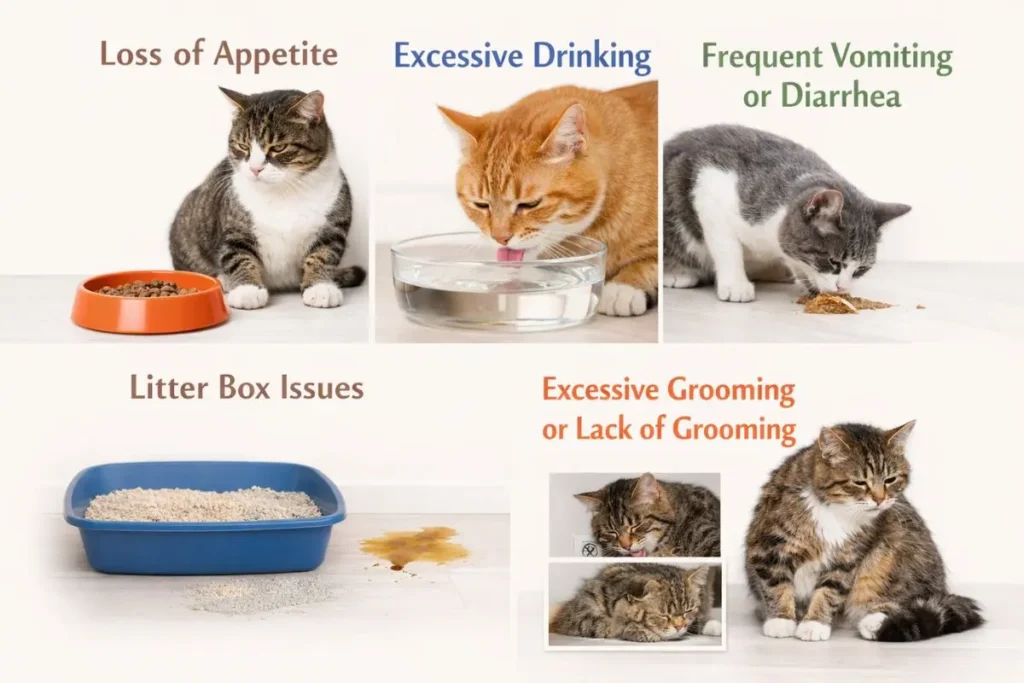
Cats are notorious for being picky eaters, but if your cat suddenly refuses to eat or shows little interest in food, something may be wrong. Loss of appetite can be a symptom of various health problems like dental disease, digestive issues, or even kidney disease.
Common Mistake:
- What people often miss: Some cats, especially older ones, may eat less due to a decrease in activity. This can be mistaken for normal aging, but it could also signal more serious issues like cancer or thyroid problems.
Action Step:
- Track your cat’s eating habits. If they go without food for more than 24-48 hours, it’s time to call the vet.
Excessive Drinking
Increased water intake can be a sign of serious conditions like diabetes, kidney disease, or hyperthyroidism. Cats are not always inclined to drink a lot of water, so if you notice your cat drinking excessively, it’s a red flag.
Common Mistake:
- What people often miss: Cats with kidney disease or diabetes may drink more water to combat dehydration, but it can go unnoticed in a busy household or if multiple cats are sharing water sources.
Action Step:
- Keep track of how much your cat is drinking. If they are drinking more than usual, schedule a vet visit.
Frequent Vomiting or Diarrhea
Occasional vomiting or diarrhea can happen, especially with sudden diet changes or hairballs, but frequent episodes are cause for concern. Persistent vomiting or diarrhea can point to gastrointestinal issues, parasites, or infections.
Common Mistake:
- What people often miss: A single episode of vomiting might seem harmless, but recurring vomiting, especially in combination with lethargy, could signal serious conditions like pancreatitis, inflammatory bowel disease, or even poisoning.
Action Step:
- Track the frequency of vomiting or diarrhea. If it continues for more than 24 hours or is accompanied by other symptoms like lethargy, get to the vet as soon as possible.
Changes in Litter Box Habits
A sudden reluctance to use the litter box, or urinating outside of it, is a significant sign that something might be wrong. Cats may avoid the litter box due to urinary tract infections (UTIs), bladder stones, or even stress.
Common Mistake:
- What people often miss: Cats may urinate outside the box due to urinary issues, but they might also be trying to tell you that the litter box is too dirty or in an inconvenient location.
Action Step:
- Watch for any changes in litter box behavior, such as straining or avoiding it. If this persists, take your cat to the vet immediately.
Excessive Grooming or Lack of Grooming
Cats are typically meticulous groomers, but if your cat starts grooming excessively or neglects grooming altogether, it could signal a problem. Over-grooming often points to skin irritations, allergies, or stress, while lack of grooming can indicate arthritis, illness, or depression.
Common Mistake:
- What people often miss: Some owners might think over-grooming is just a cat being “particular,” but it’s often a response to pain, discomfort, or anxiety.
Action Step:
- Watch for signs of over-grooming, bald spots, or mats. If your cat seems unwilling to groom, it could indicate discomfort or arthritis, which requires veterinary evaluation.
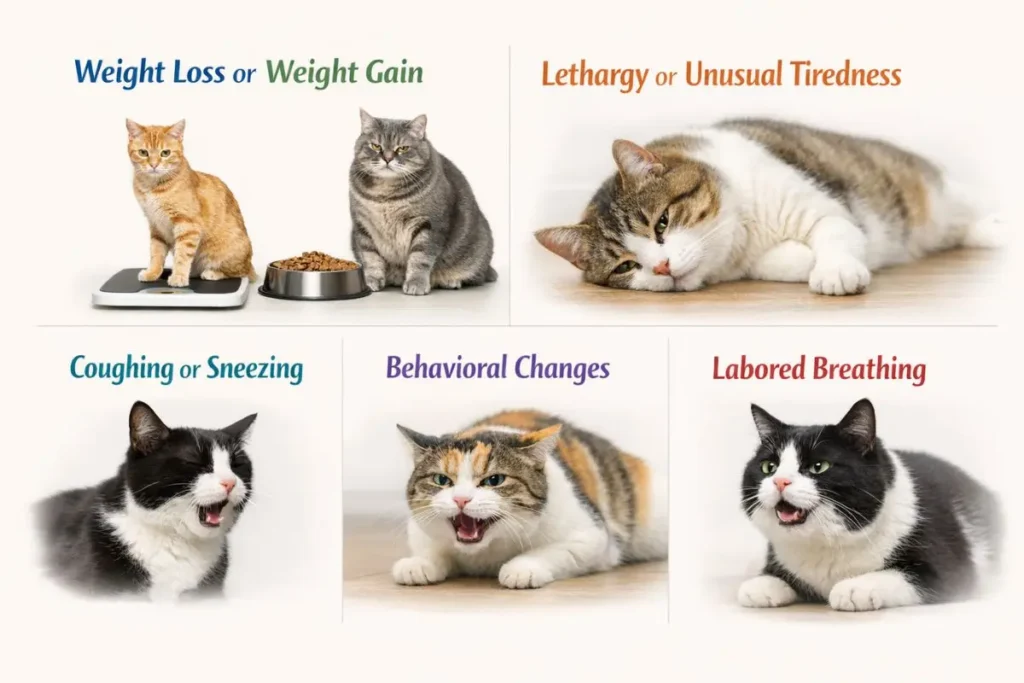
Weight Loss or Weight Gain
Unexpected changes in weight can be a sign of serious health problems. Weight loss could indicate hyperthyroidism, cancer, or diabetes, while sudden weight gain could be due to overeating, hormonal issues, or fluid retention.
Common Mistake:
- What people often miss: Cats can hide weight loss well, especially in older cats. Small changes in weight might not seem alarming, but they can indicate serious health conditions like diabetes or cancer.
Action Step:
- Weigh your cat regularly. If you notice significant weight loss or gain, it’s essential to schedule a vet appointment.
Lethargy or Unusual Tiredness
Cats are known for sleeping a lot, but if your cat is suddenly sluggish, overly tired, or disinterested in their usual activities, it could be a sign of illness, such as anemia, kidney disease, or heart disease.
Common Mistake:
- What people often miss: As cats age, they may naturally sleep more. However, if your cat is no longer interested in play or seems to lack the energy to even move around, it could indicate a health issue.
Action Step:
- Pay attention to changes in activity. If your cat seems unusually lethargic, it’s time for a vet visit.
Coughing or Sneezing
If your cat starts coughing or sneezing frequently, it may be a sign of respiratory issues, such as feline asthma, upper respiratory infections, or allergies. While a few sneezes may not be a concern, consistent coughing or wheezing requires veterinary attention.
Common Mistake:
- What people often miss: Some cats may develop asthma over time, which often goes unnoticed unless the symptoms are severe. This can lead to difficulty breathing if left untreated.
Action Step:
- If your cat has persistent coughing or sneezing, make sure to have them checked by your vet to rule out respiratory infections or asthma.
Behavioral Changes
Cats are creatures of habit. If your cat starts acting out of character—becoming unusually aggressive, fearful, or withdrawn—it could be a sign that they are in pain or unwell. This could be caused by pain, anxiety, or even neurological problems.
Common Mistake:
- What people often miss: Behavioral changes are often attributed to stress or external factors like moving or new pets. However, if the behavioral change is sudden and severe, it could be linked to physical pain.
Action Step:
- Monitor any sudden behavioral shifts. If your cat becomes aggressive or anxious without a clear reason, take them to the vet for a check-up.
Labored Breathing
Difficulty breathing, panting, or labored breathing can indicate a serious health problem such as asthma, heart disease, or even a lung infection. This requires immediate veterinary attention.
Common Mistake:
- What people often miss: Cats may not always show signs of respiratory distress unless it’s very severe. Subtle signs of labored breathing can be hard to spot, so make sure to monitor their breathing patterns closely.
Action Step:
- If your cat is breathing heavily or seems to be struggling to breathe, get them to the vet immediately.
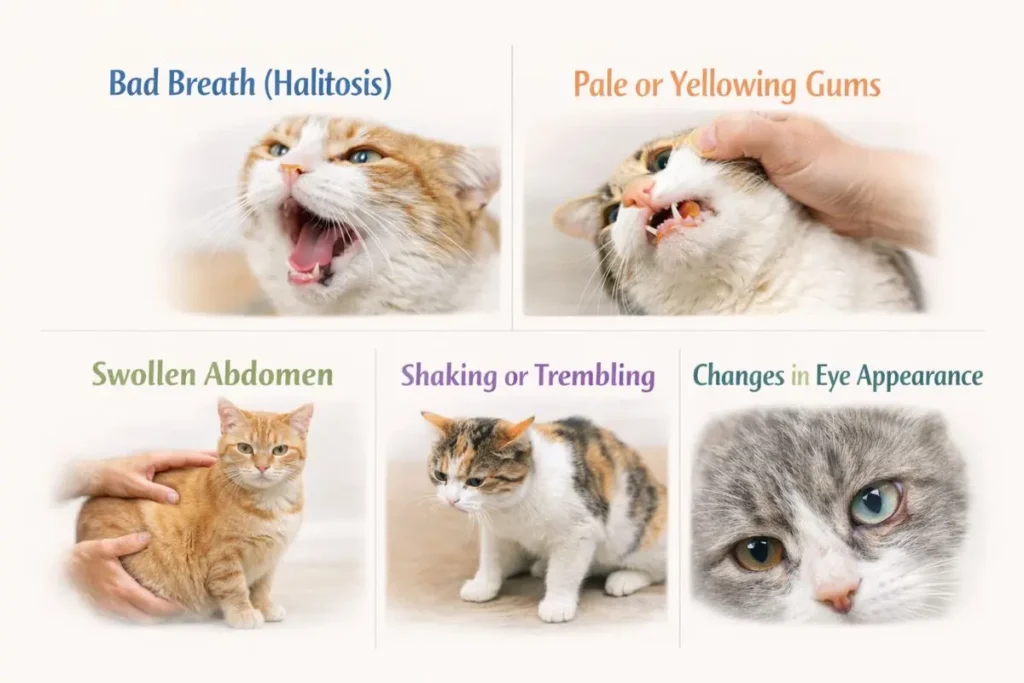
Bad Breath (Halitosis)
While cats don’t have minty-fresh breath, bad breath can indicate dental disease, gingivitis, or even liver or kidney disease. Foul-smelling breath, especially if accompanied by drooling, warrants a vet check.
Action Step:
- Check your cat’s teeth for any signs of gum disease. If the bad breath persists or worsens, it’s time to visit the vet for a dental check-up.
Pale or Yellowing Gums
Healthy cat gums should be pink. If your cat’s gums are pale or have a yellowish tint, it could indicate anemia, liver disease, or a lack of oxygen in the blood.
Action Step:
- Lift your cat’s lip to check their gums. If they appear pale or yellow, contact your vet immediately.
Swollen Abdomen
A bloated or swollen abdomen can be a sign of fluid buildup (ascites), organ failure, or tumors. This is a serious condition that needs to be evaluated right away.
Action Step:
- If you notice that your cat’s abdomen is swollen, or they seem sensitive when their belly is touched, see your vet as soon as possible.
Shaking or Trembling
Shaking or trembling can indicate pain, anxiety, hypoglycemia (low blood sugar), or even poisoning. If your cat is shaking and you can’t explain it, you should seek veterinary advice.
Action Step:
- If your cat shakes excessively without a clear cause (e.g., cold weather), take them to the vet immediately for further evaluation.
Changes in Eye Appearance
Redness, cloudiness, or discharge from the eyes can indicate infections, injuries, or conditions like conjunctivitis or glaucoma. If your cat’s eyes look abnormal, it’s time for a veterinary check-up.
Action Step:
- Regularly check your cat’s eyes for any signs of irritation or unusual discharge. If they appear abnormal, consult your vet.
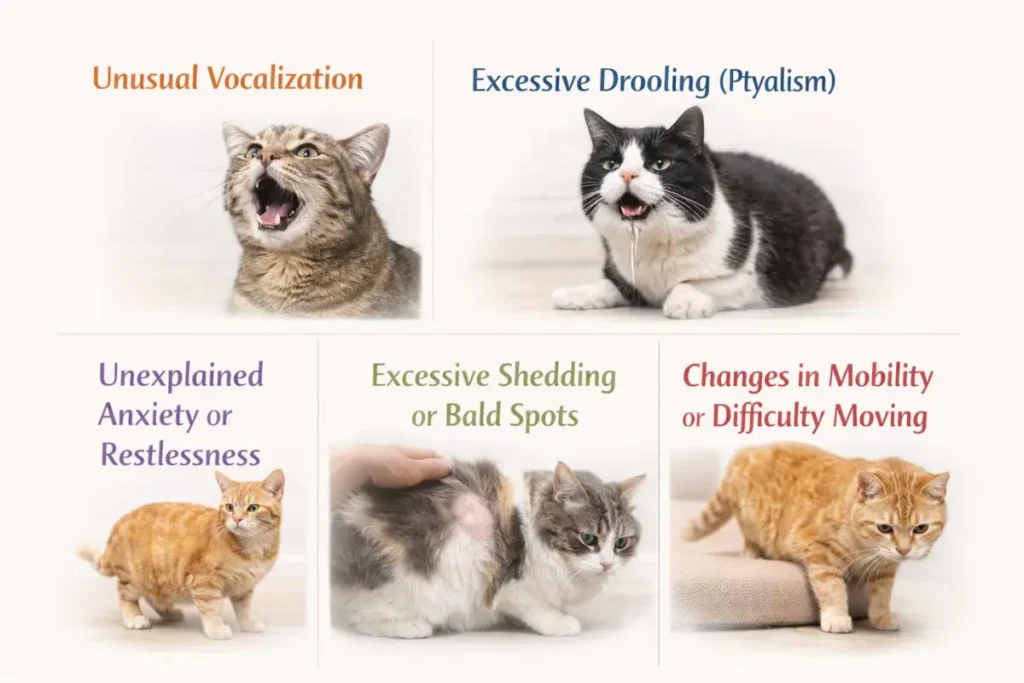
Unusual Vocalization
If your cat starts meowing excessively or making strange sounds, it could be a sign of pain, distress, or cognitive dysfunction. This is particularly common in older cats.
Action Step:
- If your cat is meowing more than usual, or if their vocalizations are more intense or unusual, it’s worth a trip to the vet.
Excessive Drooling (Ptyalism)
Excessive drooling can indicate dental disease, nausea, or poisoning. If your cat is drooling more than usual, it could be a sign that something is wrong.
Action Step:
- If your cat is drooling excessively or their saliva appears foamy, contact your vet immediately.
Unexplained Anxiety or Restlessness
Increased anxiety, pacing, or excessive meowing could indicate pain or discomfort. Cats may also exhibit signs of anxiety due to illness.
Action Step:
- Observe if your cat seems restless without a clear cause. If they appear stressed or agitated, seek veterinary advice.
Excessive Shedding or Bald Spots
While shedding is normal, excessive hair loss or bald patches can be a sign of allergies, parasites, or stress. This could also be due to hormonal imbalances or skin infections.
Action Step:
- Check your cat’s coat for bald patches or signs of skin irritation. If you see any, consult your vet for a proper diagnosis.
Changes in Mobility or Difficulty Moving
Arthritis, injury, or neurological issues can cause difficulty in moving. If your cat seems reluctant to move or has trouble jumping or walking, they may be in pain.
Action Step:
- If your cat has difficulty moving, walking, or climbing, schedule a vet visit to rule out joint pain, injury, or neurological issues.
Mistakes Cat Owners Make About Illness
As a new cat parent, you might assume some behaviors are just part of your cat’s personality. Here are some common mistakes to avoid:
Ignoring Small Changes in Behavior
- Mistake: Not noticing small, gradual changes in eating, grooming, or behavior.
- Solution: Keep track of your cat’s habits and note any changes, no matter how minor they may seem. If something seems off, don’t hesitate to consult your vet.
Assuming Cats Will “Get Better on Their Own”
- Mistake: Thinking that if a cat is still eating and drinking, they’re fine even when displaying unusual behaviors.
- Solution: While some conditions do resolve on their own, many don’t. If your cat shows signs of illness for more than 24-48 hours, it’s best to get them checked by a professional.
Delaying Vet Visits
- Mistake: Waiting too long to take your cat to the vet, especially when you notice serious symptoms like vomiting or labored breathing.
- Solution: Don’t wait—taking action sooner rather than later can prevent worsening of the condition and improve treatment outcomes.