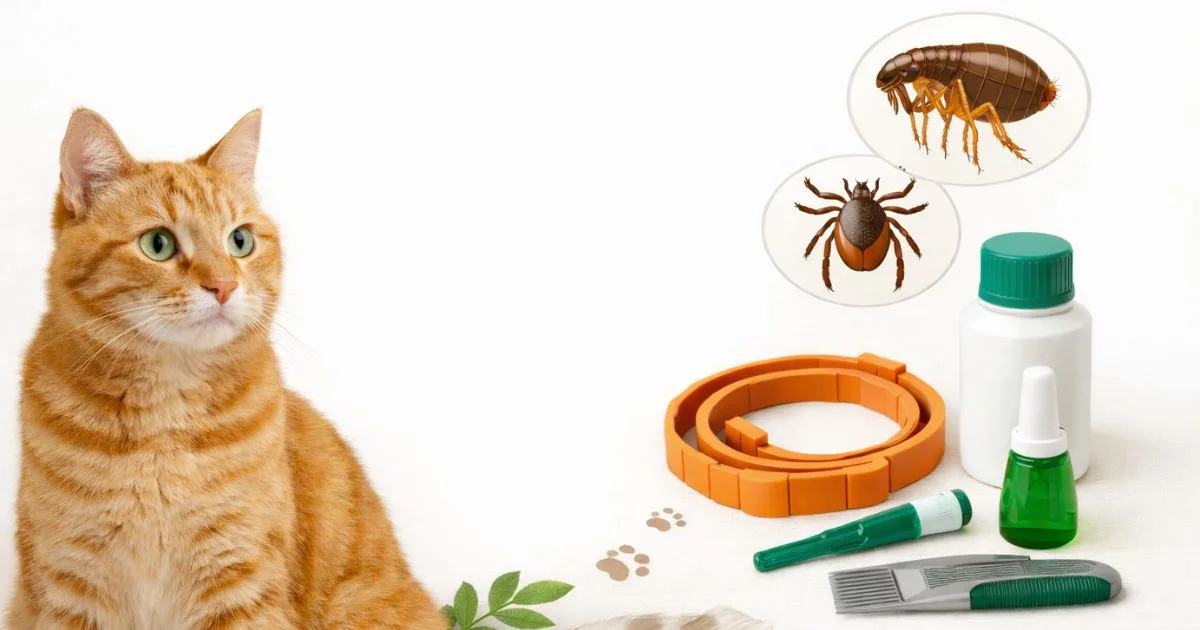
Fleas and ticks are common parasites that can seriously impact your cat’s health, causing everything from itching and discomfort to more severe issues like infections, skin irritation, and even life-threatening diseases. As a first-time cat owner, you may be concerned about how to prevent fleas and ticks in cats and keep your feline friend safe from these pesky parasites. It’s completely normal to feel overwhelmed, but don’t worry—you’re not alone in this.
Preventing fleas and ticks is essential for your cat’s overall health, and the good news is that there are a variety of simple, effective steps you can take right now to keep your cat free from fleas, ticks, and the harmful effects they bring. Whether you have an indoor cat or one who enjoys outdoor exploration, ensuring their protection is easy with the right products and a few proactive habits. Let’s dive into practical solutions to prevent fleas and ticks, so you can provide the best care for your cat’s well-being.
Why Fleas and Ticks Are a Problem for Cats
Fleas and ticks are common external parasites that can affect your cat’s well-being. These tiny creatures feed on your cat’s blood, leading to itching, scratching, and possible infections. If left unchecked, fleas can even lead to more serious issues like anemia or tapeworms, while ticks can transmit diseases such as Lyme disease and anaplasmosis.
But here’s the good news: preventing fleas and ticks is easier than you might think!
Understanding Fleas and Ticks
Fleas are small, wingless insects that feed on the blood of cats and other animals. They are often responsible for itching, scratching, and skin irritation. Fleas can also transmit other parasites, such as tapeworms, and cause more serious health issues like anemia, especially in kittens or cats with compromised immune systems.
Ticks are arachnids that attach to your cat’s skin to feed on its blood. Unlike fleas, ticks latch onto the cat for an extended period and can transmit dangerous diseases such as Lyme disease, anaplasmosis, and babesiosis. Ticks are more commonly found in wooded or grassy areas but can be brought indoors on your cat’s fur.
Signs Your Cat Has Fleas or Ticks
It’s crucial to recognize the signs of fleas and ticks early to prevent discomfort and health issues for your cat. If your cat is constantly scratching, biting, or licking its skin, it could be a sign of a flea infestation. Fleas cause intense itching and irritation, leading to hair loss and scabs. Ticks, on the other hand, can be harder to spot as they attach to your cat’s skin and may be hidden under its fur.
Look for tiny, dark specks moving on your cat’s skin—these are often fleas. Ticks, however, are larger and may appear as small, dark bumps on your cat’s skin, commonly found around the ears, neck, or underarms. If you notice any of these signs, it’s important to act promptly to prevent further health complications for your cat.
10 Ways to Prevent Fleas and Ticks in Cats

Use Monthly Flea and Tick Treatments
Preventing fleas and ticks starts with using a reliable monthly treatment. Topical treatments, like Frontline or Advantage, are popular options and are applied to your cat’s skin. Oral medications (e.g., Comfortis or Bravecto) are also effective for long-lasting protection. Flea collars are an alternative, but make sure they’re suitable for your cat’s age and health condition. Tip: Always consult with your vet before choosing a product, as some treatments may not be suitable for kittens or senior cats.
Vacuum Regularly
Fleas and ticks don’t just stay on your cat—they’re also in your home. Vacuum your floors, carpets, and furniture regularly to remove flea eggs, larvae, and ticks that may be hiding. Focus on areas where your cat spends most of its time, like your cat’s favorite napping spots and under furniture. Pro Tip: If you have hardwood floors, don’t forget to vacuum corners and cracks, where fleas may hide. After vacuuming, empty the bag or bin into an outdoor trash can to avoid reintroducing pests back into the home.
Wash Your Cat’s Bedding
Fleas and ticks can easily hide in your cat’s bedding, so make sure you wash it every week in hot water. Flea eggs can linger in bedding and re-infest your cat. Also, clean any cat furniture, like scratching posts or cat trees, that might trap fleas or ticks. Tip: Wash your cat’s bedding separately from your own to avoid cross-contamination.
Treat Your Yard
If your cat enjoys outdoor time, it’s essential to treat your yard. Fleas and ticks love grassy, shaded areas, so keeping your yard flea-free can greatly reduce your cat’s risk. Use pet-safe insecticides and consider using a flea yard spray to treat common outdoor areas. Pro Tip: Keep the lawn well-maintained—mow regularly and trim shrubs to reduce tick habitats. If your cat spends a lot of time outside, consider building a catio (a safe, enclosed outdoor space) to prevent direct exposure to fleas and ticks.
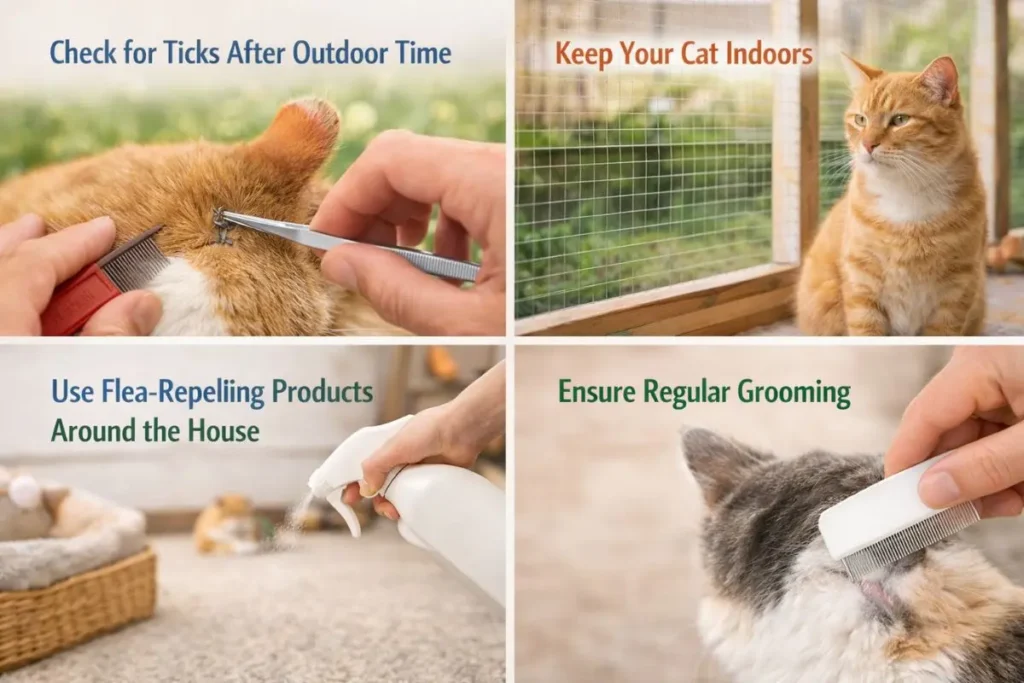
Check for Ticks After Outdoor Time
Ticks are more than just a nuisance—they can transmit serious diseases like Lyme disease. After your cat has been outdoors, take the time to carefully check their body for ticks. Ticks tend to attach around the ears, neck, and underbelly, so be sure to check these areas. Use a flea comb or your fingers to gently feel for ticks and remove them with fine-tipped tweezers if you find any. Pro Tip: Always pull ticks out slowly and straight to avoid leaving parts behind. If your cat is tick-prone, consider using a tick-repelling collar or treating them with an additional tick prevention product.
Keep Your Cat Indoors
One of the easiest ways to prevent fleas and ticks is to keep your cat indoors. Cats that are kept indoors are far less likely to come into contact with fleas or ticks. If your cat loves to explore the outside world, limit their time outdoors or consider building a cat enclosure (catio). Pro Tip: Even if your cat is primarily indoor, make sure to treat them for fleas and ticks year-round, as indoor environments can stillharbor pests.
Use Flea-Repelling Products Around the House
In addition to treating your cat, you should also treat your home for fleas and ticks. Flea-repelling sprays can be used on carpets, furniture, and pet resting areas. Choose a pet-safe product to avoid harming your cat or other pets in the home. Also, consider flea traps—these can help monitor if there’s an active infestation. Pro Tip: Focus on high-traffic areas where your cat spends the most time—fleas will often hide in these areas.
Ensure Regular Grooming
Grooming your cat not only keeps their coat healthy but also helps you spot early signs of fleas or ticks. Use a flea comb to gently go through your cat’s fur, especially around the neck and tail area, where fleas tend to hide. Tip: Regular grooming is a great opportunity to check your cat for any skin abnormalities, like scabs or hair loss, which could signal an infestation.

Monitor Your Cat’s Health
A healthy cat is less likely to be affected by fleas and ticks. Keep your cat on a balanced diet, ensure they’re properly hydrated, and schedule regular vet visits. A strong immune system helps prevent infections and makes it easier for your cat to fight off parasites.
Pro Tip: If you notice your cat is scratching excessively or showing signs of lethargy, it might be worth scheduling a vet visit to rule out a flea infestation or tick-borne illness.
Consult Your Vet for Preventive Care
Your vet is your best resource when it comes to preventing fleas and ticks. They can recommend the most effective products based on your cat’s health, lifestyle, and risk factors. Pro Tip: Ask your vet about comprehensive flea and tick plans, which may include both topical treatments and other prevention measures. Don’t forget to ask about year-round preventive care, as fleas and ticks can be a year-long issue, not just a summer problem.
Common Mistakes
1. Relying on Outdated Flea and Tick Treatments
One of the biggest mistakes many cat owners make is using outdated or ineffective flea treatments. Not all flea medications are created equal, and some may not even work as effectively as newer, advanced options.
2. Neglecting to Treat the Home and Environment
While it’s important to treat your cat directly, remember that fleas and ticks live in your home too. Neglecting to treat your home and yard can mean that your cat is simply reinfected after a few days.
3. Not Using Preventive Measures Year-Round
Fleas and ticks don’t disappear in the winter. It’s a common mistake to stop preventive treatments during colder months, but many parasites are active year-round