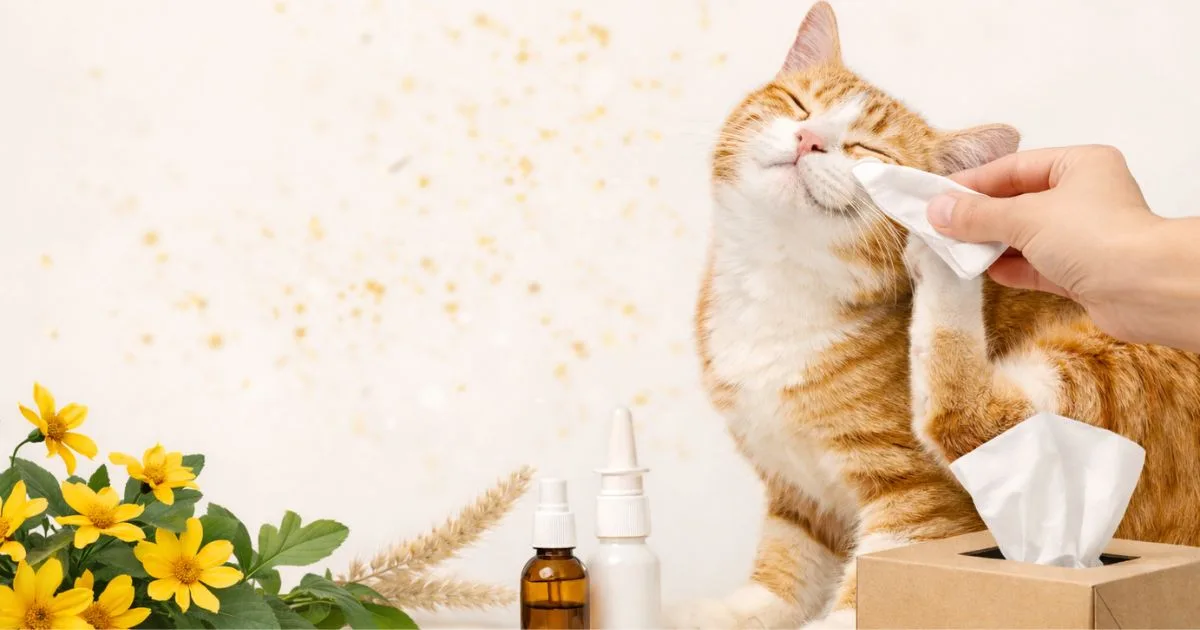
If you’ve noticed your indoor cat sneezing more than usual, itching excessively, or dealing with watery eyes as the seasons change, you might be dealing with seasonal allergies in cats. How to deal with your cat’s seasonal allergies is a concern for many pet owners, especially during certain times of the year when allergens like pollen, dust mites, and mold are more prevalent.
These environmental triggers can cause your cat to experience discomfort, making them scratch, sneeze, or even develop respiratory issues. As a cat parent, it’s essential to recognize the symptoms early and take action to help your furry friend feel better.
In this article, we’ll explore the common causes of seasonal allergies in cats, effective ways to manage the symptoms, and practical solutions for how to deal with your cat’s seasonal allergies to ensure they remain comfortable and healthy during allergy season.
What Are Seasonal Allergies in Cats?
Seasonal allergies, also known as hay fever or allergic rhinitis, occur when a cat’s immune system overreacts to environmental allergens such as pollen, mold, or dust mites. Just like humans, cats can develop these allergies during certain seasons, especially spring and fall.
Common Symptoms
- Sneezing: Frequent sneezing, often accompanied by a runny nose.
- Itchy Skin: Cats may scratch, lick, or bite at their skin more than usual.
- Watery Eyes: Clear discharge or tears around the eyes.
- Coughing: Occasional coughing or wheezing due to irritated airways.
- Red or Swollen Ears: Allergies can irritate the ears, causing redness or swelling.
What Causes Seasonal Allergies in Cats?
The main triggers in cats include:
- Pollen from trees, grasses, and flowers during spring and fall.
- Mold spores from fallen leaves or damp areas in the home.
- Dust mites that thrive in warm, humid conditions.
Cats who live indoors aren’t completely safe from allergens; pollen can still enter the house through open windows, and dust mites may thrive in carpets or furniture.
How to Help Your Cat with Seasonal Allergies
Here are practical steps you can take to help your cat feel better when they’re dealing with seasonal allergies:
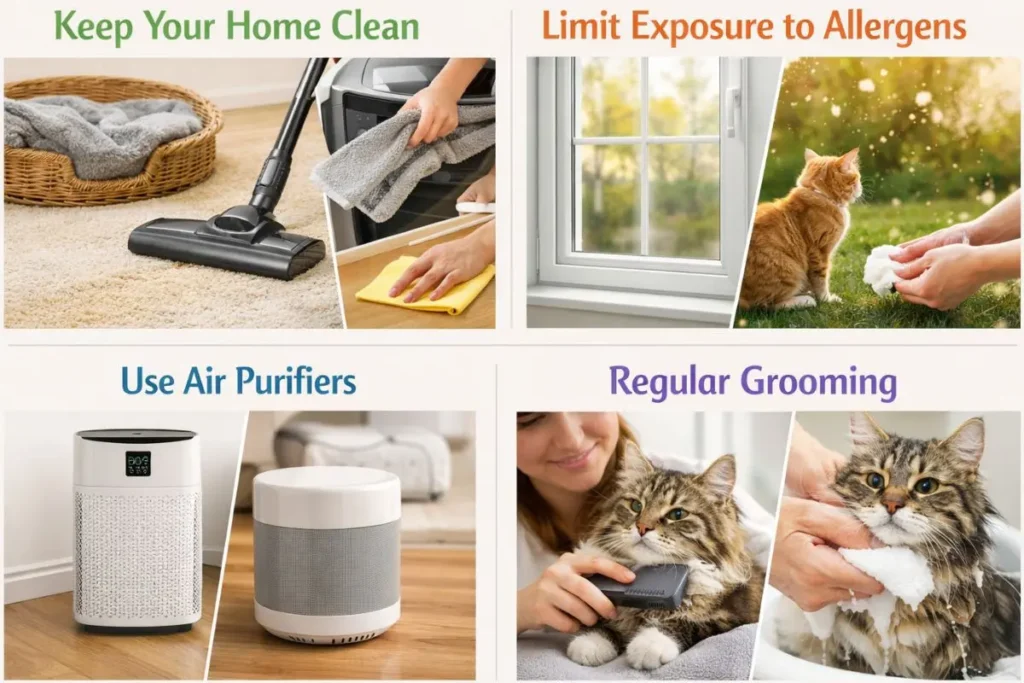
Keep Your Home Clean
Cleanliness plays a major role in reducing allergens in your home:
- Vacuum regularly: Make sure to vacuum every other day, especially in rooms where your cat spends the most time. Use a HEPA vacuum to ensure that you’re picking up pollen and dust mites.
- Wash your cat’s bedding: Cats spend a lot of time on their beds, so washing them weekly in hot water will help eliminate allergens.
- Damp dusting: Instead of dry dusting, which can stir up pollen and dust, use a damp cloth to trap these allergens as you clean.
Limit Exposure to Allergens
If your cat goes outside, try to limit their time in areas where allergens are high:
- Keep windows closed during peak pollen times, usually in the morning or late afternoon.
- Limit outdoor time when pollen counts are high, typically on windy days or after a rainstorm (pollen gets stirred up then settles).
- Rinse your cat: After they’ve been outside, gently wipe down their paws, face, and fur with a damp cloth to remove any pollen they may have picked up.
Use Air Purifiers
A high-quality air purifier with a HEPA filter is a game changer for reducing airborne allergens:
- Invest in an air purifier: Place one in the room where your cat spends most of their time, especially if it’s a high-pollen season.
- Change the filter regularly to ensure optimal performance.
Regular Grooming
Brushing your cat’s fur regularly can help reduce the amount of pollen, dust, and allergens they carry around in their coat:
- Brush daily to remove loose fur and dander. This reduces the chance of them ingesting pollen or allergens when grooming themselves.
- Occasional baths: Bathing your cat with a cat-safe shampoo can help remove allergens, but only do this if your cat is comfortable with water.
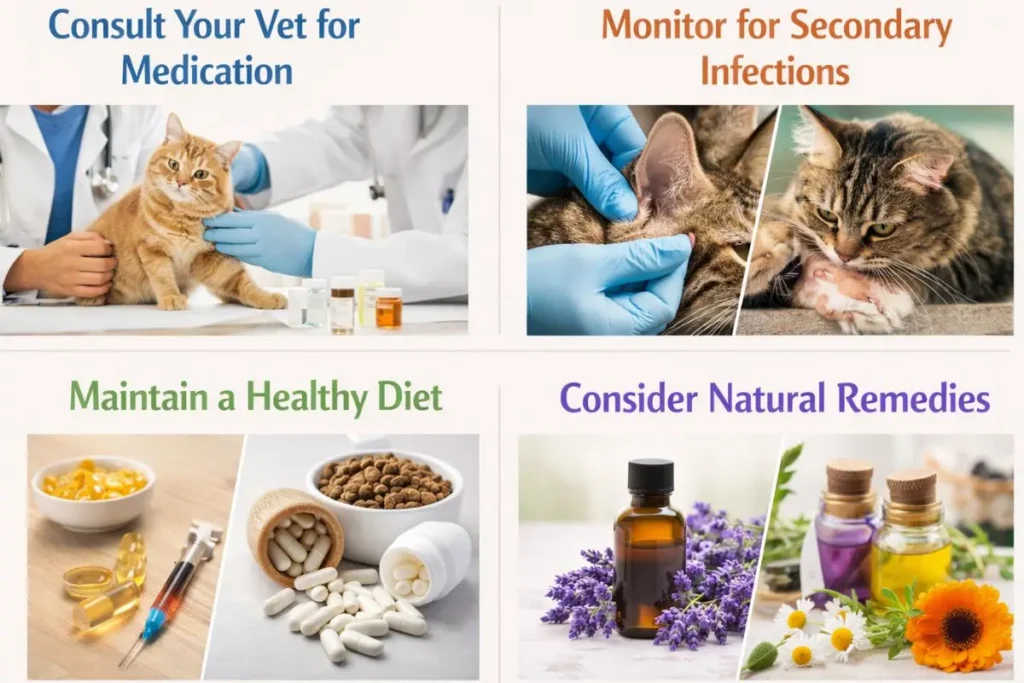
Consult Your Vet for Medication
If your cat’s allergies are causing them a lot of discomfort, medication may be necessary:
- Antihistamines: Your vet may prescribe medications to help relieve sneezing, itching, or eye discharge.
- Steroid treatments: For severe cases, corticosteroids might be recommended to reduce inflammation and control allergic reactions.
- Allergy shots: Immunotherapy (allergy shots) can sometimes be an option to help reduce your cat’s sensitivity to allergens over time.
Monitor for Secondary Infections
Allergies can make your cat more susceptible to infections, especially in their ears or skin. Be on the lookout for:
- Ear infections: Watch for signs like excessive head shaking, scratching at the ears, or a foul odor from their ears. These are common in allergy-prone cats.
- Hot spots or sores: Excessive scratching can lead to painful, infected areas on your cat’s skin. If you notice these, consult your vet for treatment.
Maintain a Healthy Diet
A nutritious diet supports your cat’s immune system, helping them deal with allergens more effectively:
- Omega-3 fatty acids: Adding omega-3 supplements to your cat’s diet can help reduce inflammation and improve their skin health.
- Probiotics: These can help strengthen your cat’s immune system and balance their gut health.
Consider Natural Remedies
While veterinary advice is crucial, some cat owners seek additional comfort measures for their allergic cats:
Essential oils: Some essential oils, like lavender or eucalyptus, may help clear the air, but they should be used with caution. Always ask your vet before using them around cats.
Herbal remedies: Consult your vet about using natural options like chamomile or calendula, which can soothe inflamed skin and provide mild relief.
Mistakes to Avoid
- Ignoring the symptoms: If your cat’s allergies seem severe, don’t wait for them to get worse. Schedule a vet visit.
- Using human allergy medications: Never give your cat human allergy medications, as some can be toxic to cats.
- Not cleaning enough: Dust mites and pollen build up quickly, so be consistent with cleaning to help your cat’s symptoms.