
As a pet parent, discovering that your dog has allergies can be a stressful experience. Allergies in dogs are relatively common and can affect their skin, digestive system, or overall well-being. Dog allergies can be triggered by a wide range of factors, including environmental allergens like pollen, mold, and dust mites, food allergies related to proteins or grains, or flea bites that cause intense itching.
Identifying the causes of dog allergies and understanding the symptoms are crucial to providing the right treatment. In this guide, we’ll break down how to recognize common signs of dog allergies, what could be triggering them, and the best treatments for dog allergies to help your furry friend feel better. Whether your dog is suffering from seasonal allergies or food-related issues, we’ll provide practical, vet-approved solutions to alleviate their discomfort and keep them healthy.
What Are Dog Allergies?
Allergies occur when a dog’s immune system mistakenly overreacts to a normally harmless substance. These substances can include foods, pollen, dust mites, or flea saliva. Just like humans, dogs can experience allergic reactions to these triggers, resulting in a range of symptoms from itchy skin to more severe reactions like vomiting or diarrhea.
Common Causes
- Environmental Allergies: Pollen, dust mites, mold, and grasses are common culprits. These are often seasonal but can occur year-round in some dogs.
- Food Allergies: Dogs may develop allergic reactions to specific proteins (like chicken, beef, or lamb) or grains (like wheat or corn).
- Flea Allergies: A common allergic reaction triggered by flea bites, particularly in dogs with sensitive skin.
- Contact Allergies: Dogs can also be to certain chemicals, shampoos, or even fabrics, leading to skin reactions.
How to Treat Your Dog’s Allergies
Treatinging dogs requires a bit of trial and error, as each dog reacts differently to allergens. However, there are some key strategies you can start with.
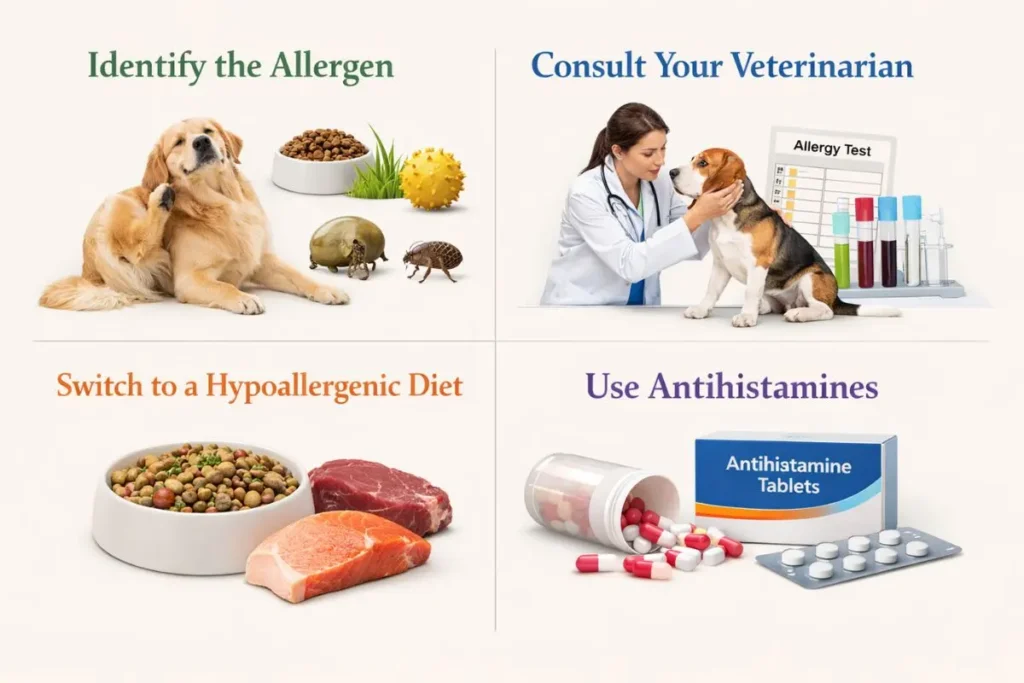
Identify the Allergen
Identifying what causes your dog’s is the first step in providing relief. Allergens can come from dog food, environmental sources (such as pollen or dust mites), or external parasites like fleas. Begin by observing your dog’s behavior and symptoms, noting when they appear and what seems to trigger them. This process helps in narrowing down potential allergens. For food allergies, this might involve elimination diets, while for environmental allergies, it may be about monitoring your dog’s reactions during certain seasons or in specific areas.
Consult Your Veterinarian
While you can identify symptoms, only a veterinarian can confirm the exact cause of your dog’s allergies. A vet may conduct allergy tests or recommend treatments based on the severity and type of allergy. They will help guide you in understanding your dog’s specific needs, whether through skin testing, blood tests, or other diagnostic tools. Consulting a vet ensures that your dog gets the proper care and avoids ineffective or harmful treatments.
Switch to a Hypoallergenic Diet
If food allergies are suspected, switching your dog to a hypoallergenic diet can help eliminate common allergens like chicken, beef, or grains. These diets often contain novel proteins (like venison or duck) and avoid common allergens. Transitioning to a hypoallergenic diet should be done gradually to allow your dog’s digestive system to adjust and to properly monitor any changes in symptoms.
Use Antihistamines
Antihistamines are often recommended for dogs dealing with environmental allergies, as they block the chemicals that cause symptoms like itching and inflammation. Common antihistamines, like Benadryl, can provide temporary relief. However, you must consult with your vet first to determine the right dosage and ensure it’s safe for your dog. Over-the-counter antihistamines should only be used as directed, as incorrect usage could lead to unwanted side effects.

Try Immunotherapy (Allergy Shots)
Immunotherapy involves giving your dog injections of small amounts of the allergen they’re sensitive to, gradually desensitizing their immune system over time. This treatment is often used for severe allergies and can provide long-term relief. Immunotherapy typically requires a long commitment and consistent treatment, but it can significantly reduce allergy symptoms in the future.
Steroid Medications
Steroid medications are effective in reducing inflammation and controlling severe allergic reactions. Steroids like prednisone are commonly prescribed to manage symptoms like itching, swelling, and skin irritation. However, long-term use of steroids can have side effects, including weight gain, increased thirst, and potential impact on organ health, so these should be used only under strict veterinary supervision.
Flea Control
Flea allergies are one of the most common and overlooked causes of allergic reactions in dogs. Even a single flea bite can trigger an allergic response. To control flea allergies, it’s essential to use preventive treatments like topical flea medications, flea collars, or oral medications that prevent flea infestations. Regular grooming and flea baths also help reduce the presence of fleas.
Bathe Your Dog Regularly
Bathing your dog regularly helps remove allergens like pollen, mold, and dust from their fur. However, frequent bathing can also dry out the skin, so it’s important to use hypoallergenic, moisturizing shampoos. Bathing once a week or every two weeks is often sufficient, but it can vary depending on your dog’s level of exposure to allergens. Always ensure your dog is dried thoroughly after bathing to avoid fungal or yeast infections in the skin folds.

Create an Allergy-Free Zone
To help manage your dog’s environmental allergies, create an allergy-free zone where they can rest without being exposed to allergens. This might involve using air purifiers to remove pollen and dust, washing your dog’s bedding regularly, and keeping windows closed during high pollen seasons. You can also vacuum frequently to remove dust mites, pet dander, and other allergens from the environment.
Oatmeal Baths for Skin Relief
Oatmeal baths are a gentle and natural way to soothe your dog’s irritated skin. Oatmeal has anti-inflammatory properties that can reduce itching and redness caused by allergies. You can use oatmeal-based dog shampoos or make your own oatmeal paste by blending oatmeal with water and applying it to irritated areas. This simple remedy can help alleviate mild skin reactions and make your dog more comfortable.
Use a Wet Cloth to Wipe Your Dog’s Paws
If your dog has environmental allergies, wiping their paws after walks can prevent allergens from being tracked into your home. Pollen, dust, and mold spores can cling to your dog’s paws and exacerbate allergy symptoms, particularly when they lick or chew at them. Keep a damp cloth near the door and wipe your dog’s paws after walks to reduce the spread of allergens around your house.
Regular Vet Check-Ups
Even after implementing a treatment plan, it’s crucial to schedule regular vet check-ups to monitor your dog’s allergy management. These visits allow your vet to assess whether your dog’s current treatment plan is effective, make adjustments if necessary, and provide new recommendations. Regular visits also help catch any potential side effects from medications or signs of worsening allergies early on, ensuring that your dog remains comfortable and healthy.
How to Spot the Signs of Allergies
Recognizing the symptoms of allergies in your dog is the first step toward providing relief. Allergies can manifest in several ways, so it’s important to observe your dog closely for changes in behavior or health.
Symptoms
- Itching and Scratching: If your dog is scratching constantly, it could indicate allergies. Common areas affected are the paws, face, and ears.
- Red or Inflamed Skin: Allergies can cause patches of red, bumpy, or irritated skin, especially on the belly, paws, or under the ears.
- Ear Infections: Dogs with allergies often develop ear infections due to the inflammation caused by allergens.
- Digestive Upset: Vomiting, diarrhea, or excessive gas can occur, particularly with food allergies.
- Sneezing or Coughing: These are common symptoms of environmental allergies such as pollen or dust mites.
Common Mistakes
While treating your dog’s allergies, it’s easy to make mistakes. Here are a few to avoid:
- Self-Diagnosing: Avoid diagnosing the allergy yourself. Only a vet can provide a proper diagnosis through tests.
- Overusing Medications: It’s tempting to use over-the-counter drugs, but they can have side effects. Always check with your vet.
- Not Following Treatment Plans: Some dog owners stop medications once symptoms improve. However, this can lead to a relapse of symptoms. Stick with the vet’s recommended plan for best result