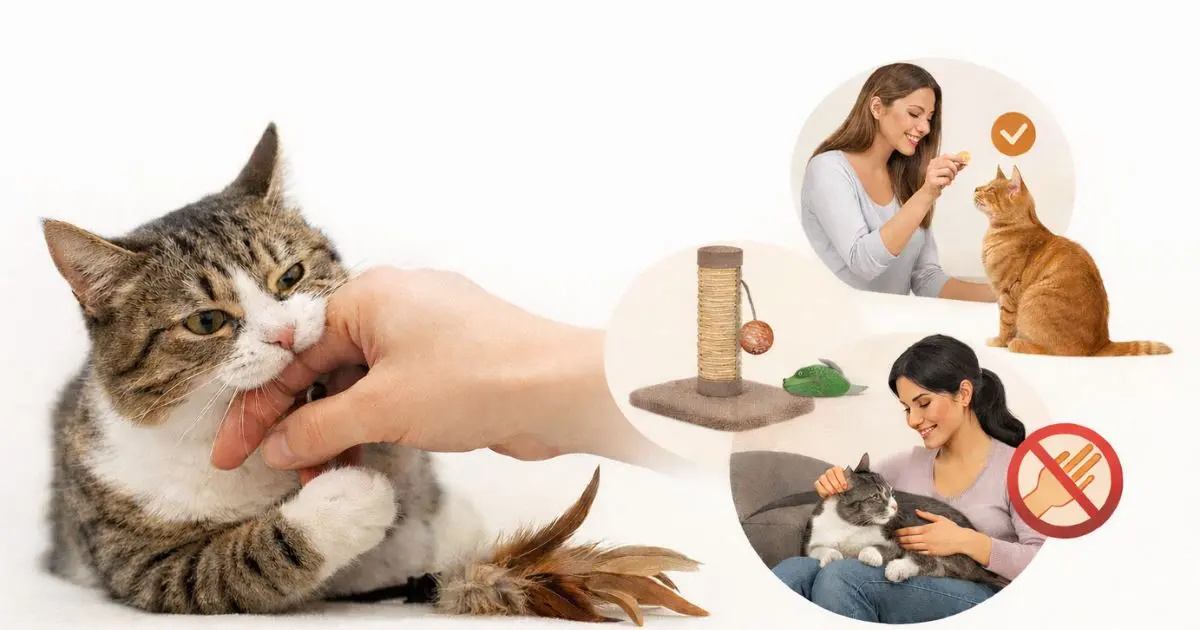
Dealing with a cat that bites can be both frustrating and confusing, especially if you’re a first-time cat owner. Whether it’s playful nips from a curious kitten or more aggressive behavior from an adult cat, understanding how to prevent your cat from biting is crucial for a peaceful home. Biting is a common issue many cat owners face, and often, it’s a sign of stress, overstimulation, or a natural instinct that hasn’t been redirected properly. In this guide, we’ll provide expert advice on how to stop your cat from biting, including practical solutions for managing cat behavior.
We’ll dive into common causes of biting and give you actionable tips that can help reduce or eliminate this behavior. From setting boundaries during playtime to offering proper toys and understanding your cat’s body language, we’ll equip you with the tools you need to foster a healthier relationship with your feline friend. Understanding why your cat bites and taking proactive steps can make all the difference in creating a safe and comfortable environment for both you and your pet.
Why Do Cats Bite?
Biting in cats can happen for a variety of reasons. Understanding why your cat bites is key to stopping it. Some common reasons include:
- Play Aggression: Cats, especially kittens, have a natural instinct to bite during play. This is how they practice hunting skills, but it can hurt if they get too carried away.
- Fear or Stress: If your cat feels threatened or stressed, they might bite as a defensive response.
- Overstimulation: Sometimes, cats bite if they’ve had too much petting or attention. What started as a gentle stroke can turn into a bite if your cat feels overstimulated.
- Pain: Cats may bite if they’re in pain, especially if they’re touched in a sore area.
- Territorial Behavior: Cats can be territorial, and biting can occur when they feel their space is being invaded.
How to Stop Your Cat from Biting
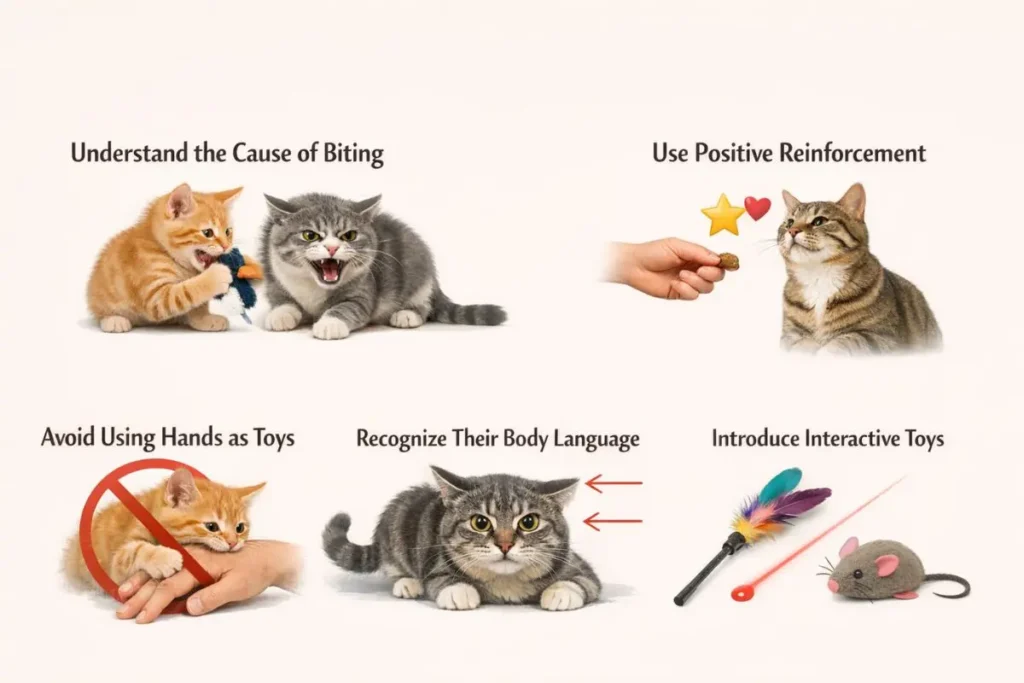
Understand the Cause of Biting
Cats bite for various reasons: play aggression, fear, overstimulation, pain, or territorial behavior. Understanding the root cause of the biting is essential to addressing it effectively.
- Definition: Playful kittens often bite because they instinctively use their teeth to practice hunting and defense. Cats can also bite out of fear when feeling threatened or cornered. Additionally, overstimulation or pain, such as dental issues or arthritis, can prompt a cat to bite.
Use Positive Reinforcement
Reinforce good behavior by rewarding your cat when they refrain from biting. This can help shift their focus from biting to more desirable behaviors.
- Definition: Positive reinforcement is a behavioral technique that encourages a desired behavior through rewards such as treats, praise, or play. When cats realize that good behavior leads to positive outcomes, they are more likely to repeat it.
Avoid Using Hands as Toys
Using your hands to play with your cat, especially a kitten, can lead to confusion between their toys and your skin. This can encourage biting.
- Definition: Cats often see hands as prey during play. They learn to use their claws and teeth instinctively during hunting activities, so if your hands are used for play, they may attack out of habit.
Recognize and Respect Their Body Language
Cats communicate through their body language. Signs like twitching tails, flattened ears, or dilated pupils are often precursors to biting. Recognizing these signs can help prevent biting before it happens.
- Definition: Cats communicate a lot through non-verbal cues. Tail flicking, ear flattening, or a stiff posture indicate discomfort or agitation. Recognizing these cues helps you stop any interaction before it escalates into biting.
Introduce Interactive Toys
Interactive toys like feather wands, laser pointers, or plush mice provide a way for your cat to engage their hunting instincts without resorting to biting your hands.
- Definition: These toys mimic prey movements and give your cat a safer outlet for their energy. Using toys helps channel your cat’s natural instincts into something fun and safe for both of you.
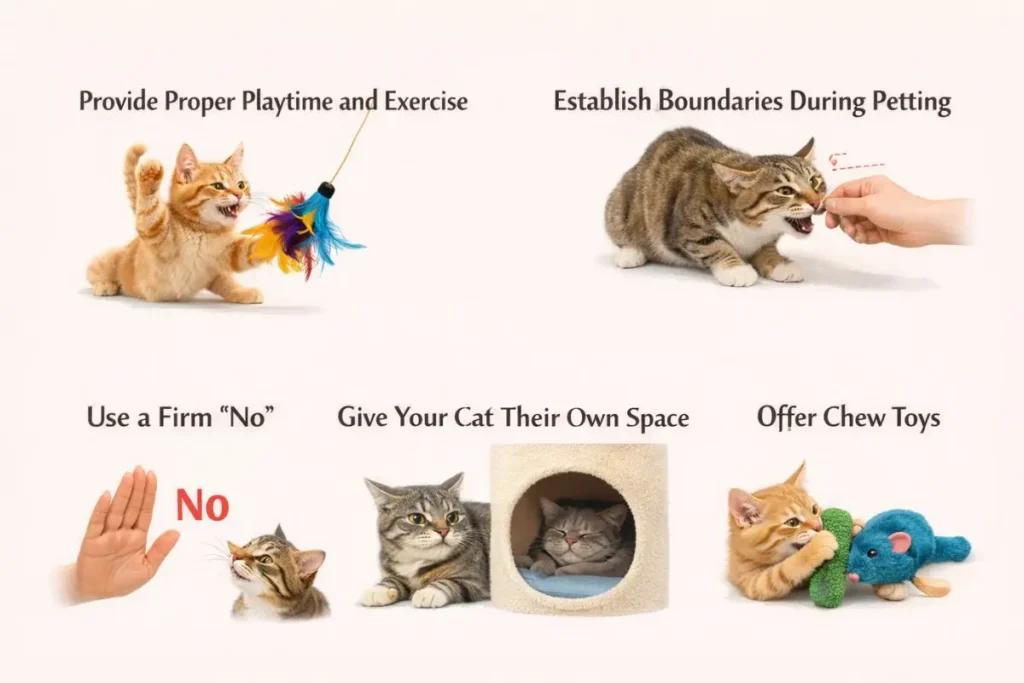
Provide Proper Playtime and Exercise
Regular play sessions are vital to keeping your cat engaged and physically active. A bored or under-exercised cat is more likely to resort to biting.
- Definition: Playtime provides physical and mental stimulation for cats. It helps them release pent-up energy and stress. Regular, engaging activities reduce the likelihood of unwanted behaviors like biting out of boredom or frustration.
Establish Boundaries During Petting
If your cat starts to bite when you’re petting them, stop immediately and give them some space. Setting boundaries can teach them that biting leads to the end of attention.
- Definition: Boundaries help teach your cat the limits of acceptable behavior. If they bite, the interaction ends, reinforcing the idea that biting results in no further affection or play.
Use a Firm “No”
If your cat bites during play or petting, immediately use a firm “No” and stop the interaction. This lets your cat know that biting is not acceptable.
- Definition: A firm “No” is a clear, consistent signal to your cat that their behavior is undesirable. It’s important to avoid yelling or punishing your cat, as it can cause fear and confusion.
Give Your Cat Their Own Space
Create a space where your cat can retreat when they feel stressed or overstimulated. A safe space with a cozy bed or hiding spot can reduce anxiety and prevent biting triggered by feeling threatened.
- Definition: Cats are territorial creatures, and having their own safe space helps them feel secure. When they feel overwhelmed, they will have a retreat to relax, reducing the chances of biting out of stress.
Offer Chew Toys
For cats, especially kittens, having chew toys can serve as an outlet for their biting behavior. Chew toys satisfy their need to gnaw while keeping them from using your hands as a target.
- Definition: Chew toys help alleviate the discomfort some cats feel when teething or when they have an urge to chew. Offering safe alternatives reduces the likelihood of your cat biting human hands.
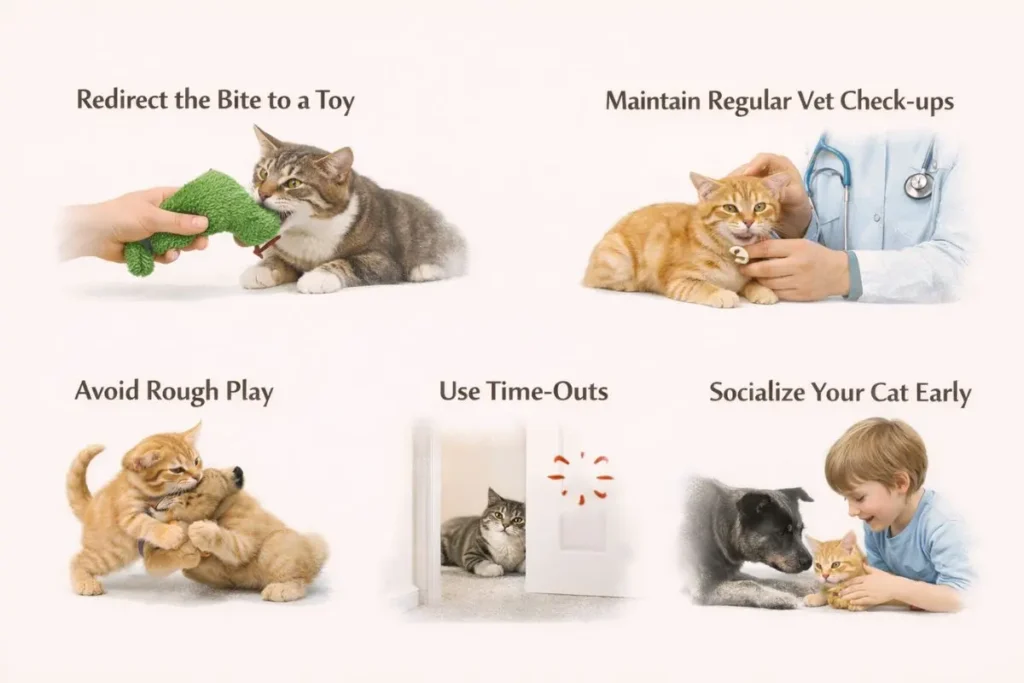
Redirect the Bite to a Toy
If your cat starts to bite, gently redirect them by offering a toy instead. This teaches them that toys are the proper objects to bite, not your skin.
- Definition: Redirecting biting behavior helps your cat learn where to focus their energy. When your cat learns that biting a toy is acceptable and biting you isn’t, they are more likely to stop the behavior.
Maintain Regular Vet Check-ups
Sometimes, cats bite because they’re in pain due to health issues like dental problems or arthritis. Regular veterinary visits ensure that any underlying health conditions are identified and treated.
- Definition: Regular veterinary check-ups are essential for detecting medical conditions that could cause pain, discomfort, or behavioral changes, like biting. Pain-related biting is often linked to teeth, gums, or joint issues.
Avoid Rough Play
Rough play, especially when it involves wrestling with your cat, can encourage biting. Keep playtime gentle and appropriate for your cat’s comfort level.
- Definition: Rough play can encourage aggression and hyperactivity in cats, which may lead to biting. Gentle play with appropriate toys helps ensure your cat stays calm and happy.
Use Time-Outs
If your cat becomes too aggressive or bites during play, give them a short time-out. Put them in a separate room for a few minutes to let them calm down before reintroducing the interaction.
- Definition: Time-outs are an effective way to break the cycle of undesirable behavior. When your cat bites, removing them from the situation helps them calm down and gives them a chance to reset their behavior.
Socialize Your Cat Early
The earlier you introduce your kitten to positive social experiences, the less likely they are to develop biting habits. Early socialization with people, other pets, and various environments helps shape good behavior.
- Definition: Socializing kittens between the ages of 3 and 9 weeks is crucial. During this period, they learn how to interact with humans and other animals appropriately. Early experiences help prevent biting from becoming a learned behavior.
Common Mistakes
When it comes to preventing biting, many new cat owners make the following mistakes:
1. Using Hands as Toys
Using your hands as toys is a big mistake. While it may seem harmless when your cat is small, it encourages biting behavior. Cats can get confused between their toys and your hands, leading to biting during playtime.
Solution: Always use proper toys like wands, balls, or plush mice to engage in play. If your cat bites during play, immediately stop and redirect their attention to a toy.
2. Ignoring Warning Signs
Cats give subtle signals before they bite. They may twitch their tail, flick their ears, or growl. Ignoring these signs can lead to a bite.
Solution: Pay attention to your cat’s body language. If they’re showing signs of discomfort or overstimulation, stop petting them immediately.
3. Punishing the Behavior
Some cat owners may try to punish their cat when they bite, thinking it will stop the behavior. This, however, can increase stress and make the problem worse.
Solution: Never hit or yell at your cat. Instead, focus on redirecting their behavior using positive reinforcement.