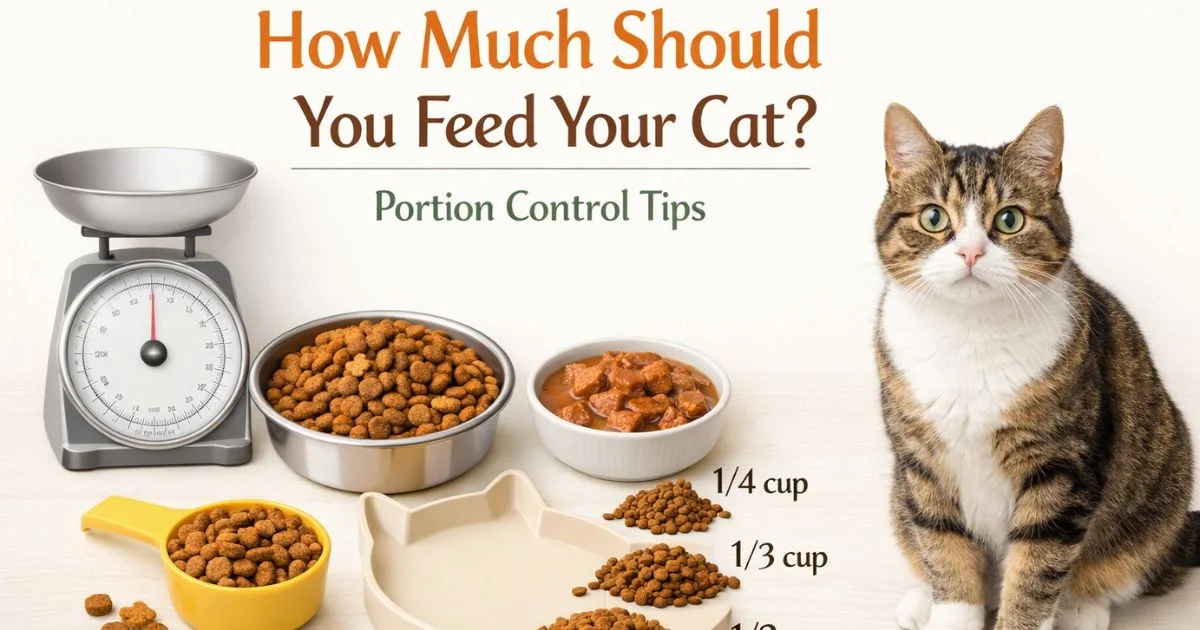
As a cat parent, it can sometimes feel overwhelming to know how much food is just the right amount for your feline friend. Overfeeding or underfeeding can both lead to health problems, and maintaining a healthy weight is crucial to your cat’s overall well-being. The question many new cat owners ask is, How much should you feed your cat? Whether you have a playful kitten, a steady adult cat, or a more sedentary senior cat, determining the right portion size can be challenging. But understanding your cat’s specific dietary needs is essential to their longevity and happiness.
Feeding your cat too much can lead to obesity, which is one of the most common health issues in indoor cats. Obesity can contribute to a variety of conditions such as diabetes, heart disease, joint problems, and a reduced lifespan. On the other hand, not feeding your cat enough can cause malnutrition, leading to weakness, energy depletion, and a compromised immune system. Therefore, striking the right balance is key to maintaining a healthy weight and ensuring your cat is receiving the proper nutrients.
Why Portion Control is Vital for Your Cat’s Health
Feeding your cat the right amount of food is crucial to maintaining their health. Obesity is one of the most common issues faced by indoor cats, leading to serious conditions like diabetes, heart disease, joint problems, and a shortened lifespan. On the other hand, underfeeding your cat can lead to malnutrition, weakened immune systems, and energy depletion.
In this article, we’ll break down how to feed your cat properly, ensuring they stay healthy, energetic, and at the right weight.
Follow Food Package Guidelines
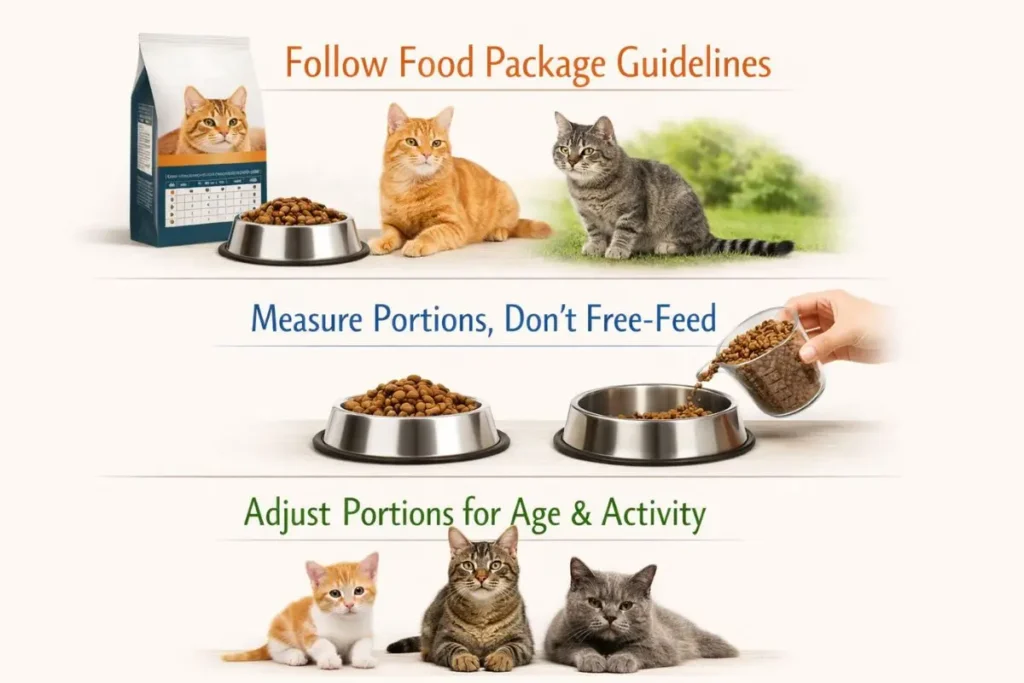
Most cat food packages come with feeding guidelines based on your cat’s age, weight, and activity level. This can be a great starting point, but it’s important to remember that these guidelines are just that—guidelines. Every cat is different.
For example, an indoor cat may require fewer calories than an outdoor cat due to lower activity levels. It’s important to regularly assess your cat’s condition and make adjustments if necessary. If your cat is gaining weight, you might need to reduce portions, and if they’re losing weight, you may need to increase their food.
Measure Portions, Don’t Free-Feed
Free-feeding, or leaving food out all day for your cat to eat as they please, can result in overeating. Most cats will eat whenever they feel hungry, and if food is constantly available, they may overeat. This can lead to weight gain over time.
Instead, measure out the food each time you feed your cat. Use a measuring cup to ensure you’re giving the correct amount. This helps control their intake and ensures you’re providing the right portions.
Adjust Portions for Age and Activity
Just like humans, cats have different dietary needs based on their life stage and activity level. Here’s a general guide for adjusting food portions:
- Kittens (Under 1 Year): Kittens are growing rapidly and need more calories and nutrients. They should be fed 3-4 small meals a day.
- Adult Cats (1-7 Years): For most adult cats, two meals a day is ideal. Measure portions based on the guidelines on your cat food package and adjust according to your cat’s activity level.
- Senior Cats (7+ Years): As cats age, they often become less active and require fewer calories. You may need to reduce their portion size, but still ensure they’re getting all the nutrients they need.
If your cat is particularly active or very sedentary, adjust the amount of food accordingly. An active cat will need more food to maintain their energy levels, while a less active cat will require fewer calories.
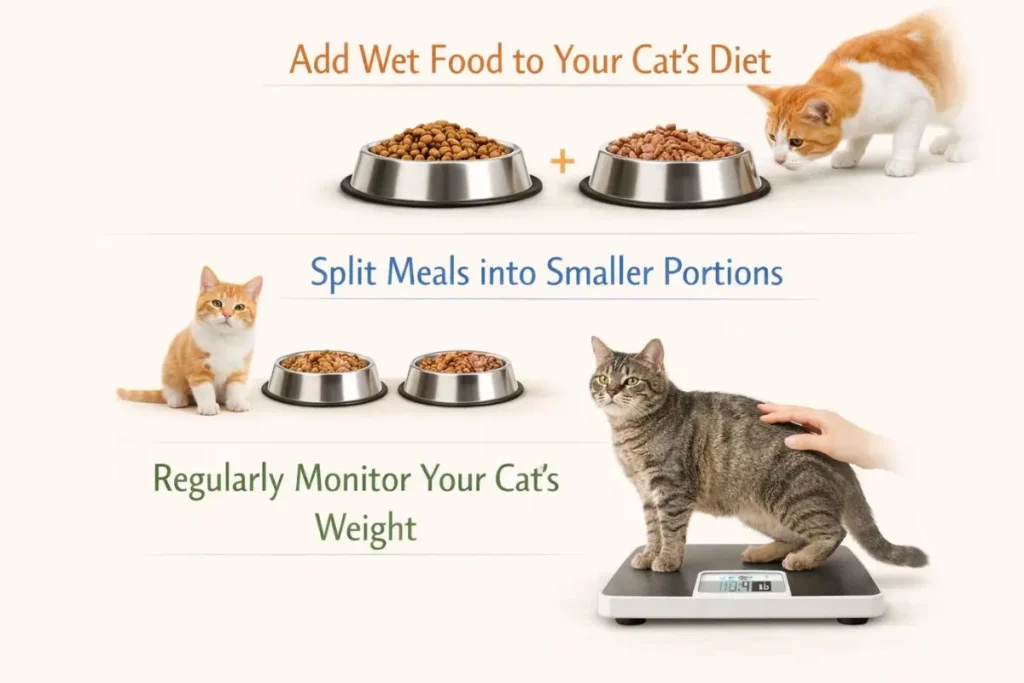
Add Wet Food to Your Cat’s Diet
If you’re feeding your cat dry kibble, consider incorporating wet food into their diet. Wet food is generally lower in calories, higher in moisture, and can help prevent your cat from becoming dehydrated.
Some cats are more likely to feel full after eating wet food, which can help control portion sizes. If your cat has trouble regulating their weight, switching to a mix of wet and dry food could be a good way to improve portion control.
Split Meals into Smaller Portions
Rather than feeding your cat one large meal each day, try splitting the daily portion into two or more smaller meals. This can help prevent them from eating too quickly, which could lead to stomach issues or bloating.
Smaller, more frequent meals also mimic the natural feeding behavior of cats, who in the wild would eat multiple small meals throughout the day. By splitting their meals, you help regulate their energy levels and avoid overfeeding in one sitting.
Regularly Monitor Your Cat’s Weight
Weight plays a crucial role in determining how much food your cat needs. Weigh your cat regularly—once a month is ideal. You should also check their body condition. A healthy cat will have a noticeable waistline when viewed from above, and you should be able to feel their ribs without excess fat.
If your cat is becoming overweight, you may need to reduce their portions. If they seem too thin or are losing weight, consider increasing their food or adding a higher-calorie food to their diet.
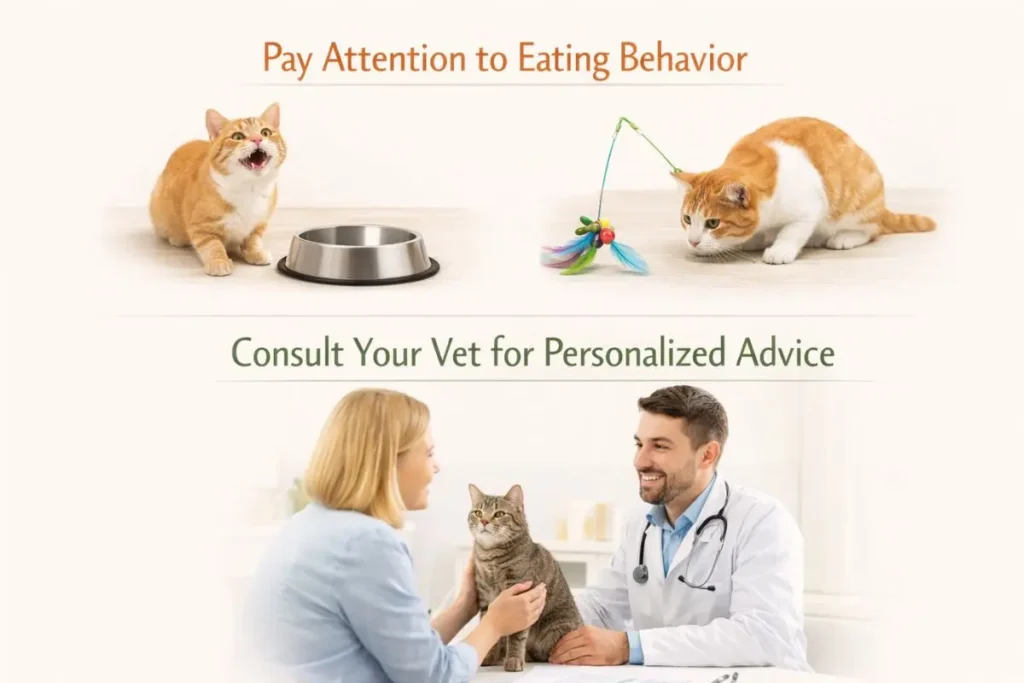
Pay Attention to Eating Behavior
Watch how your cat behaves at meal times. If your cat constantly seems hungry or begs for food after eating, it could be a sign they need a little more food or that their meals aren’t satisfying enough.
Sometimes, though, excessive begging can be a sign of boredom or emotional stress, not just hunger. Cats may act hungry if they’re not getting enough stimulation or attention. Make sure your cat has enough mental and physical activities to keep them engaged, such as interactive toys or playtime with you.
Consult Your Vet for Personalized Advice
Every cat is unique, and dietary needs can vary based on factors like breed, health status, and lifestyle. If you’re unsure about how much to feed your cat or if they have special health concerns, don’t hesitate to consult your veterinarian. They can provide personalized recommendations based on your cat’s specific needs.
Common Mistakes
Free-Feeding
Leaving food out all day can lead to overeating and obesity. Stick to scheduled mealtimes to prevent this.
Not Adjusting for Activity Level
If your cat is more active, they may need more food. Adjust portions accordingly based on your cat’s behavior and activity levels.
Ignoring Body Condition and Weight
Regularly monitor your cat’s weight and body condition to ensure they are not gaining or losing weight too rapidly. Adjust food portions as necessary.