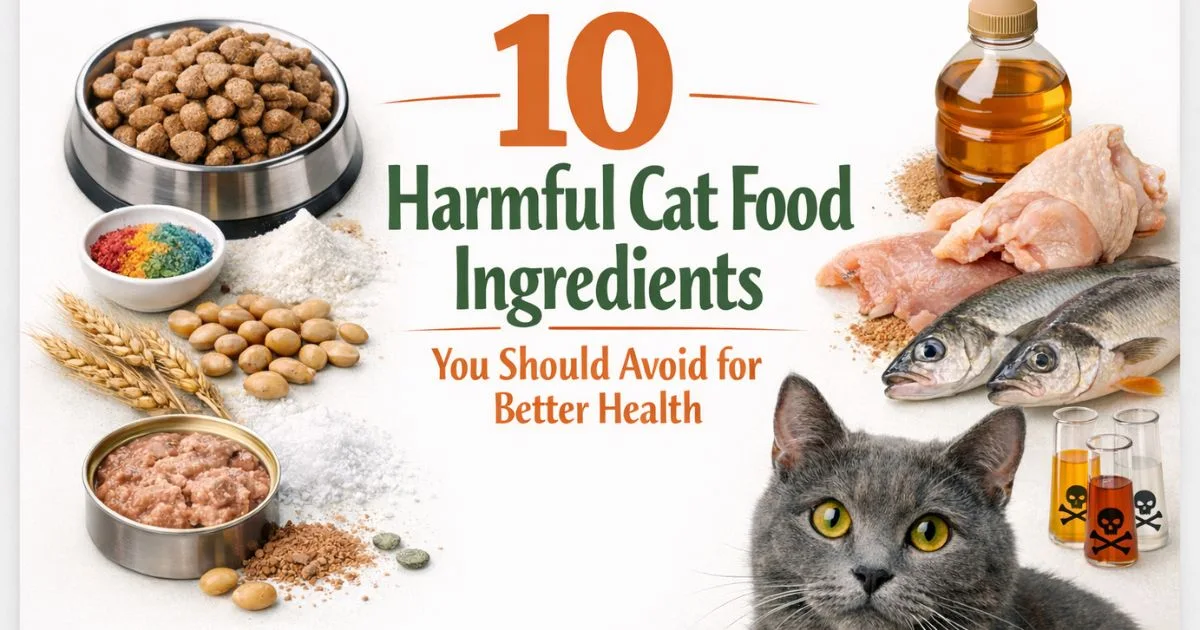
When it comes to your cat’s diet, making the right food choices is essential for cat health, cat nutrition, and overall pet care. Choosing the right food for your cat is not just about filling their bowl, it’s about providing them with the nutrients they need to thrive. As a new cat parent, you may feel overwhelmed by the variety of food options available on the market. One of the best ways to set your indoor cat up for success is by choosing the right food, but this also means knowing which cat food ingredients to avoid to ensure your pet’s long-term health and well-being.
You might not know that some of the most common ingredients in commercial cat food can have negative impacts on your feline’s digestive health, cat behavior, and overall well-being. Some ingredients may even contribute to serious health problems like allergies, digestive upset, or obesity. This blog post will guide you through the top 10 cat food ingredients to avoid and explain why they are harmful to your cat’s health, helping you make informed choices to keep your furry friend healthy and happy.
The Importance of Choosing the Right Cat Food
You might be surprised to learn that not all cat foods are created equal. Some commercial pet foods contain hidden ingredients that can contribute to health problems such as digestive issues, obesity, allergies, and even more serious long-term conditions. By avoiding these harmful ingredients, you’re taking a proactive approach to your cat’s overall well-being.
Let’s dive into the 10 ingredients you should avoid in your cat’s food.
Why the Right Ingredients Matter for Your Cat’s Health
Cats are obligate carnivores, which means their bodies are designed to thrive on meat, not grains, fillers, or artificial additives. Unfortunately, many budget-friendly cat foods are packed with ingredients that aren’t beneficial—and sometimes even harmful—for your cat’s health. Some of these ingredients can lead to digestive issues, obesity, food allergies, and more serious long-term health concerns.
1. Artificial Colors and Dyes
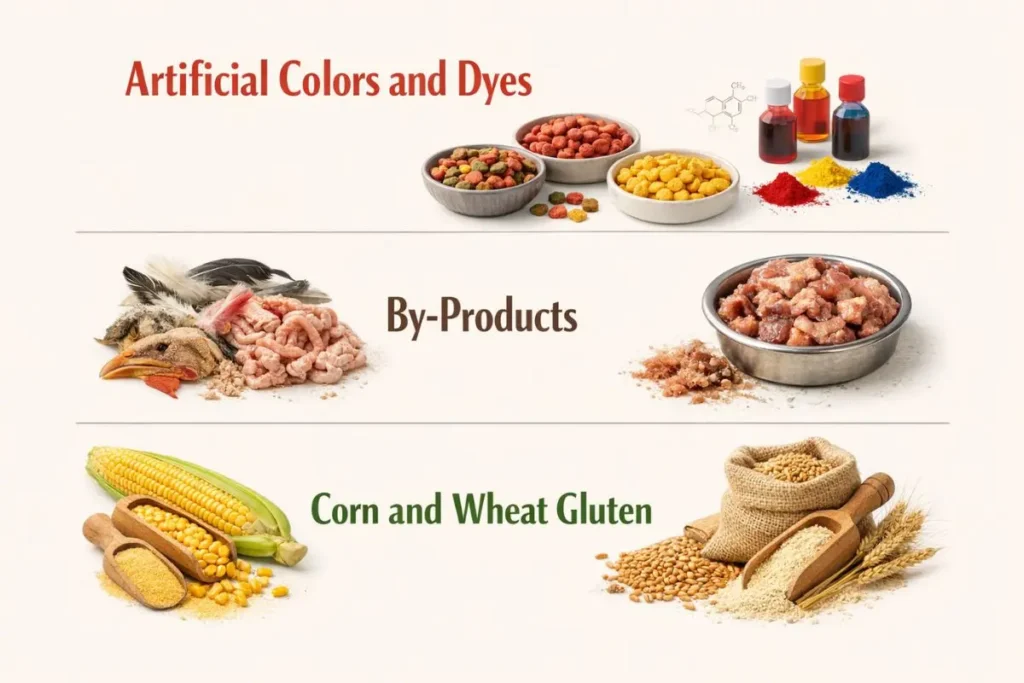
While the bright, colorful appearance of cat food might be appealing to us, cats don’t need food dyes. Artificial colors like Red 40 or Yellow 5 are often used to make the food look more appetizing, but they offer no nutritional benefit. In fact, studies have linked these additives to hyperactivity, allergies, and even cancer in pets.
Why to Avoid:
- Can cause allergic reactions or behavioral issues like hyperactivity.
- Provide no nutritional value to your cat.
Pro Tip: Choose foods with natural coloring from ingredients like beetroot powder or pumpkin—these are safer alternatives that still add a little color.
By-Products
By-products are low-quality animal parts such as feathers, beaks, and intestines that are often used as cheap fillers in cat food. These ingredients are typically harder for your cat to digest and lack the essential nutrients found in whole meats.
Why to Avoid:
- Poor quality protein sources that may not be fully digestible.
- Can lead to food sensitivities or digestive issues.
Pro Tip: Always choose foods with named protein sources like chicken, turkey, or beef rather than “meat by-products.”
Corn and Wheat Gluten
Corn and wheat gluten are often included in dry cat food as cheap fillers. These grains aren’t easily digested by cats, and they can contribute to digestive upset or food sensitivities.
Why to Avoid:
- Difficult to digest and often cause allergies or sensitivities.
- Offer little nutritional benefit to cats, who are obligate carnivores.
Pro Tip: Choose grain-free options or foods that focus on protein as the main ingredient, such as chicken or fish.
Xylitol
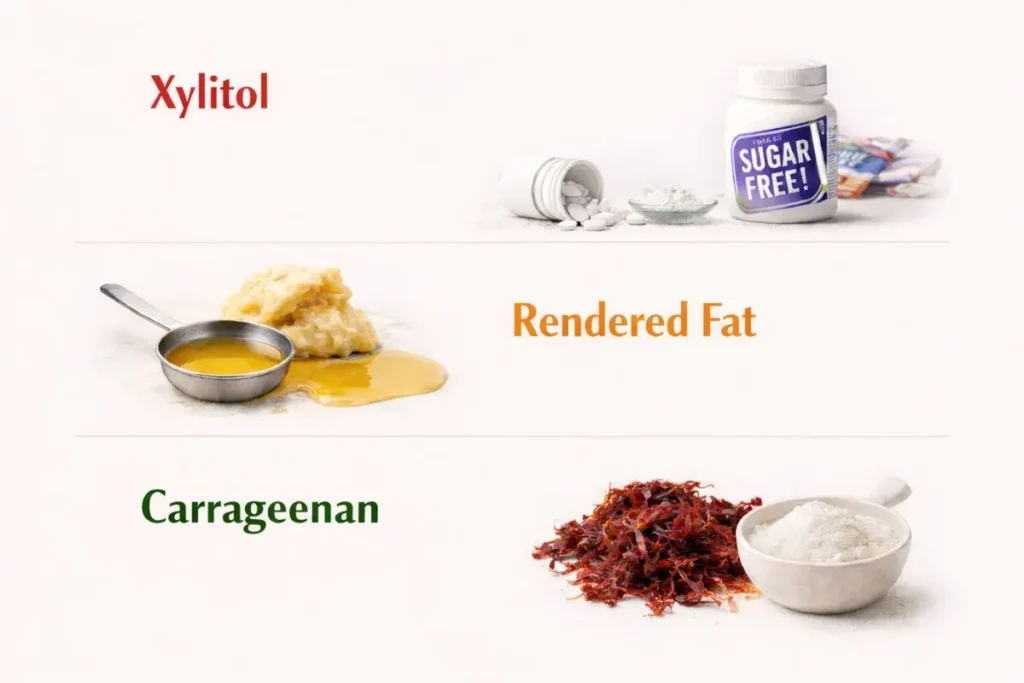
Xylitol is a sugar substitute commonly found in sugar-free foods or treats, and it’s extremely toxic to both dogs and cats. Even in small amounts, it can cause a sudden drop in blood sugar, leading to dangerous symptoms like lethargy, seizures, or even liver failure.
Why to Avoid:
- Causes dangerous drops in blood sugar levels.
- Can lead to liver failure or death in extreme cases.
Pro Tip: Always read the labels of treats or flavored food, especially if they’re marketed as “sugar-free,” to make sure they don’t contain xylitol.
Rendered Fat
Rendered fat is a by-product of meat processing and is often used to add flavor to cat food. While fat is an essential part of a cat’s diet, rendered fat is a low-quality ingredient that may cause digestive upset and isn’t as easily absorbed as more natural fats.
Why to Avoid:
- Difficult to digest and may cause stomach issues.
- Often used as a cheap substitute for high-quality fats.
Pro Tip: Opt for food with named fats such as chicken fat or fish oil, which provide higher-quality fats that are beneficial to your cat’s health.
Carrageenan
Carrageenan is a common thickening agent used in wet cat food. While it’s derived from seaweed and is technically “natural,” studies have shown that it can cause inflammation in the digestive tract, leading to long-term gastrointestinal issues.
Why to Avoid:
- Known to cause gastrointestinal inflammation and discomfort.
- Can lead to long-term digestive problems.
Pro Tip: Look for wet food options that use guar gum or agar-agar as thickeners instead of carrageenan.
BHA/BHT (Butylated Hydroxyanisole/Butylated HydroxyToluene)
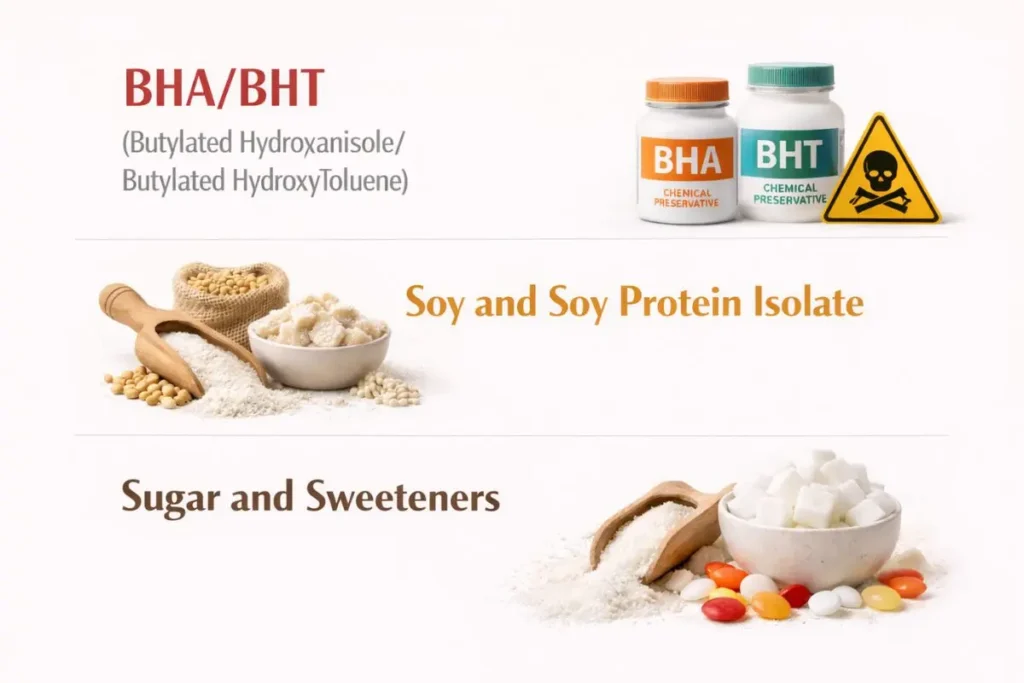
BHA and BHT are preservatives commonly used to extend the shelf life of dry cat food. However, these chemicals are controversial because studies have shown that they can be carcinogenic over time.
Why to Avoid:
- Linked to cancer and long-term health issues.
- Often found in low-quality, heavily processed foods.
Pro Tip: Look for natural preservatives like tocopherols (vitamin E), which are much safer for your cat.
Soy and Soy Protein Isolate
Soy is frequently used as a cheap protein source in cat food, but it can lead to digestive issues, food allergies, and hormonal imbalances. Cats are not well-equipped to process plant-based proteins, and too much soy in their diet can cause significant health problems.
Why to Avoid:
- Difficult for cats to digest and may cause food sensitivities.
- Can interfere with hormone levels and cause long-term health issues.
Pro Tip: Opt for protein-rich foods made from real meat sources, such as chicken, lamb, or turkey, rather than soy.
Sugar and Sweeteners
Cats don’t need sugar in their diet, but some foods include added sweeteners to make them more appealing. Sugar contributes to obesity, diabetes, and can disrupt your cat’s metabolism.
Why to Avoid:
- Contributes to obesity, diabetes, and other metabolic disorders.
- Unnecessary and adds empty calories with no nutritional value.
Pro Tip: Look for foods that don’t include sugar or artificial sweeteners, as your cat doesn’t need them to be happy or healthy.
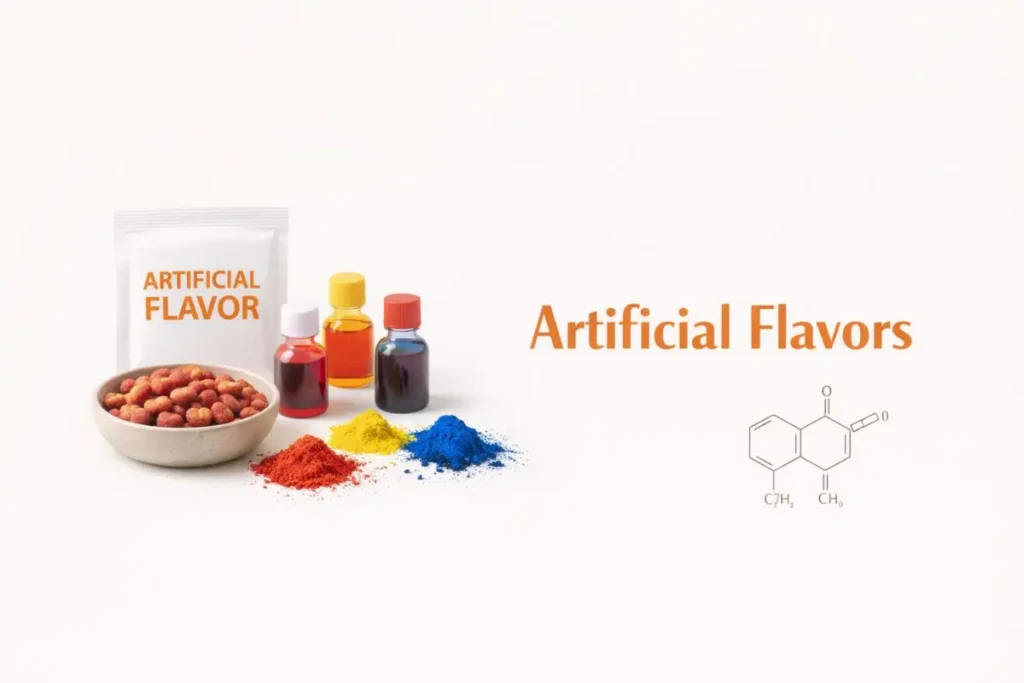
10. Artificial Flavors
Artificial flavors are used to make cat food more palatable. However, they don’t provide any nutritional benefit and can sometimes trigger allergic reactions or sensitivities in your cat.
Why to Avoid:
- Can lead to allergic reactions or sensitivities.
- Offer no real nutritional benefit.
Pro Tip: Choose foods that rely on natural ingredients, such as real chicken or fish, for flavor instead of artificial additives.
Common Mistakes
Many new cat owners make the mistake of assuming that all commercial pet foods are equal, but this is far from the truth. Here are a few common mistakes and how to fix them:
- Not checking the ingredient list: Always read the labels and make sure the first few ingredients are named proteins (like chicken, turkey, or fish).
- Choosing the cheapest option: Price often reflects quality. Invest in a higher-quality food with real ingredients.
- Relying solely on dry food: Cats need moisture in their diet. Mixing wet and dry food can help keep your cat hydrated and support their overall health.