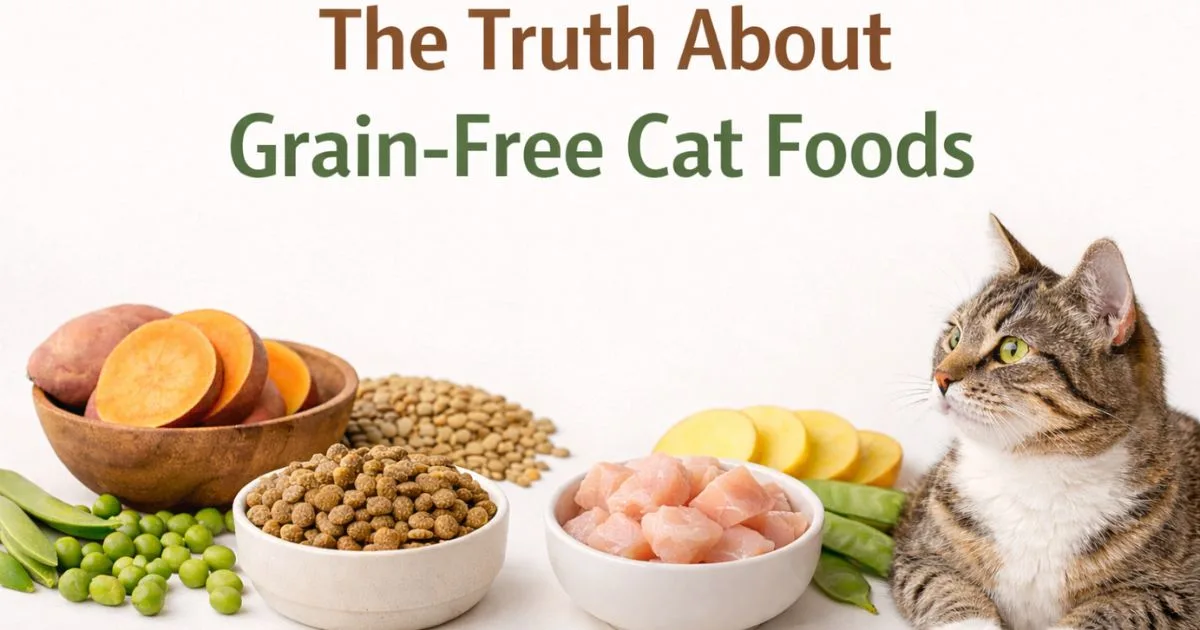
As a cat owner, you’ve probably heard a lot about grain-free cat foods. Advertised as the healthier, more natural choice for your feline friend, it can be tempting to believe that grain-free diets are the best option for all cats. But is it really the case, or is there more to the story?
In this post, we’ll go beyond the marketing claims and give you a clear understanding of whether grain-free cat food is the right choice for your pet. We’ll also help you navigate common mistakes and explain what to look for when selecting the best diet for your cat.
The Main Problem
When you’re dealing with your cat’s health issues—whether it’s digestive problems, food allergies, or skin irritations—the promise of a grain-free diet may sound appealing. But before jumping on the grain-free bandwagon, you need to understand that it’s not a one-size-fits-all solution.
Some cats thrive on grain-free food, while others might not see any changes at all, or worse, may experience health issues. The real question is: How do you know if grain-free food is the right choice for your cat’s unique needs?
What Is Grain-Free Cat Food?
At its core, grain-free cat food eliminates grains like corn, wheat, and soy, replacing them with alternative carbohydrates such as peas, lentils, sweet potatoes, or potatoes. These ingredients are typically easier to digest for some cats who may have sensitivities to grains.
Grain-free foods are marketed to mimic a cat’s ancestral diet, claiming to be more natural and nutritious. But is the absence of grains truly beneficial for every cat? Let’s take a closer look.
How to Choose the Right Food
It’s essential to look beyond the grain-free label and assess the whole nutrition profile of the food. Here’s what you should focus on:
- Animal-based Protein: The first ingredient should be a high-quality source of protein, such as chicken, turkey, or fish. Cats are obligate carnivores, and their diet should reflect this.
- Healthy Fats: Look for healthy fats like omega-3 and omega-6 fatty acids, which are crucial for maintaining your cat’s coat and overall health.
- Low Carbs: Carbohydrates should be minimal and easy to digest. Excess carbs, often found in grain-free foods, can lead to obesity, especially in less active cats.
Is Grain-Free Better for Cats with Allergies?
If your cat has food allergies or digestive sensitivities, a grain-free diet could potentially help. Many cats react poorly to grains like wheat, corn, or soy, which can cause issues like vomiting, diarrhea, or skin irritations.
However, before making the switch, it’s crucial to consult with your vet. They can help you identify which ingredients are causing the reaction. If your cat has a protein sensitivity (e.g., chicken), grain-free food won’t solve the problem—it’s the protein source you need to avoid.
It’s also worth noting that grain-free foods are not always the solution to food allergies. Many grain-free options contain alternative fillers like peas or potatoes. These could also be problematic if your cat has sensitivities to them, so always consider the full ingredient list before switching.
When Might Not Be the Right Choice
For some cats, especially those with certain health conditions, grain-free food might not be the ideal choice. Here’s why:
- Cats with Kidney Disease: Grain-free diets tend to be higher in protein, which might not be suitable for cats with kidney issues, as their bodies may struggle to process excess protein.
- Overweight or Less Active Cats: The higher carb content in some grain-free foods can contribute to weight gain if your cat is not particularly active. A balanced food with a proper calorie ratio might be a better option.
- Digestive Issues: Some grain-free foods are packed with peas or lentils, which are high in fiber and can cause gas, bloating, or diarrhea in sensitive cats.
These factors make it clear that grain-free food is not a universal solution. It’s essential to evaluate your cat’s specific needs—whether they’re related to health conditions, lifestyle, or food sensitivities—before choosing a diet.
Safely Switching Your Cat to a Diet
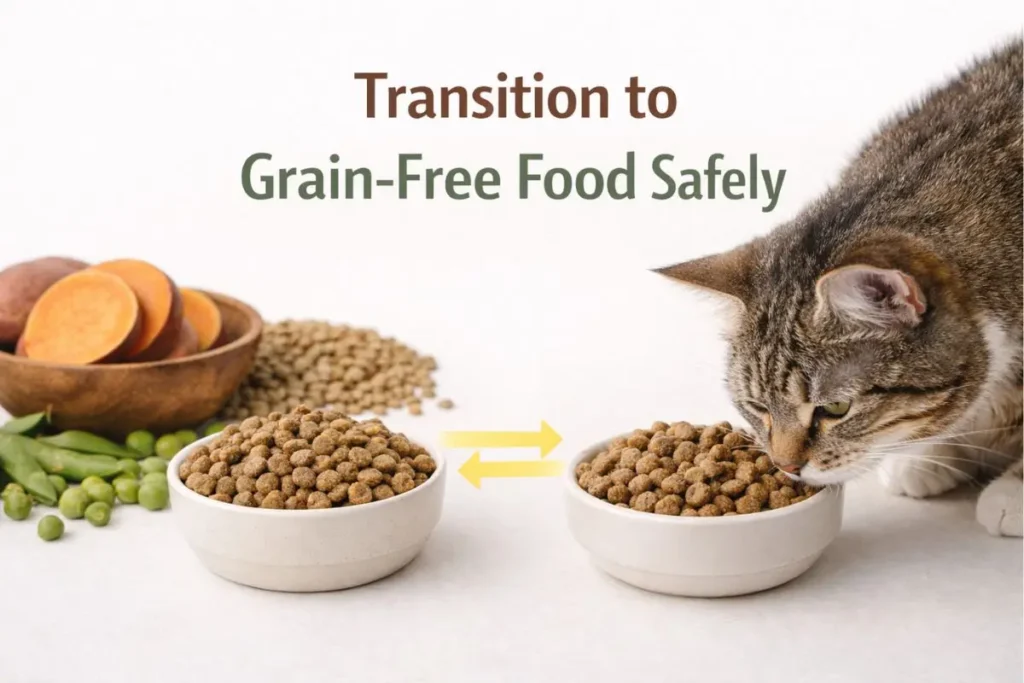
If you’ve decided to try a grain-free diet for your cat, it’s important to do so gradually to avoid upsetting their stomach. Here’s how you can make a smooth transition:
- Start Slowly: Gradually mix the new grain-free food with your cat’s current food. Over the course of 7-10 days, increase the amount of new food while decreasing the old food to avoid digestive problems.
- Monitor for Adverse Reactions: Keep an eye on your cat’s stool, behavior, and overall health during the transition. If you notice vomiting, diarrhea, or excessive scratching, it may indicate that the new food is not right for them.
- Consult Your Vet: If the food doesn’t seem to work or causes issues, talk to your vet. They can help recommend a more suitable diet for your cat’s specific needs.
Making the switch to grain-free food isn’t as simple as just picking a brand from the pet store shelf. A gradual transition ensures your cat’s digestive system adjusts properly and prevents any unwanted reactions.
Grain-Free Diets
One aspect of grain-free cat food that’s often overlooked is the potential impact on long-term cat health. While grain-free foods are often marketed as a healthier alternative, they might not always be beneficial in the long run. For instance, a high-protein, grain-free diet could contribute to obesity or kidney issues in some cats if not carefully managed.
It’s important to ensure your cat is getting the right balance of protein, fat, and carbohydrates in their diet. Additionally, if your cat is on a grain-free food that’s particularly high in fat, it could lead to digestive issues or more serious health problems down the line.
Cats Struggles
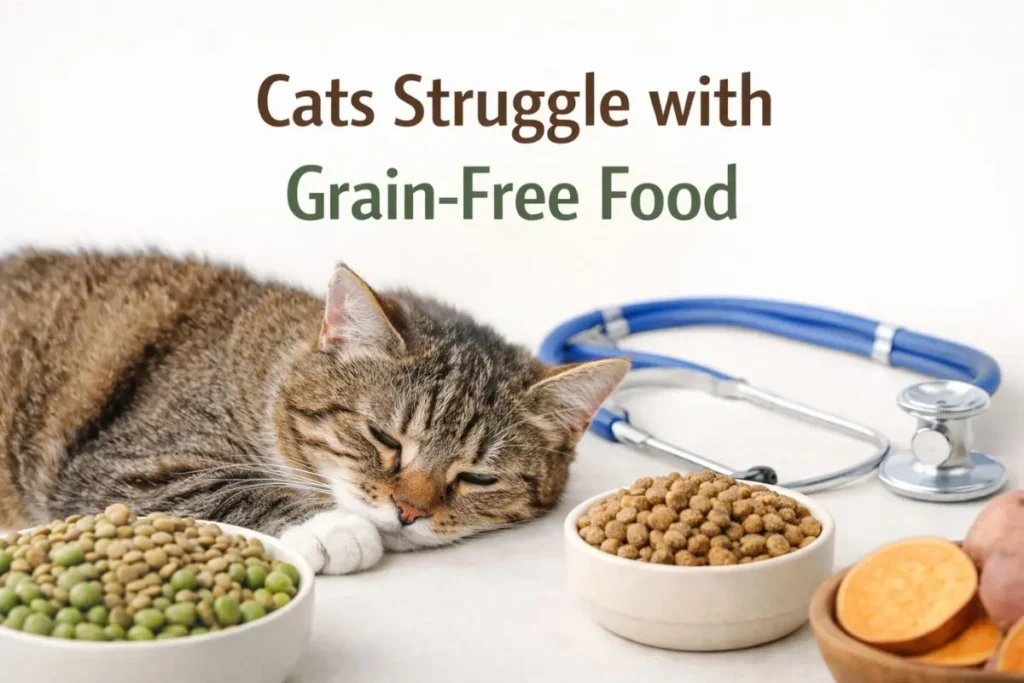
Cats who are older or have specific health issues (e.g., kidney disease, diabetes, or obesity) may have trouble digesting certain ingredients commonly found in grain-free foods. For example, peas and lentils are often used as substitutes for grains, but they contain high levels of fiber and carbohydrates that may not be suitable for cats with particular health conditions.
If you suspect that your cat isn’t responding well to their grain-free food, the next step is to consult with your vet. They can help identify if another ingredient is causing problems or if a different type of diet would be better suited to your cat’s needs.
In this blog post, we’ve explored the complexities of grain-free cat food and how it affects your cat’s health. Remember, each cat is different, and what works for one may not work for another. By carefully considering your cat’s individual needs and working with your vet, you can make an informed decision that promotes your cat’s health and happiness.
Common Mistakes
Many cat owners believe that simply switching to a grain-free diet will solve their cat’s problems, but this isn’t always the case. Here are a few common mistakes to watch out for:
- Believing Grain-Free Is Always Healthier: Not all grain-free foods are created equal. Some are loaded with carbohydrates like peas or potatoes, which can lead to weight gain, especially in less active or indoor cats.
- Focusing Only on Grains: While eliminating grains may help with certain food sensitivities, it’s more important to focus on protein quality. Cats need a diet rich in animal-based proteins, and grain-free food should still meet this critical requirement.
- Ignoring Your Cat’s Specific Needs: If your cat has a sensitivity to chicken or beef, a grain-free diet won’t fix that. Food sensitivities can be caused by many ingredients, not just grains.