
Bringing a new cat into your home is always an exciting experience, but it can also come with its challenges—especially when you already have other pets. Whether you’re introducing your new cat to dogs, other cats, or even smaller animals like rabbits, the idea can be overwhelming. One of the most common problems cat owners face in this situation is ensuring that the introduction process goes smoothly without causing stress for either the new cat or the existing pets.
Many pet owners overlook the importance of a gradual, controlled introduction, which can lead to territorial behavior, aggression, and heightened anxiety. The goal of a successful pet introduction is to make sure that your new cat and your other pets coexist peacefully, without creating tension or stress. So how do you introduce your new cat to the rest of your household in a way that ensures everyone feels safe, comfortable, and happy? This guide will provide you with the step-by-step strategies to make sure your new cat and your existing pets settle in without any issues.
Why Proper Introductions Matter for Cats and Other Pets
The introduction phase is crucial because it sets the tone for future interactions. Cats are naturally territorial creatures, and they might view other animals, especially dogs, as intruders into their personal space. On the other hand, dogs and other pets can feel threatened by the presence of a new cat in the house, especially if they haven’t been properly socialized. The main goal here is to ensure that both your new cat and your existing pets feel secure and comfortable.
Introducing a new cat can also be particularly challenging if you have multiple pets. Multiple-pet households require extra care, as you need to manage not only the dynamics between the new cat and the other pets but also maintain a balance so that everyone has their own space and resources. This is especially true when you’re introducing a new cat to a dog or a second cat, as these animals have different social needs and behaviors.
By following a thoughtful, structured process for your pet introductions, you can avoid unnecessary stress and ensure that your new cat and existing pets start on the right foot. Proper introductions will also help prevent future behavioral issues, such as inappropriate territorial marking, aggressive behavior, or avoidance behaviors.
Preparing Your Home for the Introduction Process

The first step in introducing your new cat to other pets is preparation. Setting up your home in a way that promotes a peaceful transition will go a long way in ensuring your new cat’s success. Here are a few tips to get started:
- Designate a separate space for your new cat: Before your new cat meets your other pets, it’s important to set up a safe and quiet area where they can settle in. This gives your new cat a chance to get used to their new environment before they encounter other pets. This should include a comfortable bed, food, water, and a litter box.
- Separate resources for each pet: In homes with multiple pets, it’s crucial to ensure that each pet has their own resources—such as food bowls, water dishes, and litter boxes. This will help reduce potential competition and territorial behavior.
- Cat-proofing your space: Make sure the area where your new cat will stay is secure, free from potential hazards like toxic plants or dangerous objects. You want to create a safe space where your cat can explore without the risk of harm.
The Power of Scent Introduction
The first step in helping your new cat and other pets get acquainted with each other is scent introduction. Scent is one of the most important ways that cats and other animals identify each other. This phase allows your new cat and your existing pets to become familiar with one another without any immediate physical contact.
- Swap bedding and toys: Start by placing your new cat’s bedding or a cloth that smells like your cat in the area where your other pets usually spend time. Similarly, take a blanket or toy from your existing pets and place it in your new cat’s space. This will help your pets get accustomed to each other’s scent in a non-threatening way.
- Scent swapping on your hands: Rub your hands on each pet’s body and then rub them on the other pet, allowing them to become familiar with each other’s smell.
Visual Introductions Through a Barrier
Once your pets have had time to get used to each other’s scent, the next step is a visual introduction. This allows them to see each other while still being physically separated, which helps prevent any aggressive interactions.
- Use a baby gate or cracked door: Set up a baby gate or keep a door slightly ajar so your pets can see one another, but not physically engage yet. Keep the first meetings short—around 10 to 15 minutes at a time—and gradually increase the duration.
- Observe body language: Watch for any signs of aggression or stress, such as hissing, growling, or stiffened posture. If either pet shows signs of aggression, back up to the previous step and give them more time.

First Face-to-Face Meeting
Once both pets seem comfortable with visual introductions, it’s time for the first face-to-face meeting. This step can feel nerve-wracking, but it’s essential to keep your cool and remain calm during the interaction. Here’s how to manage this important moment:
- Keep your new cat in a carrier or on a leash: When you first allow your new cat to meet your other pets face-to-face, keep them in a safe, controlled space. Using a cat carrier for your new cat or a leash can help prevent sudden movements or any unwanted reactions.
- Short, positive sessions: The first few meetings should be brief. Aim for short, calm sessions of around 5 to 10 minutes, and gradually increase the time as both pets grow more comfortable with each other’s presence.
- Reward positive behavior: Whenever either pet remains calm or displays friendly behavior, reward them with treats and praise. This helps them associate each other’s presence with positive experiences.
Gradually Increase Time Together
- Supervised playtime: Over time, allow your new cat and your existing pets to spend more time together, always under supervision. Continue to monitor body language carefully, and if either pet becomes stressed or anxious, separate them and try again later.
- Free roaming under supervision: As both pets get more comfortable, you can start allowing them to roam freely in shared spaces, but still monitor their interactions closely.
Understanding Pet Body Language
Understanding the body language of both your new cat and your existing pets is key to ensuring the introduction goes smoothly. Cats, in particular, use body language to communicate their emotions. Here are a few important signs to watch for:
- Relaxed body posture: A relaxed cat will have a soft body, tail held low, and ears facing forward. This means the cat is comfortable in the situation.
- Aggressive behavior: If your new cat or existing pet is showing signs of aggression, such as raised fur, growling, or hissing, it’s a clear indication that they’re not yet ready for closer interaction.
- Signs of stress: Cats might show stress through behaviors like hiding, excessive grooming, or refusing to eat. These behaviors can indicate that the pet is feeling overwhelmed and may need more time to adjust.
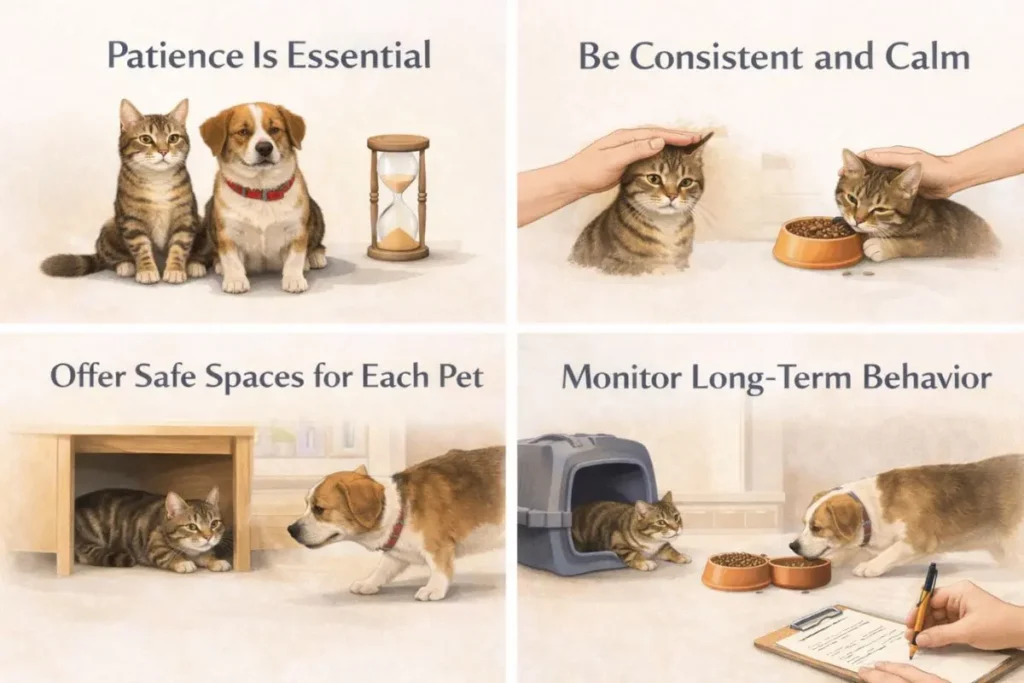
Patience Is Essential
Patience is key throughout this entire process. Pets need time to adjust to new situations, especially when new members are added to the family. Allow both your new cat and your existing pets to take things at their own pace. Don’t rush the process, as forcing pets into situations they’re not ready for can cause unnecessary stress or even long-term behavioral issues.
Be Consistent and Calm
Consistency is one of the most important factors when introducing a new cat to your other pets. Stick to the introduction steps and avoid skipping any of the stages. When introducing pets, you must remain calm and consistent in your approach. This will reassure your pets and help them feel more comfortable.
Offer Safe Spaces for Each Pet
Throughout the introduction process, make sure each pet has a safe space where they can retreat when they need a break. This is especially important if you have multiple pets. If your existing pets feel overwhelmed by the new addition, a safe space allows them to retreat and regain their composure.
Monitor Long-Term Behavior
Once the initial introductions have gone smoothly, it’s important to continue monitoring the pets’ behavior long-term. If any issues arise—such as territorial aggression, litter box problems, or food guarding—be sure to address them promptly with extra training, behavior modification, or professional help if necessary.
By following these steps and keeping a close eye on your pets’ behavior, you can help ensure that the introduction of your new cat to your other pets is as smooth and stress-free as possible. With time, patience, and consistent effort, your new cat and your existing pets will likely form a peaceful and harmonious relationship.