As a first-time dog owner, the first vet visit is often one of the most memorable milestones in your journey. It can feel both exciting and daunting, especially when you’re unsure of how your puppy’s reaction will be to the unfamiliar sights, sounds, and smells of the clinic. Whether your dog is a young puppy or an adult dog experiencing their first vet exam, it’s natural to feel anxious about how they’ll respond to the visit.
In this guide, we’ll provide expert dog care tips, pet care advice, and common mistakes to avoid to ensure your dog’s first vet visit is as stress-free and positive as possible.
The Problems
Many first-time dog owners worry about one major issue: fear. Whether it’s your dog’s first vet appointment or their tenth, it’s common for dogs to become anxious about the unfamiliar sounds, smells, and even the people at the clinic. Fearful dogs may show signs of stress such as trembling, hiding, excessive barking, or even trying to escape.
Fear can make the visit more difficult for both the dog and the owner. Dogs that are anxious about vet visits are likely to develop a negative association with the experience, making future visits even harder. The goal is to reduce stress and build positive associations between your dog and thevet clinic.
Preparing for the Vet Visit Beforehand
Handle Your Dog Regularly
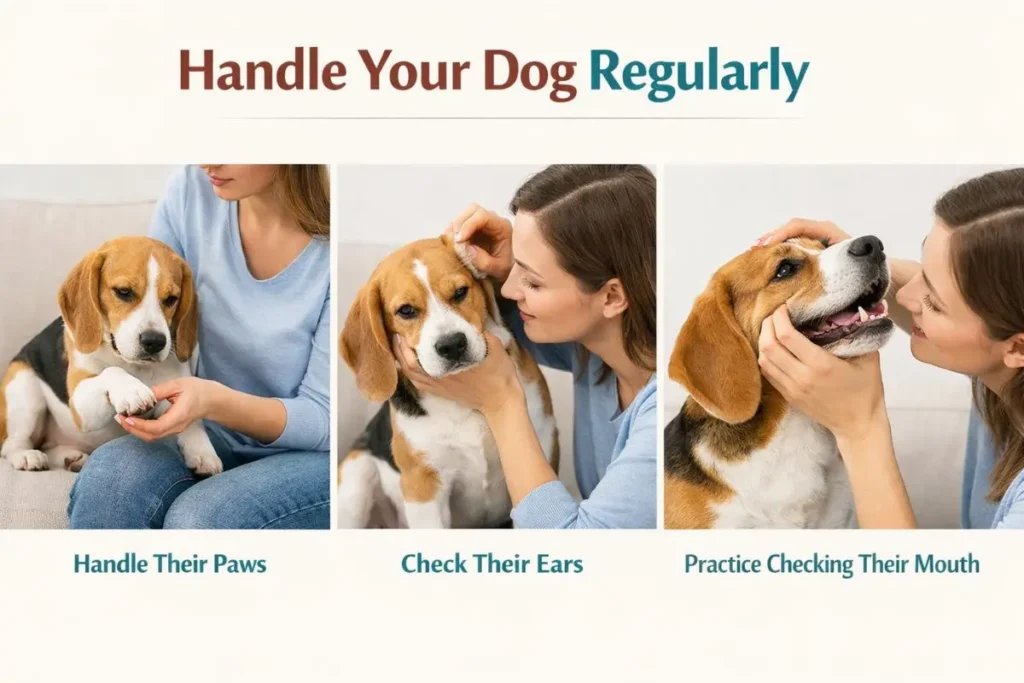
One of the biggest causes of stress at the vet is that many dogs aren’t used to being handled in the way the vet needs to for an exam. For your dog to stay calm during their visit, it’s helpful to practice at home, so they’re familiar with being touched in certain areas.
Start by gently handling your dog’s paws, ears, and mouth. If your dog is hesitant or scared, go slow and offer plenty of praise. Gradually build up to touching their body, teeth, and inside their mouth—areas that will be examined at the vet.
Pro Tip: Always use positive reinforcement (treats, toys, or praise) when your dog cooperates. This creates a positive experience around handling, which will translate into a better visit to the clinic.
Example: Let’s say your dog has a strong aversion to having their paws touched. Start by touching their paws for just a few seconds while sitting calmly on the couch. After each touch, reward them with a treat. Over time, this will help them become accustomed to handling, making them less likely to resist during their vet visit.
Take a Pre-Visit Trip to the Vet Clinic
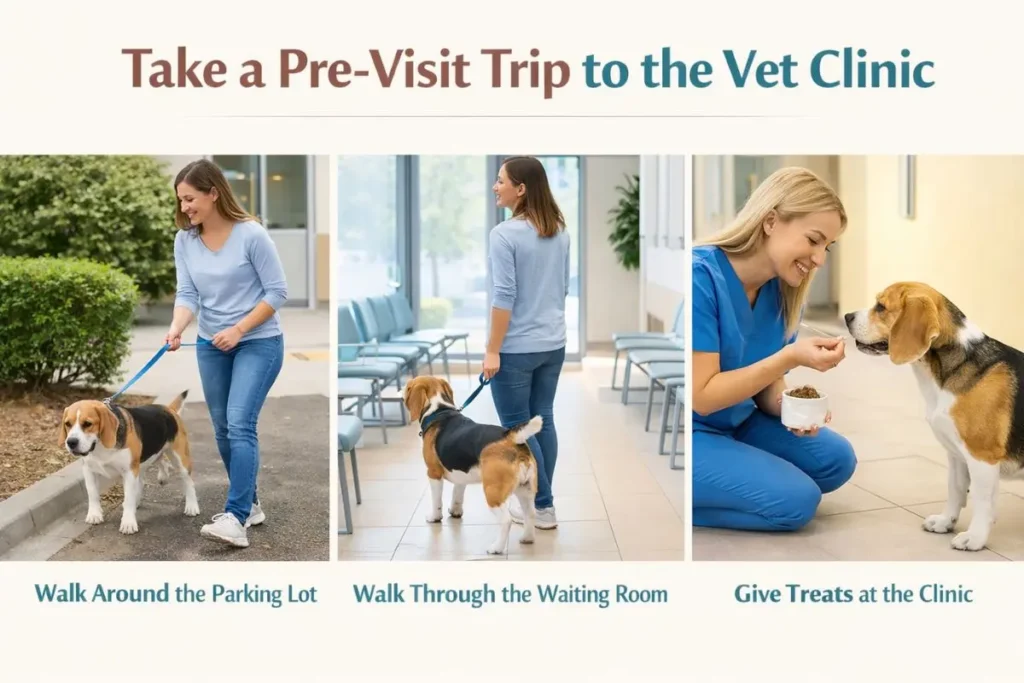
Before the big day, plan a low-stress visit to the clinic. You don’t need to see the vet, but taking your dog to the building beforehand allows them to become familiar with the environment.
- Walk around the parking lot: Let your dog sniff around the parking lot to help them get comfortable with the outside area.
- Walk through the waiting room: Some vets allow a quick tour of the waiting room so your dog can get familiar with the space.
- Treats at the clinic: Ask the staff if they can offer your dog a treat while you’re there to help build a positive connection with the space.
This pre-visit helps reduce the overwhelming feelings that can arise when your dog enters the clinic for the first time.
Plan the Timing of Your Visit
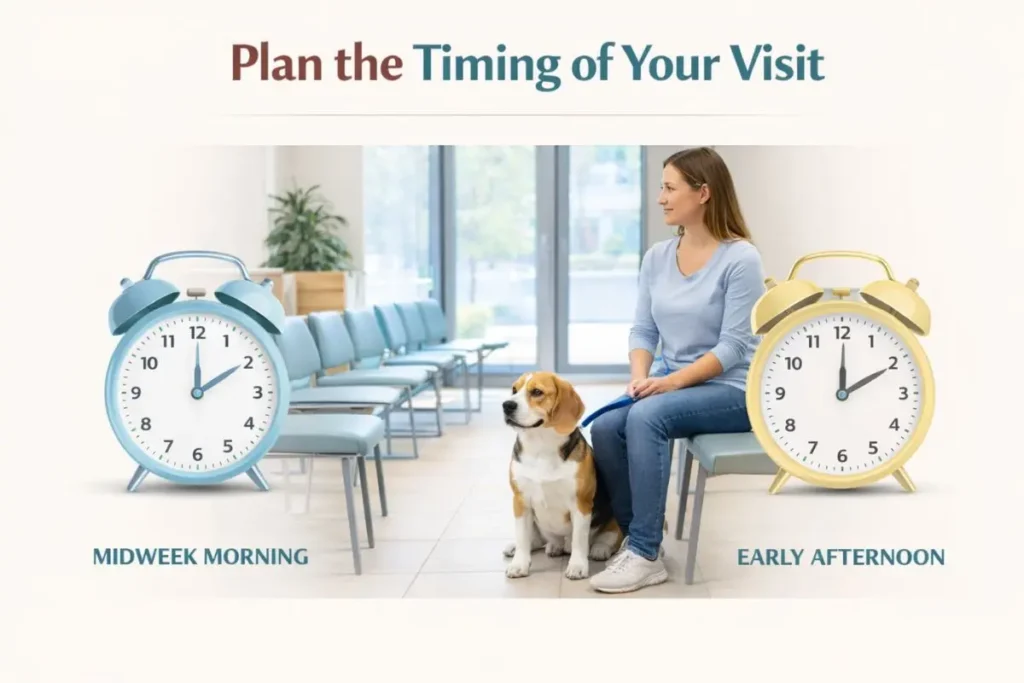
Timing can make a big difference in your dog’s experience. Vet clinics tend to be busier at certain times, which can increase your dog’s anxiety. If possible, schedule your visit during midweek mornings or early afternoons when the clinic is typically quieter.
This also means less noise and fewer distractions, making it easier for you and your dog to focus on the experience rather than becoming overwhelmed by a crowded room.
What to Expect During the First Vet Visit
The first vet visit is typically a routine check-up, especially for puppies. During the visit, the vet will likely:
- Weigh your dog
- Check their vital signs, including heart rate and temperature
- Examine their body: This includes their eyes, ears, teeth, paws, and skin
- Ask about your dog’s history: For puppies, this may include discussing their vaccinations and diet, while for adult dogs, it includes behavioral concerns, health history, and lifestyle.
During this visit, your vet may administer necessary vaccinations or treatments. They may also give you a basic health plan to follow, including recommendations for diet, exercise, and training.Don’t Overwhelm Your Dog
The exam itself can be overwhelming for a dog that’s never been in this situation before. But you can reduce your dog’s anxiety by:
- Bringing comfort items: If your dog has a favorite toy or blanket, bring it along to help provide reassurance during the visit.
- Calming presence: Sit with your dog on the exam table and stay close to them. This provides emotional support.
- Use treats for distraction: Offering treats during the exam can help distract your dog and create a positive association with the vet.
Stay Calm Yourself
Dogs are keenly aware of their owner’s emotions. If you’re stressed, your dog will likely mirror that anxiety. So, it’s crucial for you to stay calm and positive. Keep your tone light and reassuring to help your dog feel more secure.
Example: If your dog starts to shake or whimper during the exam, calmly reassure them with a soft voice. Avoid getting frustrated or rushing the vet, as your dog will pick up on your impatience, making it harder for them to relax.
Common Mistakes
Forcing Your Dog into the Clinic
One of the most common mistakes is forcing your dog into the clinic if they resist. Dragging or pulling them will only create negative associations with the visit. Instead, take a calm approach and allow your dog to explore at their own pace. If they seem fearful, give them a moment to adjust before proceeding.
Skipping the Practice at Home
If you skip practicing handling your dog before the vet visit, your dog may become frightened when touched by the vet. Get them used to being touched in various spots and build a routine around positive reinforcement. This simple step can make a world of difference in how your dog handles the vet exam.
Not Bringing a Comfort Item
Comfort items like a favorite toy or blanket can help your dog feel safe in unfamiliar situations. Don’t forget to bring something that smells like home—it’s a small but effective way to ease your dog’s anxiety.
Not Rewarding Positive Behavior
When your dog behaves calmly at the vet, make sure to reward them with treats or praise. This creates a positive association with the experience, making future vet visits much easier.
Tips for a Smooth Vet Visit
- Give Your Dog a Walk Before the Visit: A brisk walk before the visit can help burn off some of your dog’s energy and reduce anxiety. Exercise helps release endorphins, which can calm them down.
- Prepare for Potential Side Effects from Vaccines: Some dogs may feel a little off after their first round of vaccinations. Monitor your dog for signs of lethargy or discomfort and call your vet if you have concerns.
- Bring All Necessary Records: If you’ve adopted your dog from a shelter or gotten them from another owner, bring along any health and vaccination records available. This helps the vet have a complete picture of your dog’s health.
- Stay Calm and Reassuring: Your dog will take cues from your demeanor. Try to stay as calm and upbeat as possible, even if you’re feeling nervous.