
As a dog owner, it’s essential to be proactive about your dog’s joint health, especially as they age. Joint issues like arthritis or hip dysplasia can significantly impact their quality of life, causing pain and limited mobility. Fortunately, maintaining your dog’s joint health doesn’t have to be complicated. With the right care and preventive steps, you can keep your dog moving comfortably well into their senior years.
In this post, we’ll explore how to keep your dog’s joints healthy, from diet and exercise to the best products and treatments available. Whether you’re a first-time dog owner or a seasoned pet parent, you’ll find practical, actionable advice to improve your dog’s joint health right away.
Why Joint Health Is Important for Dogs
Joint health plays a significant role in your dog’s overall well-being. Healthy joints allow your dog to walk, run, jump, and play without pain. However, as dogs age or experience injuries, their joints can become inflamed or weakened, leading to conditions like arthritis or hip dysplasia.
Joint issues can be painful and limit your dog’s mobility, making it harder for them to enjoy daily activities. That’s why it’s important to take preventive measures and manage any joint health problems early.
Signs Your Dog May Have Joint Problems
Before diving into joint health solutions, it’s important to know the signs of joint issues in dogs. Some common symptoms to watch for include:
- Limping or stiffness: Particularly after activity.
- Reluctance to jump or climb stairs: Your dog may avoid jumping onto the couch or up the stairs.
- Change in activity level: Dogs with joint pain may become less active or avoid playing.
- Licking or chewing joints: Your dog may focus on a specific joint that is hurting.
If you notice these signs, it’s a good idea to consult your vet for an accurate diagnosis and treatment plan.
The Basics of Maintaining Your Dog’s Joint Health
Taking care of your dog’s joint health is crucial, as it directly impacts their mobility, comfort, and overall quality of life. Joint issues such as arthritis or hip dysplasia are common, particularly in senior dogs, but with the right care, you can help manage and prevent these problems. Here’s a detailed, informative guide with key steps and tips for maintaining your dog’s joint health.

Regular Exercise
Exercise is one of the best ways to keep your dog’s joints healthy. Regular movement helps maintain joint flexibility, muscle strength, and mobility. For dogs of all ages, aim for moderate exercise like daily walks, gentle play, or swimming, which is particularly good for dogs with joint pain since it’s low-impact and water supports their weight.
Tip: Avoid high-impact exercises like running or jumping, particularly for older dogs or dogs prone to joint issues.
Weight Management
Maintaining an ideal weight is critical for your dog’s joint health. Extra weight puts additional stress on their joints, particularly the hips, knees, and elbows. Over time, this can lead to pain, inflammation, and even early onset arthritis. A healthy diet combined with regular exercise can help your dog maintain a healthy weight.
Tip: Talk to your vet to determine your dog’s ideal weight and portion sizes for their breed, age, and activity level.
Joint Supplements
Joint supplements are often recommended for older dogs or those with known joint issues. Key ingredients in these supplements include:
- Glucosamine: Supports cartilage repair and joint function.
- Chondroitin: Helps retain water in the cartilage, preventing it from wearing out.
- Omega-3 fatty acids: Reduce inflammation and improve joint lubrication.
Tip: Always consult your vet before starting supplements to ensure the right dosage and ingredients for your dog.
Comfortable Bedding
Ensure your dog has a comfortable, supportive bed that cushions their joints, especially if they are older or have joint pain. Orthopedic beds are a great option, as they provide more cushioning than traditional beds, helping to relieve pressure from the joints and providing them with better rest.
Tip: Choose a bed that’s large enough for your dog to stretch out, as cramped sleeping spaces can stress their joints.
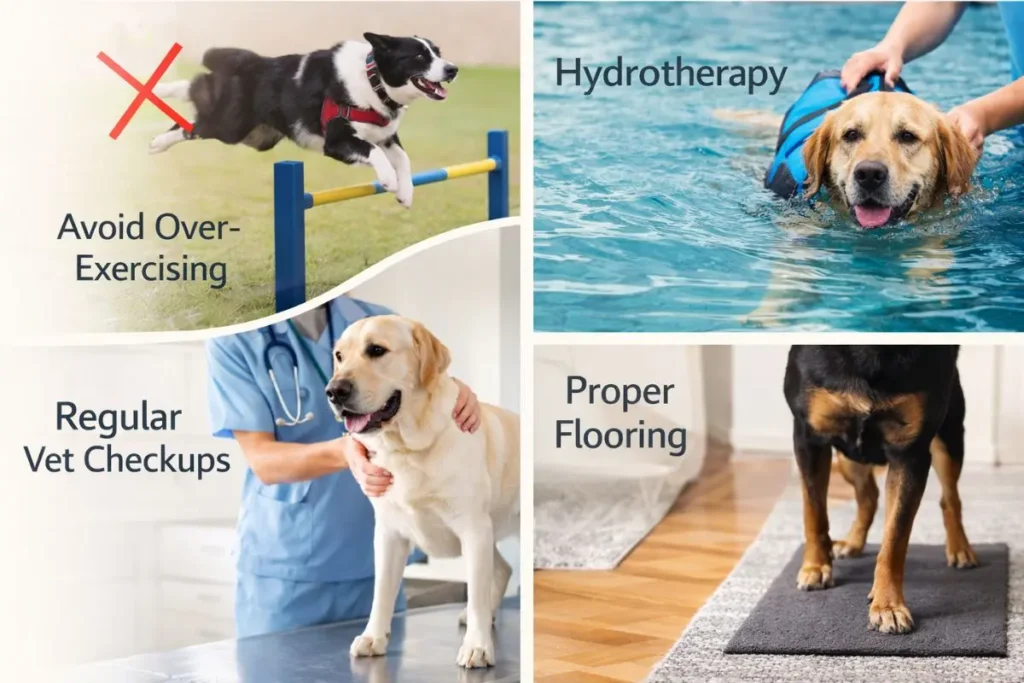
Avoid Over-Exercising
While regular exercise is essential, over-exercising can exacerbate joint problems. Excessive running or jumping, especially on hard surfaces, can strain the joints and lead to injury. If your dog is already showing signs of joint pain, reduce the intensity of their exercise routine to low-impact activities like walking or swimming.
Tip: Follow the “rest and recovery” rule — make sure your dog has plenty of rest between activities to allow their joints to recover.
Hydrotherapy
Hydrotherapy, or swimming, is a fantastic way to improve your dog’s joint health, particularly if they have arthritis or limited mobility. The buoyancy of the water helps take the pressure off their joints, allowing them to move more freely and build strength without the strain of land-based exercise.
Tip: If your dog is new to swimming, start slowly with shallow water and gradually increase the depth and duration as they become more comfortable.
Regular Vet Checkups
Routine vet visits are vital to catch early signs of joint issues, such as stiffness or discomfort. Your vet can perform tests to identify potential joint problems early, helping to prevent further damage. Early treatment options like medication, therapy, or lifestyle changes can make a huge difference in managing joint health.
Tip: Ask your vet to check for specific signs of arthritis or other joint conditions during your dog’s annual health check-up.
Proper Flooring
Hard floors, like tile or hardwood, can be difficult for dogs with joint issues, leading to slips or added strain when moving around. Consider adding non-slip mats or rugs to high-traffic areas to provide extra traction and prevent slipping, which can worsen joint problems.
Tip: Use soft rugs with non-slip backing in places your dog frequently walks, such as hallways or near stairs.
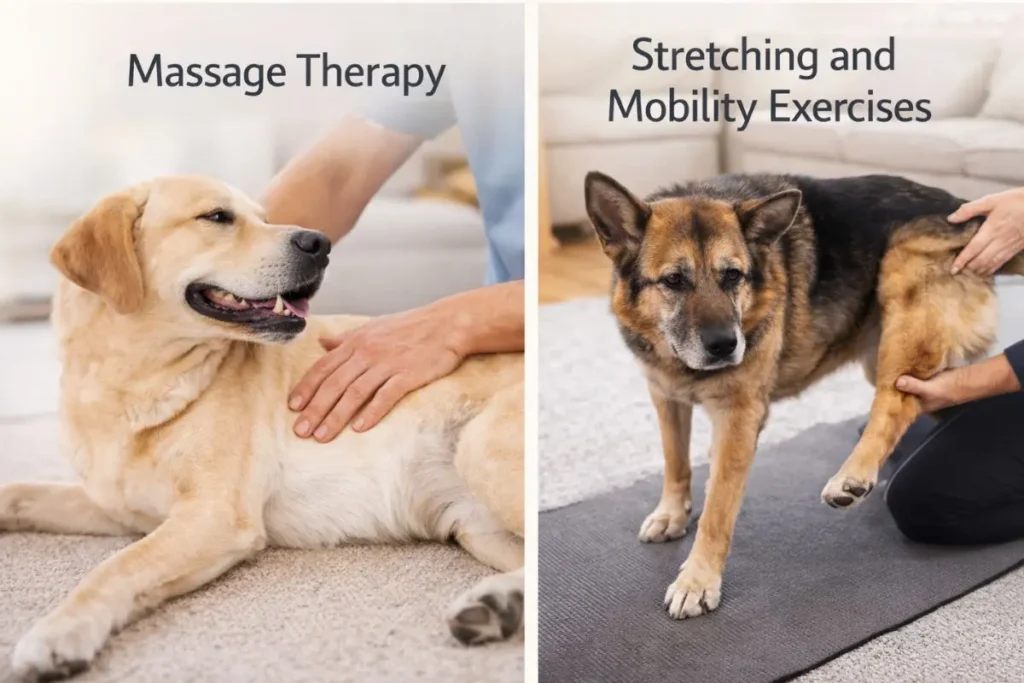
Massage Therapy
Massaging your dog’s joints can help alleviate stiffness and promote blood circulation, providing them with relief from discomfort. Gentle massages around the affected area can reduce inflammation and improve mobility.
Tip: Learn some simple massage techniques, or consider professional massage therapy if your dog has chronic joint issues.
Stretching and Mobility Exercises
Incorporating light stretching and mobility exercises into your dog’s routine helps maintain flexibility in their joints and prevents stiffness. For senior dogs, daily stretching can be particularly beneficial, helping them move more freely and reducing the risk of injury.
Tip: Work with your vet or a professional trainer to learn the best stretches and mobility exercises suited to your dog’s specific needs.
Pro Tips to Enhance Joint Health
While basic care can help most dogs maintain joint health, some steps may go above and beyond the typical advice to provide additional benefits. Here are some pro-level tips:
Hydrotherapy and Swimming
Swimming is a low-impact exercise that’s gentle on the joints. It can help build muscle strength and improve joint mobility, particularly for dogs with arthritis or recovering from surgery. Hydrotherapy is a great option, especially for dogs who have limited mobility on land.
Consider a Comfortable Bed
A high-quality, orthopedic bed can support your dog’s joints during rest. These beds provide extra cushioning to relieve pressure from joints, especially for older dogs with arthritis.
Use Joint-friendly Flooring
If your dog has joint issues, consider placing area rugs or non-slip mats on hard floors to prevent slipping. Slipping on hardwood or tile floors can lead to additional strain and even injury to your dog’s joints.
Massages
Regular gentle massages can stimulate blood flow and help relax stiff muscles and joints. You can learn simple dog massage techniques or consult a professional to help relieve discomfort from arthritis or muscle tightness.
Common Mistakes
Many dog owners unknowingly make mistakes that can worsen joint problems. Here are a few common errors and how to fix them:
- Mistake: Ignoring early signs of joint pain.
- Solution: If your dog shows any signs of joint pain, consult your vet early to prevent further damage. Early intervention can make a significant difference in their comfort and quality of life.
- Mistake: Over-exercising your dog.
- Solution: While regular exercise is vital, avoid pushing your dog too hard, especially if they’re a senior or have joint issues. Stick to moderate exercise, and make sure to provide plenty of rest between sessions.
- Mistake: Using inappropriate flooring for older dogs.
- Solution: If your dog has arthritis or joint issues, avoid slippery floors. Consider using non-slip mats or rugs to help your dog move around without putting unnecessary stress on their joints.