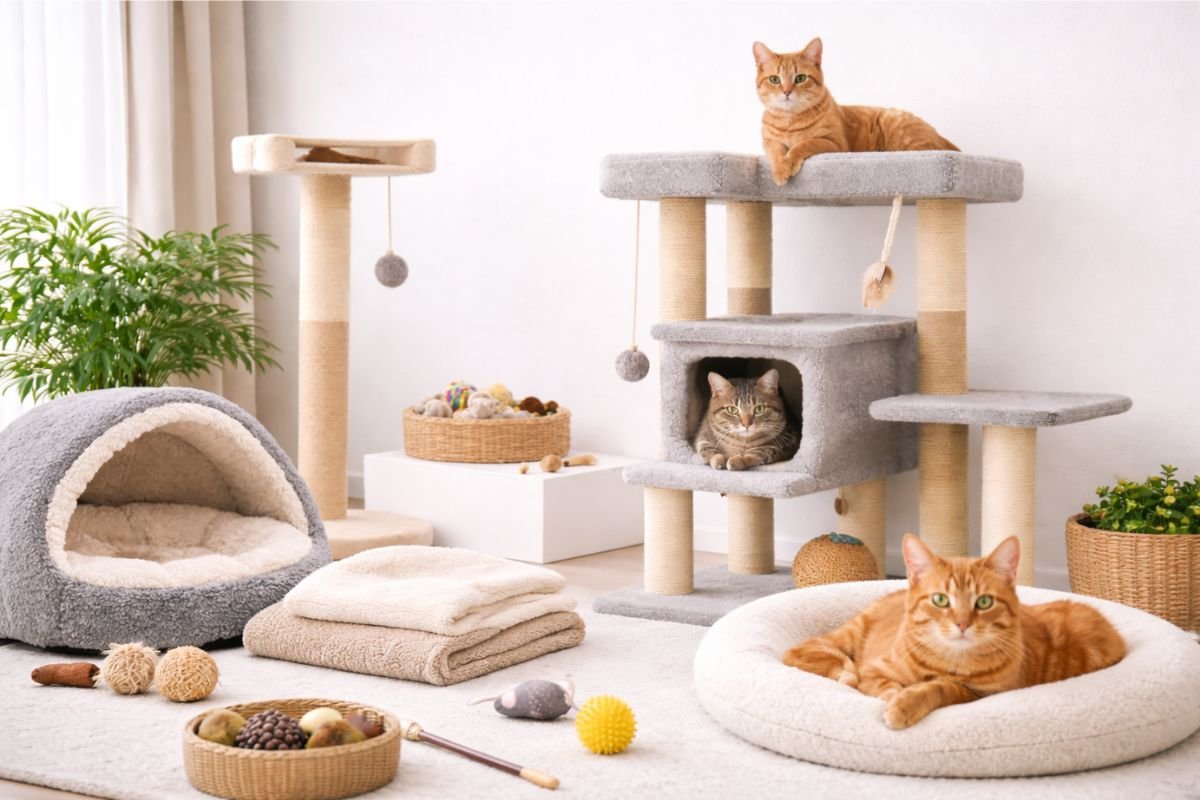
How to Set Up the Perfect Cat Space at Home is essential knowledge for any cat owner who wants to create a safe, stimulating, and comfortable environment for their feline friend. Setting up the perfect cat space at home goes beyond simply picking up a bed or food bowl. It involves carefully selecting cat furniture like cat trees, shelves, and cozy hideaways that provide both comfort and enrichment.
Additionally, incorporating interactive toys and thoughtful accessories will encourage play and mental stimulation, while plush beds ensure your cat has a quiet retreat. The right combination of space, enrichment, and comfort is key to creating the ultimate cat-friendly area in your home.
Why Your Cat Needs Their Own Space
Cats need a private area that belongs solely to them. It’s essential for their mental health and can help reduce common behavioral issues. Without a dedicated space, cats can become stressed, anxious, or engage in undesirable behaviors like excessive scratching, marking, or even aggression. A well-set-up space reduces these problems, offering a retreat for when your cat needs to relax, sleep, or escape from household chaos.
Common Problems
- Stress and anxiety: Cats who don’t have a safe space may retreat under furniture or hide in inappropriate places.
- Unwanted behaviors: Lack of boundaries and stimulation can lead to scratching, chewing, or excessive meowing.
- Clutter and confusion: Without organization, you may find toys and supplies all over the place, leading to a disorganized living space.
Pick the Right Location
Find a Quiet, Safe Spot
Cats appreciate calm, secluded spots where they can observe the environment while feeling secure. Here’s how to select the best location for their space:
- Away from noise and traffic: Choose a quiet corner or a less-trafficked room in your home where your cat can retreat without being disturbed.
- Separation from other pets: If you have other pets (especially dogs), ensure the space is free from potential interruptions or anxiety-inducing encounters.
- Natural light and outdoor view: Cats love to watch the world outside. A window perch or cat-friendly ledge can give them hours of entertainment and stimulation.
Lisa’s Cat Space Setup
Lisa’s cat, Whiskers, always seemed a bit nervous and shy, often hiding under the couch. After setting up a window perch in a quiet corner of her home, Whiskers started spending more time in that area, calmly watching birds outside. This gave him the mental stimulation and relaxation he needed, leading to a noticeable decrease in his anxiety.
Make It Comfortable and Safe
Cozy Bed or Soft Blanket
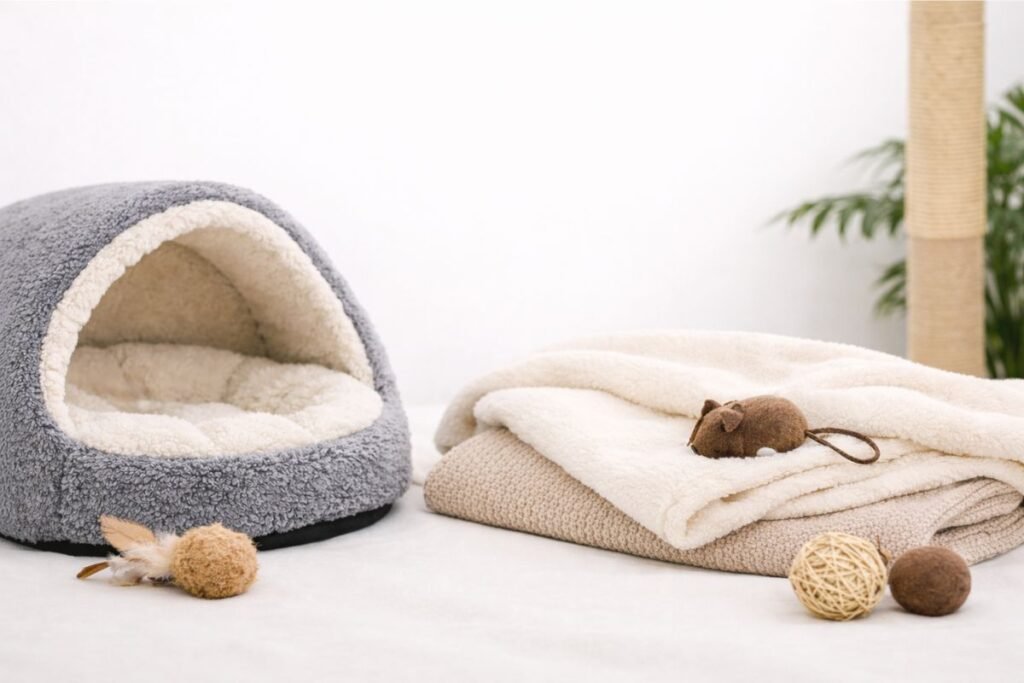
Every cat needs a place to rest and sleep comfortably. The bed should be soft, washable, and in a location that feels safe. Here’s how to do it right:
- Covered beds: Cats like to feel secure, so a covered or hooded bed can make them feel safe.
- Extra blankets: Lay down soft blankets that your cat can curl up on. Blankets are not only cozy but also help retain warmth.
Litter Box Placement
It’s essential that your cat has easy access to a clean litter box. The box should be placed in a quiet corner of their space, separate from their food and water bowls.
- Size matters: Ensure the litter box is large enough for your cat to comfortably move around in.
- Keep it clean: A dirty litter box can lead to stress or even your cat avoiding it altogether. Clean the box daily to keep it fresh.
Add Enrichment for Mental Stimulation
Scratching Posts and Cat Trees
Cats need to scratch to keep their claws sharp and to mark their territory. It’s important to provide several scratching surfaces throughout their space.
- Vertical surfaces: Cats enjoy climbing, so add cat trees or shelves for climbing and perching.
- Different textures: Mix scratching posts made from sisal, cardboard, or carpet to offer variety.
Toys and Interactive Activities
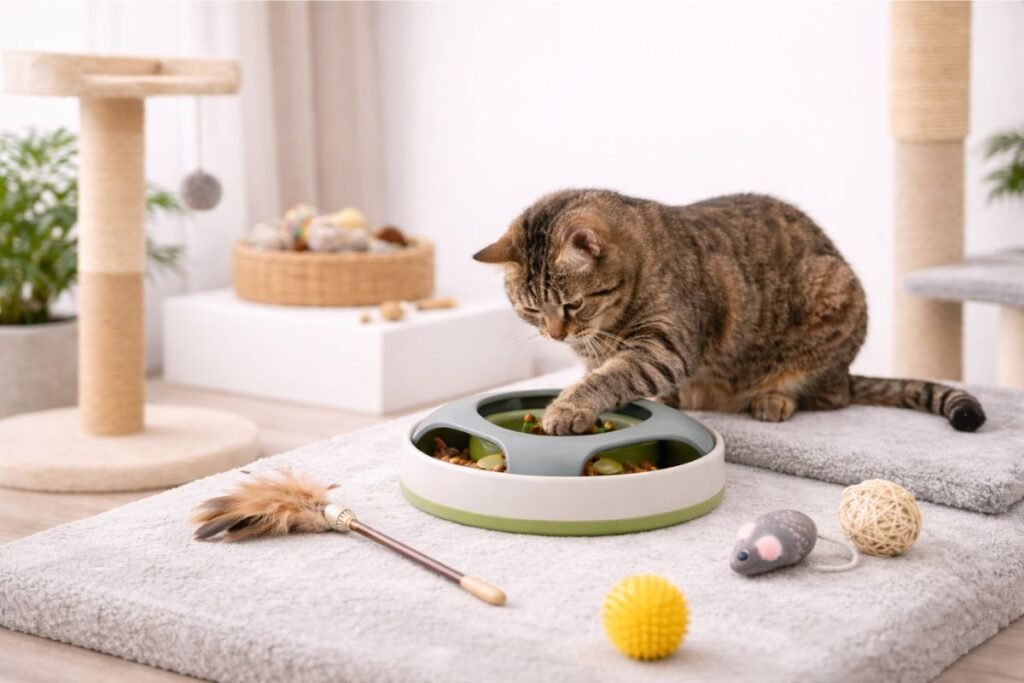
Cats need mental and physical stimulation to stay active and happy. Here are a few ways to enrich their environment:
- Interactive toys: Battery-operated or motion-activated toys will engage your cat’s hunting instincts.
- Puzzle feeders: These are great for both mental stimulation and slowing down mealtime.
- Balls, feathers, and wands: Toys like these encourage play and exercise.
Cat Furniture
Consider incorporating some cat-friendly furniture to enhance the space:
- Cat shelves and hideaways: Install wall-mounted shelves for climbing and places where your cat can hide when they need rest or privacy.
- Window perch: If possible, provide a cozy perch where your cat can enjoy the view.
Ensure Proper Feeding and Hydration
Your cat’s feeding station should be separate from their litter box area. Consider using an automatic feeder if you’re away during feeding times, ensuring your cat has access to food consistently.
- Fresh water: Keep a water bowl nearby, and consider using a water fountain to encourage hydration.
- Multiple stations: If you have multiple cats, create distinct feeding areas to prevent competition.
Respect Their Space
Give Them Privacy
One of the most important aspects of creating a perfect cat space is respecting your cat’s need for solitude. Cats are independent animals that occasionally need to retreat to a quiet corner to unwind.
- Don’t disturb them: When your cat is in their designated space, don’t force interaction. Let them come to you when they’re ready.
- Observe behavior: Pay attention to how your cat uses the space and make adjustments if necessary.
Max and His Space
Max, an energetic cat, was constantly in trouble, knocking things over and being hyperactive. After creating a dedicated space with plenty of toys, a scratching post, and a cozy hideaway, Max started using the space to unwind, which helped curb his more disruptive behaviors. Over time, he became more comfortable and less destructive.
Common Mistakes
- Too much openness: Cats need hiding spots. If the space is too open, your cat might feel exposed.
- Lack of vertical climbing space: Cats love to climb, so not providing vertical surfaces can make your cat feel restricted.
- Ignoring litter box hygiene: An unclean litter box can lead to stress and health problems. Always keep it clean and accessible.