
As a first-time dog parent, choosing the right collar or harness can feel overwhelming, especially when you’re facing problems like leash pulling, discomfort, or a lack of control. You want something that’s not only effective but also comfortable for your dog. In this post, I’ll help you choose the best dog collars and harnesses that solve common leash-related problems and improve your dog’s behavior.
Why the Right Collar or Harness Matters
The right collar or harness does more than just hold your dog’s ID tag—it’s essential for their safety, comfort, and behavior. Using the wrong one can lead to discomfort, skin irritation, or behavioral issues like pulling on the leash. Understanding which one to choose will make your walks more enjoyable for both you and your dog.
Common Problems
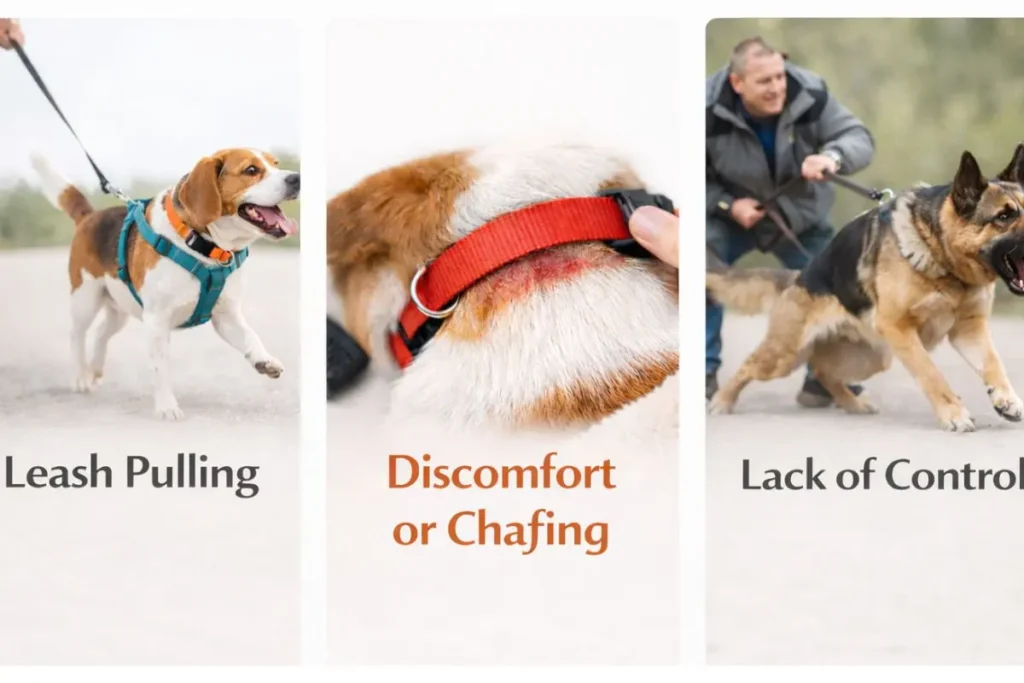
Before diving into our top picks, let’s go over the common problems that most dog owners face when choosing the right collar or harness.
Leash Pulling
Leash pulling is a huge issue for many dog owners. Whether your dog is a strong breed like a Labrador or a smaller, energetic dog, pulling on the leash can turn daily walks into a challenge.
Discomfort or Chafing
Traditional collars can sometimes cause discomfort or chafing, especially for dogs that wear them all day or during long walks. This discomfort can even worsen behavioral problems.
Lack of Control
Some collars and harnesses don’t provide the level of control you need to guide your dog properly, especially if they’re prone to lunging, pulling, or darting after distractions.
Top Dog Collars and Harnesses
Now, let’s dive into the best dog collars and harnesses that solve these issues and more.
Front-Clip Harness: The Best Solution for Pulling
If leash pulling is a concern, a front-clip harness is your best option. By attaching the leash at the front, it gently steers your dog’s body back toward you when they pull, discouraging the behavior.
- Pro Tip: Combine the front-clip harness with consistent training. If your dog pulls, stop walking and only continue when they’ve calmed down. This reinforces the “calm walking” behavior.
- Top Pick: Easy Walk Dog Harness by PetSafe
The front-clip design and lightweight material of this harness make it perfect for reducing pulling. It’s designed to be comfortable and easy to put on and adjust.
Head Halter: Maximum Control for Strong Dogs
For stronger dogs that tend to pull or lunge, a head halter gives you the ultimate control. It works similarly to a horse halter—steering your dog by their head rather than their body.
- Pro Tip: Head halters take a bit of getting used to. Start with short training sessions and use plenty of positive reinforcement, like treats, to encourage calm behavior.
- Top Pick: Halti Headcollar
The Halti Headcollar is one of the most effective options for strong or stubborn dogs. It’s designed to gently redirect their head and prevent pulling, making it a great option for dogs that don’t respond well to traditional harnesses.
Padded Collars: Comfort and Everyday Use
If your dog isn’t a big puller and you’re looking for something more comfortable for daily use, a padded collar may be all you need. These collars are gentle on your dog’s neck and ideal for more relaxed dogs.
- Pro Tip: Always check that the collar fits snugly but not too tight. You should be able to fit two fingers between the collar and your dog’s neck.
- Top Pick: Blueberry Pet Padded Dog Collar
This collar is padded for comfort and comes in various sizes and colors. It’s ideal for dogs that are calm on walks and need a simple, everyday collar.
Back-Clip Harness: Ideal for Puppies and Calm Dogs
Back-clip harnesses are great for puppies or calm dogs that don’t have pulling issues. These harnesses distribute pressure evenly across the chest, making them a great choice for comfortable, stress-free walks.
- Pro Tip: Back-clip harnesses work best for lighter dogs or puppies in training. If your dog tends to pull, you might want to switch to a front-clip option for better control.
- Top Pick: Ruffwear Front Range Harness
With a soft, padded design, this harness is perfect for puppies or dogs who don’t pull. It’s lightweight and comfortable, making it an excellent option for everyday use.
Mistakes to Avoid When Choosing a Collar or Harness
Selecting the right collar or harness can be tricky, but here are a few common mistakes to avoid.
Choosing the Wrong Size
If a collar or harness is too tight or too loose, it can cause discomfort or even injury.
- Solution: Measure your dog’s neck and chest before purchasing a collar or harness. Most products offer size guides to help you make the right choice.
Relying Only on Equipment Without Training
Using a no-pull harness or head halter is helpful, but it won’t solve the problem if your dog hasn’t been properly trained.
- Solution: Pair any new collar or harness with proper leash training. Consistent training and positive reinforcement are key to changing your dog’s behavior.
Prioritizing Style Over Function
While it’s tempting to choose a collar or harness based on how cute it looks, style should not be your priority, especially if your dog has specific needs like reducing pulling or chafing.
- Solution: Always prioritize function and comfort. Choose a collar or harness that addresses your dog’s specific behavior or physical needs.
Tips for Getting the Most Out of Your Collar or Harness
To make sure your collar or harness works effectively, follow these pro tips:
- Introduce Slowly: If your dog is new to wearing a harness or collar, let them get used to it gradually. Allow them to explore the equipment before putting it on, and always make sure it’s a positive experience.
- Fit Checks: Regularly check your dog’s collar or harness for signs of wear and tear. This ensures that it continues to fit well and doesn’t cause any discomfort.
- Use Positive Reinforcement: Whether you’re training your dog to walk without pulling or just getting them used to a new harness, always reward calm behavior with praise or treats.
Real-Life Example: Max the Labrador and His No-Pull Harness
Max, a 2-year-old Labrador, was a strong puller on walks. His owner, Sarah, had tried several collars, but nothing seemed to help. After switching to a front-clip harness, she began using the “stop-and-go” method during walks—whenever Max pulled, she stopped and waited for him to calm down before continuing.
Within a week, Max learned that pulling wouldn’t get him anywhere. The front-clip harness, combined with consistent training, helped him walk calmly by Sarah’s side. Max’s behavior improved significantly, and their walks became more enjoyable.
Key Takeaways
- Choose a collar or harness based on your dog’s specific needs, whether it’s reducing pulling, providing comfort, or giving you control.
- Front-clip harnesses and head halters are great solutions for pulling, while padded collars and back-clip harnesses are ideal for more relaxed dogs.
- Always combine the right equipment with consistent training to address behavior problems effectively.
Action Steps You Can Start Today
- Measure your dog’s neck and chest for a perfect collar or harness fit.
- Choose a harness that fits your dog’s walking behavior (front-clip for pulling, back-clip for calm dogs).
- Begin using the “stop-and-go” technique during walks if your dog pulls.
- Regularly check your dog’s equipment for comfort and wear.
By following these tips, you’ll not only solve your dog’s leash problems but also create a more comfortable and enjoyable walking experience for both of you. Don’t forget to save this article or share it with fellow dog owners to help them make the best choice for their dogs!