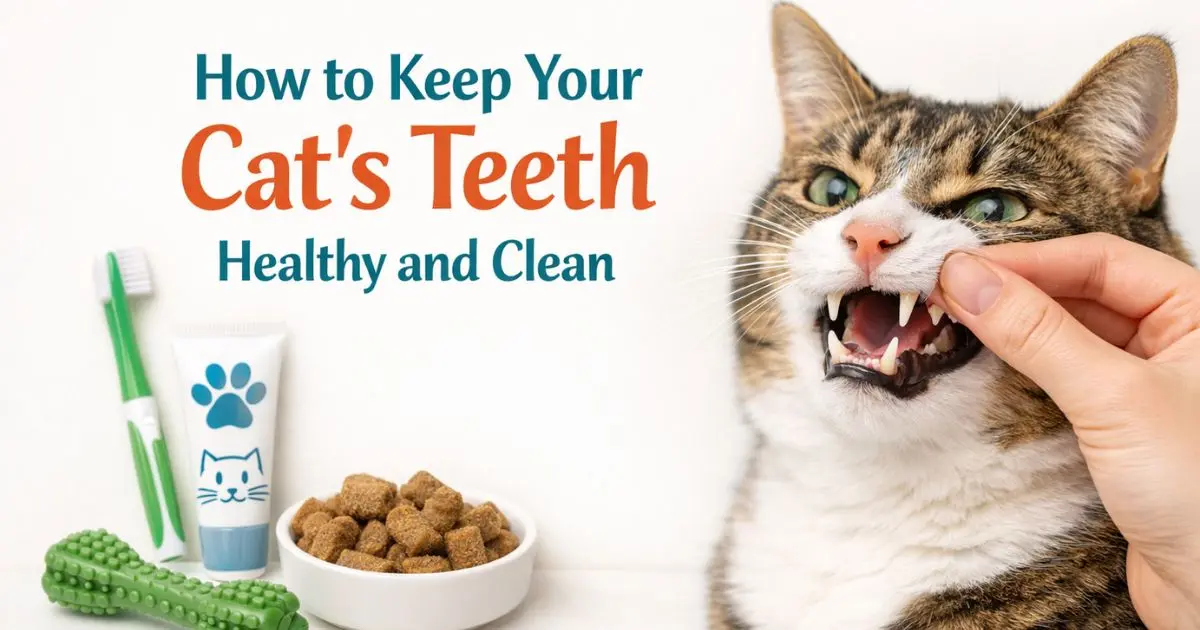
Taking care of your cat’s health goes beyond just feeding them and cleaning their litter box. One often overlooked aspect of your cat’s well-being is their dental hygiene. Many cat owners don’t realize how important it is to maintain their cat’s teeth and gums, which can lead to serious health issues like gum disease, bad breath, and even tooth loss. In this guide, we’ll help you understand how to keep your cat’s teeth healthy and clean, so they can live a happy, comfortable life.
Why Your Cat’s Teeth Matter
Just like in humans, your cat’s teeth are crucial for overall health. They play a role in chewing food properly, which helps with digestion. Poor oral hygiene can cause bacteria to build up in the mouth, leading to gum disease, tooth decay, and painful abscesses. These dental issues can also affect your cat’s kidneys, liver, and heart over time.
By taking simple steps to keep your cat’s teeth healthy, you can prevent these problems and keep your cat smiling.
Cat Dental Health Issues
The most common dental problem in cats is periodontal disease, which is caused by the buildup of plaque and tartar on the teeth. This can lead to gum irritation, infection, and even tooth loss. If left untreated, these problems can cause pain and affect your cat’s overall health. If you notice your cat avoiding food, drooling excessively, or pawing at their mouth, it might be a sign of dental discomfort.
Start Brushing Your Cat’s Teeth Early to Build Lifelong Habits
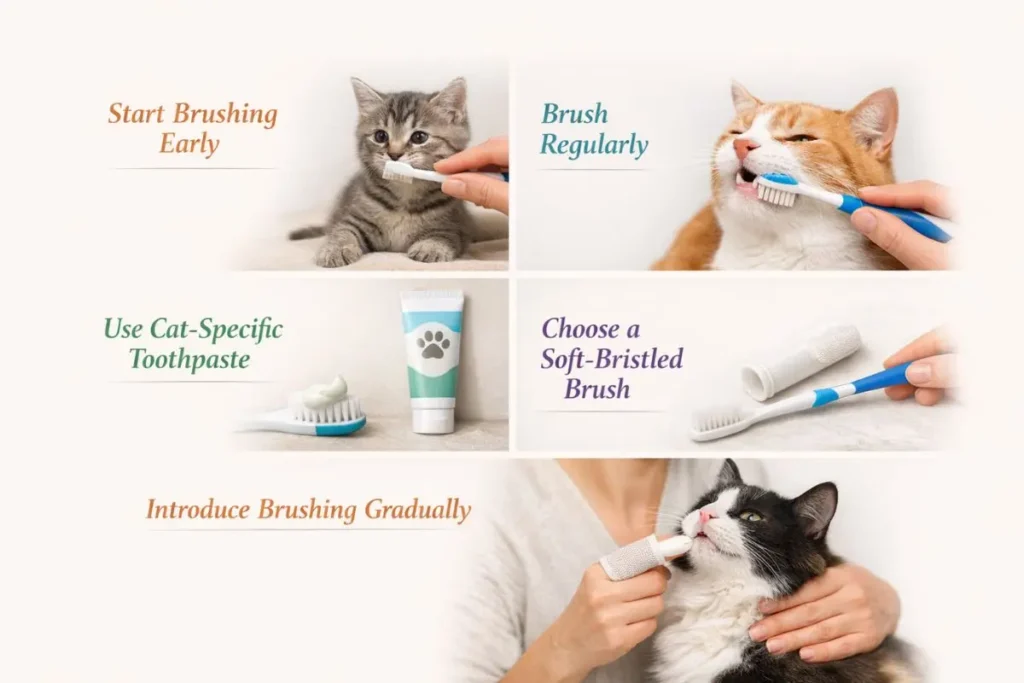
Starting dental care early is crucial for establishing a long-lasting habit. By introducing teeth brushing at a young age, your cat will gradually become accustomed to the process, making it easier to maintain their oral health as they grow. Cats that are introduced to brushing early on tend to accept it as part of their routine, helping prevent more serious dental issues in the future.
Incorporate Regular Brushing into Their Routine for Consistent Oral Care
Brushing your cat’s teeth 2-3 times a week is a vital step in preventing plaque and tartar buildup. Consistency is key in maintaining your cat’s dental health. Regular brushing will ensure that your cat’s teeth remain clean, their gums stay healthy, and the risk of periodontal disease is minimized. Make brushing a part of your cat’s grooming routine to keep their teeth in great condition over the long term.
Use Cat-Specific Toothpaste to Ensure Safety and Effectiveness
It’s essential to use toothpaste formulated specifically for cats because human toothpaste contains fluoride and other chemicals that are toxic to pets. Cat-friendly toothpaste, on the other hand, is safe to swallow and often contains enzymes that help break down plaque and tartar. These toothpaste options are made with flavors like chicken or seafood that appeal to cats, making the brushing process easier for both you and your cat.
Choose a Soft-Bristled Toothbrush to Protect Your Cat’s Gums
A toothbrush designed for cats should have soft bristles to avoid irritating your cat’s sensitive gums. You can find specially designed cat toothbrushes in most pet stores, and some even come with angled heads for easier access to the back of their mouths. A softer toothbrush ensures a more comfortable cleaning experience and reduces the risk of injury or gum damage while effectively removing plaque.
Gradually Introduce Brushing to Make Your Cat Comfortable
Not all cats will immediately take to the idea of having their teeth brushed. If your cat is new to brushing, it’s important to start gradually. Begin by gently massaging their gums with your finger or a soft cloth, then move on to using the toothbrush as they become more accustomed to the sensation. By taking things slow and being patient, you’ll help your cat feel comfortable and reduce any stress related to brushing.
Offer Dental Treats to Support Brushing and Reward Your Cat
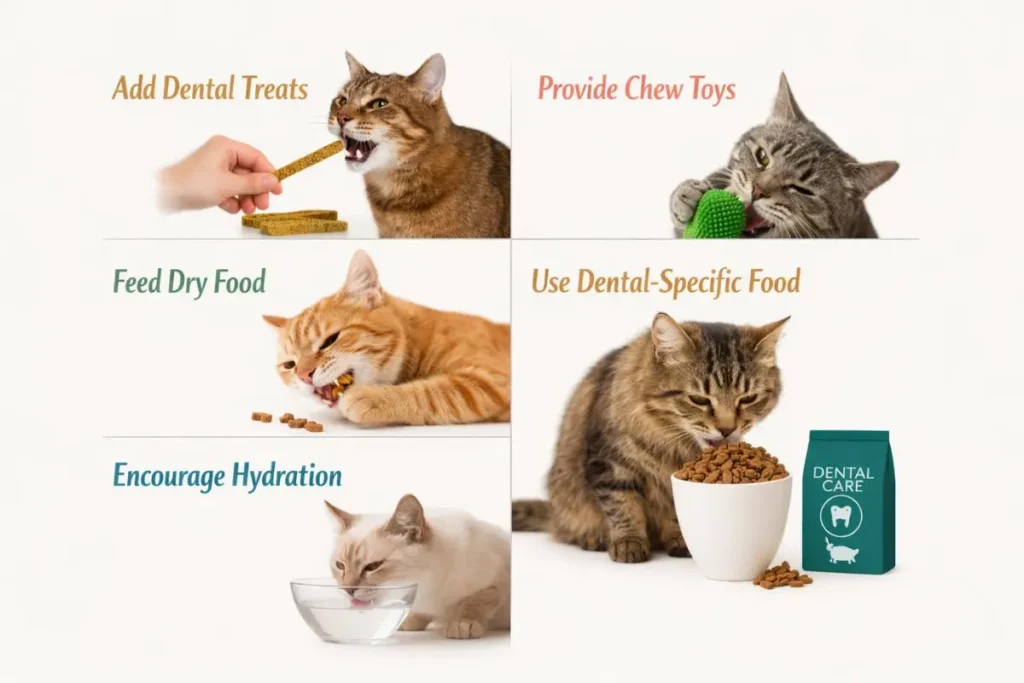
Dental treats are a great way to complement your cat’s brushing routine, helping reduce tartar buildup and freshen their breath. These treats often have a special texture that encourages chewing, which naturally helps clean their teeth. By offering dental treats after brushing, you not only provide an additional layer of oral care but also reward your cat for their cooperation, making the process enjoyable for them.
Provide Chew Toys to Help Maintain Healthy Teeth and Gums
Rubber or silicone chew toys are fantastic tools for maintaining your cat’s dental health. These toys help clean your cat’s teeth as they chew, promoting better oral hygiene while also providing entertainment. They are especially useful for targeting areas that are hard to reach with a toothbrush, such as the back molars, and can help prevent plaque buildup between regular brushing sessions.
Incorporate Dry Food into Your Cat’s Diet for Natural Plaque Removal
Dry food can play a helpful role in your cat’s dental care. The crunchy texture of kibble helps scrub the teeth as your cat chews, removing some of the plaque buildup and keeping their teeth cleaner. While dry food is not a replacement for brushing, it works in tandem with it to support oral hygiene. Be mindful of your cat’s overall diet, though, to ensure it’s balanced and suitable for their age and health needs.
Offer Dental-Specific Food to Help Reduce Plaque and Tartar Build-up
Certain specialized cat foods are formulated to support dental health. These foods are designed with larger kibble or specific ingredients that help reduce plaque and tartar as your cat eats. They can be a great addition to your cat’s regular diet, particularly if they are prone to dental issues or need extra support in keeping their teeth clean.
Encourage Hydration for Healthier Teeth and Gums
Proper hydration is crucial for your cat’s overall health, including their dental health. Fresh water helps rinse away food particles and bacteria from their mouth, preventing the buildup of plaque and tartar. Ensure that your cat has access to clean, fresh water at all times. Consider investing in a water fountain to encourage drinking, as many cats prefer running water, which may lead to increased hydration.
Use Water Additives for an Extra Layer of Plaque Protection
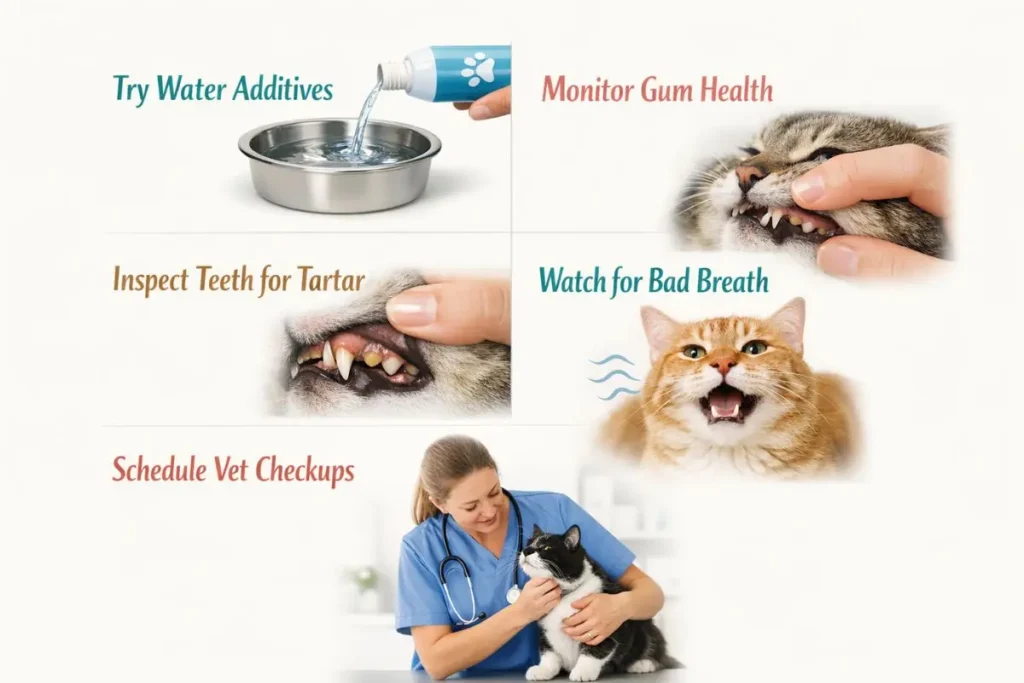
Water additives designed for oral health can be a helpful supplement to brushing. These additives are simply added to your cat’s drinking water and work by reducing plaque and tartar buildup. They also help freshen your cat’s breath by neutralizing odor-causing bacteria. Water additives are easy to incorporate into your cat’s daily routine and provide additional oral care without requiring extra effort.
Monitor Gum Health to Spot Early Signs of Problems
Healthy gums should appear pink and firm. It’s important to regularly check your cat’s gums for any signs of swelling, redness, or bleeding, as these can be early indicators of gum disease. If you notice any abnormalities, consult your vet promptly to address the issue before it develops into something more serious, like gingivitis or periodontal disease.
Watch for Plaque and Tartar Buildup on Your Cat’s Teeth
Plaque buildup can quickly turn into tartar, which hardens and can only be removed through professional cleaning. Inspect your cat’s teeth regularly for signs of yellow or brown discoloration, which are indicators of plaque or tartar buildup. If you notice this, it’s time to step up your brushing routine or schedule a visit to the vet for a professional cleaning.
Pay Attention to Bad Breath as a Warning Sign
While occasional bad breath is normal, persistent foul-smelling breath could be a sign of dental problems such as periodontal disease or infection. If your cat’s breath remains unpleasant despite regular brushing, it may indicate underlying dental issues that need attention. Don’t ignore bad breath, and consult your vet if it persists.
Visit the Vet Regularly for Checkups and Early Detection of Dental Problems
Regular vet visits are essential for monitoring your cat’s dental health. Your vet will examine your cat’s teeth and gums during their annual checkup and can spot early signs of dental disease that might not be obvious to you. Catching dental issues early can help prevent more serious complications and save your cat from pain later on.
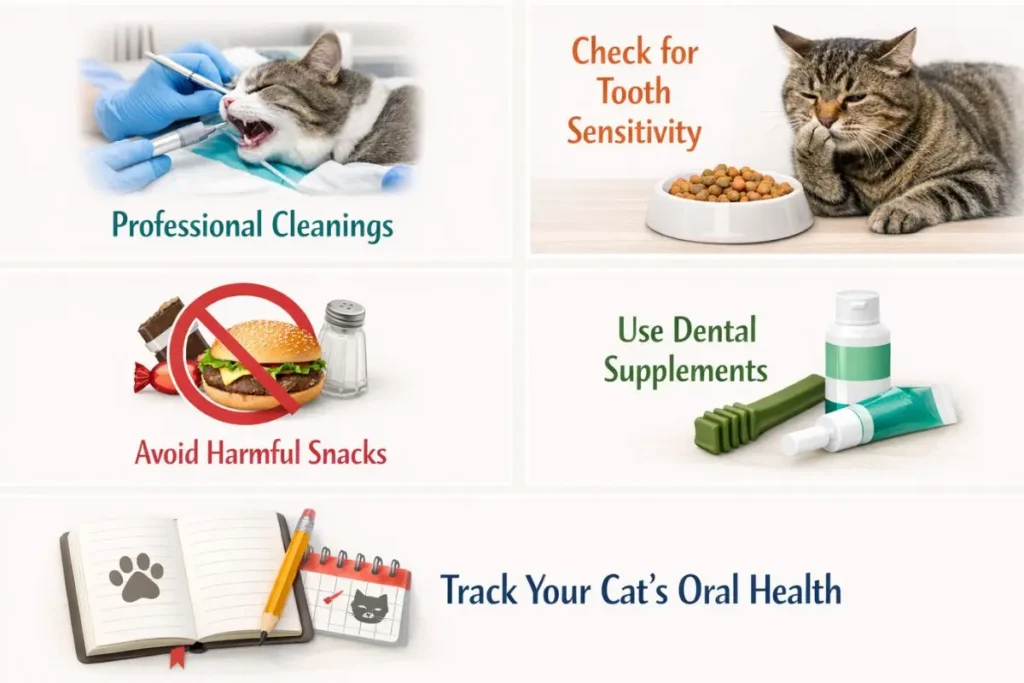
Schedule Professional Cleanings for Deep Plaque and Tartar Removal
For cats with significant tartar buildup, professional cleanings are necessary. These cleanings are performed under anesthesia to allow your vet to thoroughly clean your cat’s teeth, including the areas below the gum line that are often hard to reach with a toothbrush. Professional cleanings are typically recommended every 1-2 years, depending on your cat’s dental health.
Observe Your Cat for Signs of Tooth Sensitivity or Pain
If your cat is reluctant to eat hard food, drools excessively, or paws at their mouth, these could be signs of tooth sensitivity or pain. Dental discomfort in cats can stem from tooth decay, gum disease, or even cracked teeth. If you notice any of these behaviors, it’s time to schedule an appointment with your vet to assess the issue.
Avoid Offering Harmful Human Foods That Can Contribute to Decay
Human food, particularly sugary snacks or salty foods, can cause tooth decay and other dental problems in cats. Stick to treats that are specifically designed for cats, as these are formulated to protect their teeth. Avoid offering leftover human snacks, as they can be harmful to your cat’s teeth and overall health.
Consider Adding Dental-Specific Water Additives to Support Oral Hygiene
Dental water additives are easy to use and can provide an extra level of protection against plaque and tartar buildup. These products typically contain enzymes that help break down bacteria and prevent the formation of plaque, making them a convenient addition to your cat’s daily water supply.
Track Your Cat’s Dental Health to Stay on Top of Care
Keep a detailed record of your cat’s dental care, including brushing schedules, any professional cleanings, and any noticeable changes in their oral health. This record will help you stay proactive in addressing any issues and allow you to track their progress over time. It will also help you provide accurate information to your vet during checkups.
Common Mistakes to Avoid
Ignoring Dental Care
Many owners overlook dental care.
Fix it: Add dental care to your cat’s routine early.
Using Human Toothpaste
Human toothpaste is harmful to cats.
Fix it: Use cat-safe toothpaste.
Overlooking Dental Pain
Cats hide pain, so signs like drooling may go unnoticed.
Fix it: Be proactive and see the vet if you notice symptoms.