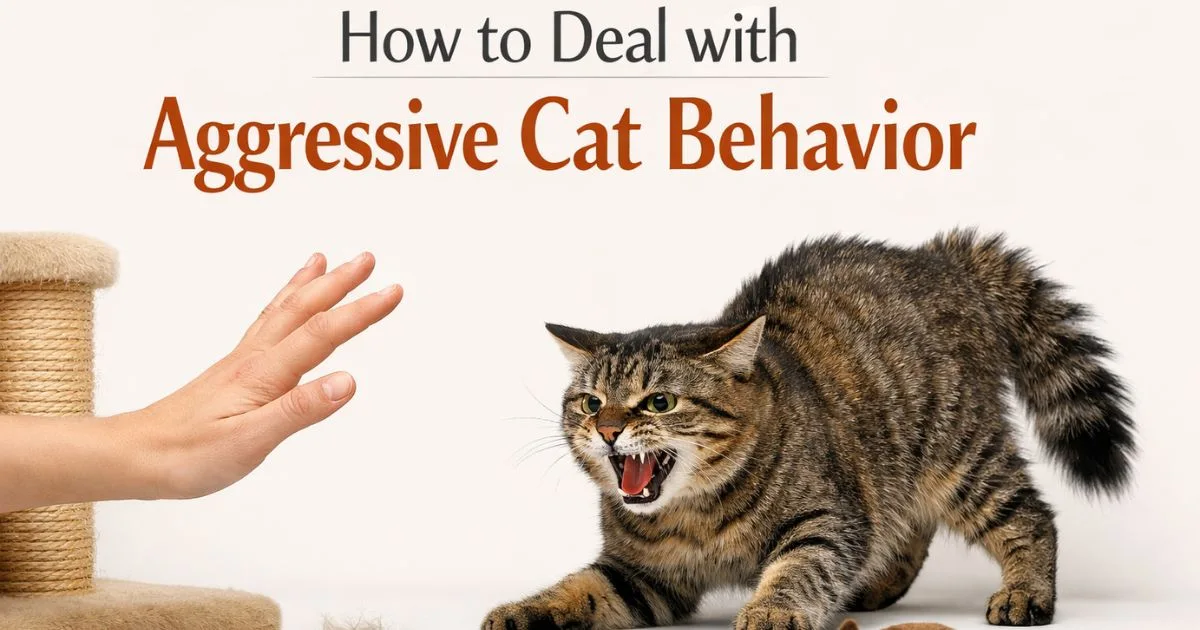
As a new cat owner, it’s not uncommon to encounter some challenging behaviors, especially aggressive cat behavior. Whether your cat is hissing, scratching furniture, swatting at your hands, or even biting, aggressive behavior can cause stress and confusion. These behaviors are often surprising, especially if you’re expecting a calm, affectionate pet. However, it’s important to understand that aggression in cats is usually a sign of an underlying issue, such as fear, frustration, or even pain. This means you can take action to address the aggression and create a better environment for both you and your cat.
In this guide, we’ll cover the common causes of aggressive behavior in cats, effective strategies to address and manage it, and common mistakes cat owners make when trying to resolve it. With the right knowledge and techniques, you’ll be able to reduce aggression, strengthen your bond with your cat, and create a happier, more peaceful home for both of you.
Understanding Aggressive Cat Behavior
First, it’s essential to understand why your cat is acting aggressively. Cats do not naturally want to harm their owners. When aggression happens, it’s often a form of communication that something is wrong, whether it’s stress, fear, or even pain.
Common Causes
Here are some of the most frequent reasons why cats display aggression:
- Fear or Anxiety: A new environment, unfamiliar people or animals, or loud noises can trigger a fear response that results in aggression. For example, your cat may lash out when a stranger enters the home, feeling threatened and unable to escape.
- Pain or Illness: Cats are excellent at hiding pain, but aggression can be a sign that something is wrong. If a cat is hurting due to an injury, dental problem, or illness, they may become irritable and aggressive when touched or handled.
- Territorial Aggression: Cats are territorial animals, and aggression can arise if they feel their space is being invaded. For instance, if you have another pet or if a cat from outside is entering your yard, your cat may act defensively.
- Overstimulation: Cats have limits when it comes to petting or play. If you pet them for too long or if they become overstimulated during play, they may switch from being relaxed to aggressive without warning.
10 Steps to Handle Aggressive Cat Behavior
Now that we understand some causes, let’s dive into 10 steps you can take to manage and reduce aggressive behavior.
Recognize the Signs of Aggression
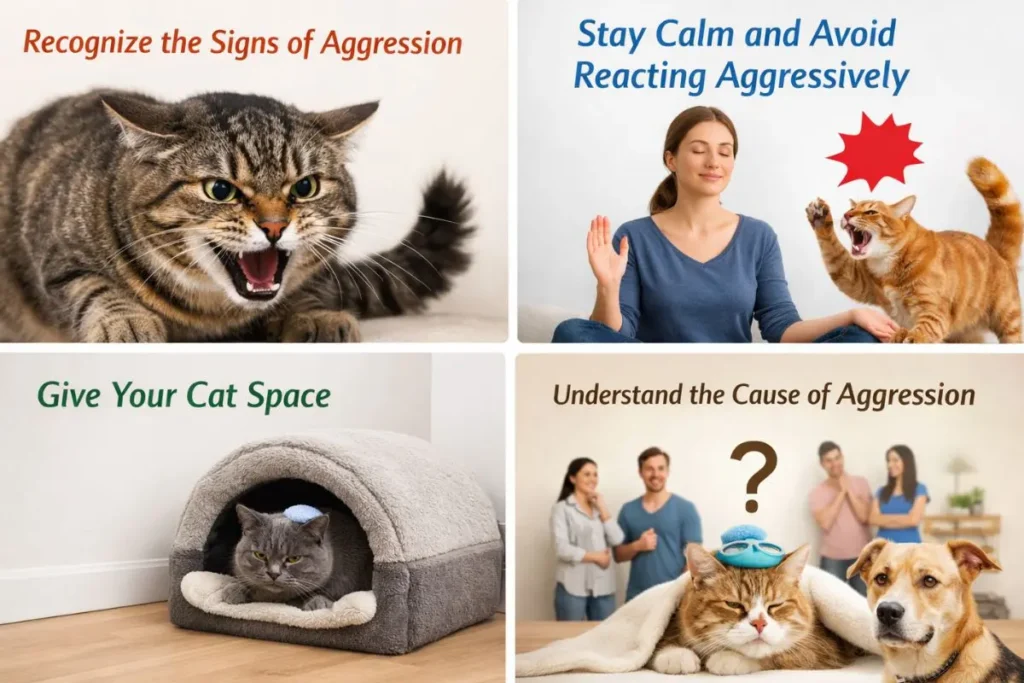
Cats usually give warning signals before acting aggressively, such as dilated pupils, a twitching tail, flattened ears, or growling. Early recognition helps you act quickly and prevent the aggression from escalating.
Stay Calm and Avoid Reacting Aggressively
If your cat is aggressive, avoid raising your voice or trying to physically punish them. Cats are sensitive to your tone and body language, and responding angrily can increase their stress. Remain calm and give your cat time to settle down.
Give Your Cat Space
Aggressive behavior often happens when a cat feels cornered or trapped. Provide them with space to retreat to a safe, quiet area. This gives your cat a chance to relax and recover from stress.
Understand the Cause of Aggression
Take a moment to think about what could be triggering the aggression. Are there new people or animals in the house? Has your cat been ill or injured? Identifying the root cause is key to finding a solution.
Create a Calm, Safe Environment
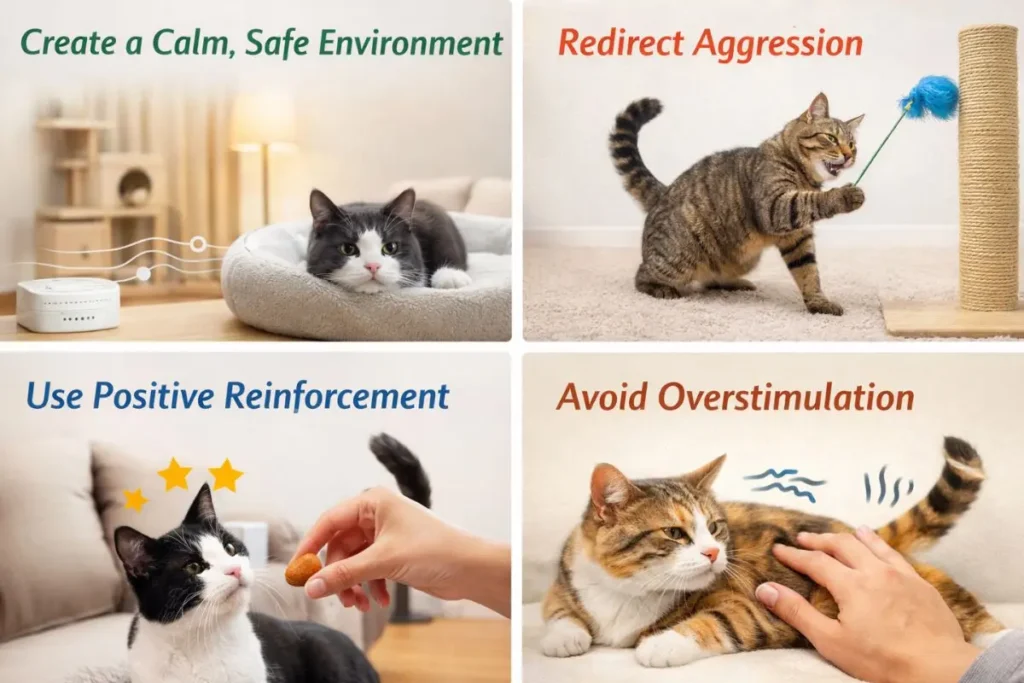
Reducing stress in the environment can help decrease aggression. Keep your cat’s environment calm by limiting noise, avoiding sudden movements, and making sure they have a quiet space to retreat to when they feel overwhelmed.
Redirect Aggression
Instead of letting the aggression escalate, redirect your cat’s energy. Use toys to engage your cat in play or place a scratching post in a strategic spot. Redirecting aggression to a toy or acceptable object helps prevent destructive behavior.
Use Positive Reinforcement
Reward calm, non-aggressive behavior with treats, praise, or affection. By using positive reinforcement, your cat will learn to associate calm behavior with good things, encouraging them to act less aggressively in the future.
Avoid Overstimulation
Be mindful of your cat’s limits. Overstimulating a cat with too much petting or play can lead to aggression. Watch for signs that your cat is becoming overwhelmed (such as a twitching tail or pulling away) and stop the interaction before it escalates.
Ensure Regular Vet Check-ups

If you suspect that your cat’s aggression is linked to pain or illness, it’s essential to take them to the vet. Health issues like arthritis, dental pain, or infections can cause discomfort, leading to aggressive behavior.
Consult a Professional
If your cat’s aggression persists despite your efforts, consider consulting a professional cat behaviorist. They can provide expert guidance, assess the situation, and offer strategies tailored to your cat’s specific needs.
Common Mistakes
As you work through the steps to address aggression, it’s important to avoid common mistakes that can make things worse. Here are five mistakes and how to fix them:
Punishing the Cat
- Mistake: Some owners mistakenly punish their cats for aggressive behavior, thinking it will stop the aggression.
- Fix: Punishing a cat for aggression only increases their stress. Focus on redirecting the behavior and rewarding positive actions instead.
Ignoring Early Warning Signs
- Mistake: Owners sometimes miss the subtle signs of aggression, like a flicking tail or dilated pupils, and this can escalate the behavior before they can react.
- Fix: Pay close attention to your cat’s body language and catch the warning signs early to prevent further aggression.
Overstimulation
- Mistake: Petting or playing with your cat for too long can lead to overstimulation, which may cause them to lash out.
- Fix: Keep interactions short, especially during playtime, and watch for signs that your cat is getting overstimulated.
Not Providing Enough Mental or Physical Stimulation
- Mistake: Boredom and lack of exercise can lead to frustration, which often results in aggression.
- Fix: Engage your cat with interactive toys, daily play sessions, and environmental enrichment like scratching posts and climbing structures.
Not Addressing Health Issues
- Mistake: Aggression can sometimes be linked to pain or medical issues, but some owners may overlook this cause.
- Fix: If your cat’s behavior changes suddenly, take them to the vet to rule out health problems such as injuries or infections that could be causing pain.
Pro Tips for Managing
- Provide Vertical Space: Cats feel safer when they have high perches to escape to. Providing a cat tree or shelves will give your cat a sense of security.
- Use Calming Collars: Pheromone-infused collars, like Feliway, can help reduce stress and anxiety, making your cat less likely to act aggressively.
- Adopt Another Cat (Carefully): If your cat is territorial, consider getting a second cat—but be sure to introduce them gradually and under supervision to avoid more aggression.