Bringing a new dog into your home is an exciting and sometimes overwhelming experience—especially when it comes to the essential steps to introduce your dog to your family and friends. Whether you’ve just adopted a playful puppy or rescued an adult dog, making sure the introduction goes smoothly is crucial. It’s not just about meeting new people; it’s about creating a positive environment where your dog feels safe, confident, and comfortable.
The main challenge many dog owners face is that dogs can get nervous or overly excited in new social situations, which might lead to behaviors like barking, jumping, or hiding. But don’t worry—by following the right steps, you’ll help your dog adjust with ease.
Why It’s Important to Introduce Your Dog to Your Family and Friends
Introducing your dog to family and friends may seem like a simple task, but it’s a pivotal moment in building your dog’s socialization skills and ensuring a positive, harmonious environment. Here’s why it’s essential:
- Establishing healthy relationships: Dogs are social creatures and thrive on positive interactions with people. Proper introductions allow your dog to form healthy bonds with your family and friends.
- Preventing behavioral issues: An improperly executed introduction can cause fear, anxiety, or aggression in your dog. The more stress-free and gradual the process, the less likely these problems will arise.
- Emotional well-being: Socializing your dog properly reduces anxiety and helps them become more confident in new situations. This is important not only for family and friends but for any future interactions with strangers or in public.
Introducing Your Dog to Your Family and Friends
Introducing your dog to family and friends isn’t a one-size-fits-all process. Each dog has their own temperament, and the introduction should be tailored to their comfort and personality. Here’s an expanded guide to make sure every introduction is as smooth as possible:

Prepare Your Dog for the Introduction
Before introducing your dog to new people, it’s crucial to prepare them for success. A well-prepared dog will have a better experience and respond calmly to the new situation.
- Exercise Before the Introduction: If your dog is full of energy, take them for a walk or play with them before the introduction. A tired dog is less likely to feel overwhelmed.
- Refresher on Obedience Commands: Basic obedience training like “sit,” “stay,” and “come” will give you more control during the introduction. Make sure your dog is familiar with these commands, so you can direct their behavior as needed.
- Have Familiar Scents Present: Dogs experience the world primarily through scent. You can start by letting your dog sniff a piece of clothing or a personal item from your family or friends before the actual introduction. This makes them less anxious when meeting the new person.
Choose the Right Time and Setting
The environment where you introduce your dog is just as important as the timing. You want to make sure the setting is calm and free from distractions to set your dog up for a successful interaction.
- Keep It Calm and Quiet: Introductions should happen in a quiet, controlled environment. This could be your living room or a neutral space in your house where your dog feels comfortable. Avoid doing the introduction in noisy or chaotic settings like during a family gathering or party.
- Avoid Distractions: Turn off the TV, close windows, and remove other distractions like toys or other pets. The fewer distractions there are, the better your dog can focus on the new person.
- Choose a Calm Time of Day: Pick a time when your dog isn’t too tired, overexcited, or hungry. It’s better to introduce your dog after a walk when they’ve burned off some energy.
Introduce Your Dog Gradually to the New Person
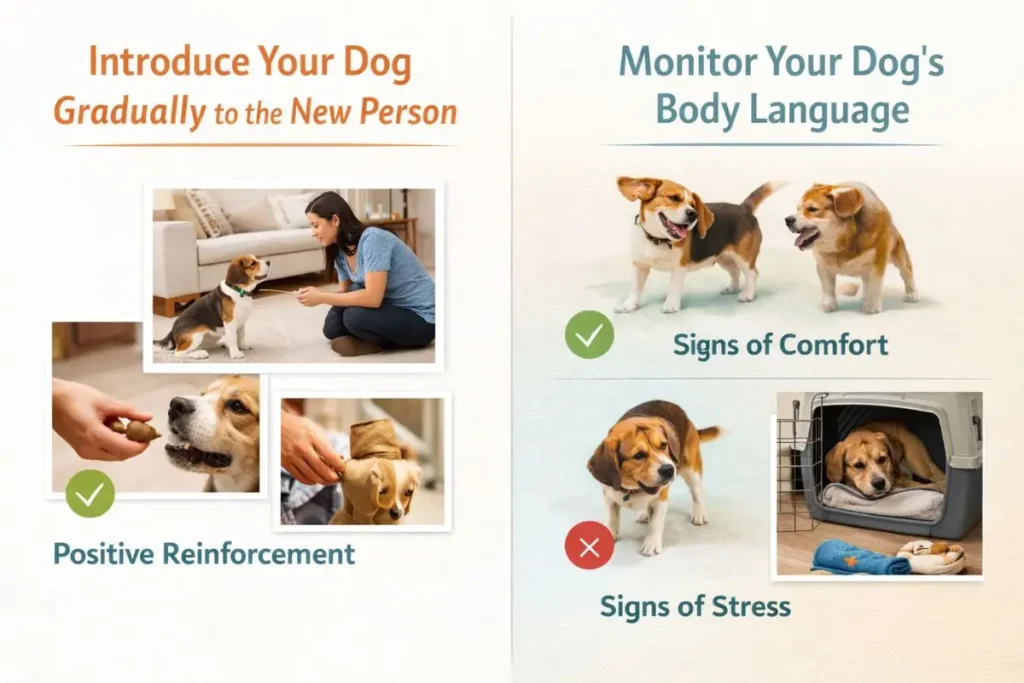
Start the introduction slowly to avoid overwhelming your dog. The goal is to give your dog a chance to become comfortable with the new person on their own terms.
- Let Your Dog Take the Lead: Don’t force your dog to approach anyone. Let them come forward when they’re ready. You can encourage the dog with treats, but don’t push them into the situation.
- Stay Low and Calm: Have your friend or family member kneel or sit down instead of standing. This makes them appear less intimidating. They should remain calm, and avoid making sudden movements or loud noises that could startle your dog.
- Short Sessions: Keep the introduction short and sweet. Start with a 5-minute interaction, especially for more nervous dogs. Gradually increase the length of time as your dog gets more comfortable with the person.
- Use Positive Reinforcement: Praise and reward your dog calm behavior. Use treats and calm words like “good dog” when they show interest in the new person without being overly excited or fearful.
Monitor Your Dog’s Body Language
Always observe your dog’s body language during introductions. This can help you gauge how your dog is feeling and when to take a step back.
- Signs of Comfort: Relaxed ears, a wagging tail, and soft body posture are signs that your dog is feeling comfortable.
- Signs of Stress: If your dog’s body becomes stiff, they start to back away, or they growl or bark, these are signs of discomfort. If this happens, allow your dog to retreat to a quiet spot where they feel safe.
- Know When to Pause: If your dog seems overwhelmed, it’s important to end the introduction early. Let them take a break in a separate room or crate to decompress. Pushing your dog too far can create negative associations with new people.
Gradual Exposure for Shyer Dogs
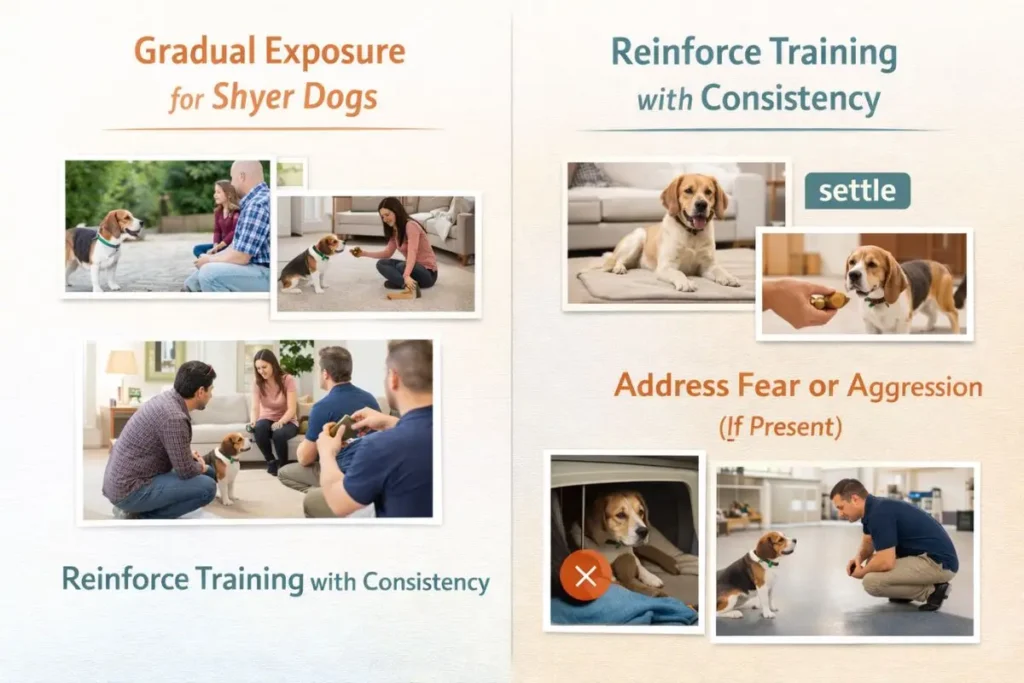
Some dogs, particularly rescues or puppies with limited socialization, may need extra help in getting comfortable with new people. If your dog is particularly shy or anxious, here’s how you can help them adjust:
- Slowly Increase the Number of People: Start by introducing your dog to one person at a time. After a few successful introductions, you can slowly increase the number of people. Avoid big family gatherings or parties during the first few months of introducing your dog.
- Desensitize with Regular Visits: Have your friends or family come over regularly but initially keep a distance. Over time, allow your dog to approach them at their own pace.
- Create Positive Associations: Every time your dog interacts calmly with someone, offer them treats and praise. This reinforces the idea that new people bring good things (treats, attention, affection), which will help reduce fear over time.
Reinforce Training with Consistency
Once your dog becomes accustomed to interacting with your family and friends, maintain a routine of positive reinforcement to continue reinforcing good behavior.
- Keep Practice Sessions Going: Regularly expose your dog to new people in low-pressure settings. These controlled sessions help your dog learn that meeting new people is a normal and positive experience.
- Train for Calm Behavior: Encourage calmness by reinforcing relaxed behavior, even when guests are not around. Teach your dog commands like “settle” or “go to your mat” to help them learn when it’s time to relax, even when there’s excitement around.
Address Fear or Aggression (If Present)
If your dog shows signs of fear, aggression, or anxiety during the introduction, it’s crucial to take steps to address these behaviors early on.
- Never Punish Fear: If your dog is frightened or nervous, punishing them will only make the situation worse. Instead, work on building confidence through positive reinforcement and patience.
- Consult a Professional Trainer: If your dog is overly aggressive or fearful, it might be time to consult a professional dog trainer. They can work with you to help your dog feel safe and secure during interactions with new people.
Common Mistakes
Overwhelming the Dog with Too Many People
Introducing your dog to too many people at once can cause them stress, especially if they’re shy or nervous. This may result in fear or avoidance behaviors.
- Solution: Start with just one person at a time and gradually increase the number of people as your dog becomes more comfortable. Allow your dog to take the lead in the interaction.
Forcing the Dog to Interact
Forcing your dog to interact with someone, especially when they’re not ready, can cause fear and anxiety.
- Solution: Always give your dog the option to approach. Let them sniff the new person and choose when to make contact. Forcing the interaction will only heighten their anxiety.
Lack of Supervision
Even if your dog is well-behaved, supervision is essential during introductions to prevent them from feeling overwhelmed or cornered.
- Solution: Always supervise interactions, especially in the beginning. If your dog shows signs of stress, such as growling or trying to hide, gently remove them from the situation and try again later.
Pro-Level Tips for Successful Introductions
Allow Scent Familiarization First
Dogs perceive the world primarily through their sense of smell. Introducing them to a new person through scent can make the process smoother.
- How to do it: Have your friends or family members leave behind a personal item, such as a jacket or scarf. Let your dog sniff the item before the in-person introduction to become familiar with the scent.
Desensitize with Regular Visits
For dogs that are particularly shy or fearful, desensitization can be a helpful tool. By allowing your dog to gradually become accustomed to the presence of new people, you can reduce their anxiety over time.
- How to do it: Have your friends or family members visit your home frequently but remain at a distance. Over time, let your dog approach them at their own pace. Gradual exposure reduces fear and makes the experience less intimidating.
Create a “Go to Your Spot” Command
A “go to your spot” command can be a lifesaver when your dog feels overwhelmed and needs a break.
- How to do it: Train your dog to go to their bed or crate when they need a moment of quiet. This gives your dog a place to retreat to during introductions, making the process less stressful for them.