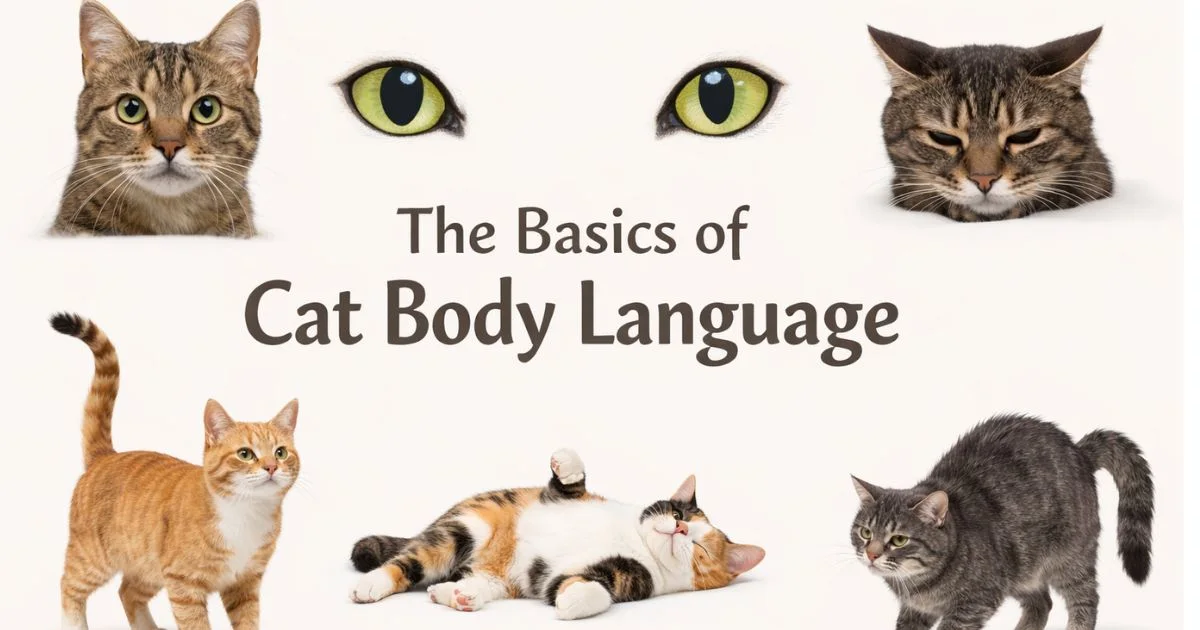
As a new cat owner, understanding your cat’s body language is crucial for fostering a healthy and positive relationship with your feline friend. Cats communicate through a variety of subtle body language cues, and recognizing these signals can help you address common issues like scratching furniture, litter box avoidance, excessive meowing, and more. Whether your cat is trying to show affection, communicate discomfort, or tell you they need space, understanding their behavior and body language will make you a more confident and compassionate pet parent. This knowledge is essential for interpreting cat behavior and preventing misunderstandings that could lead to unwanted habits.
In this article, we’ll guide you through the key body language signals your cat uses, such as tail positioning, ear movement, and eye contact, and provide actionable tips to solve behavioral problems. You’ll learn how to recognize signs of stress, happiness, fear, aggression, and other emotions in your cat, ensuring that you meet their needs and strengthen your bond. By paying close attention to cat behavior, you’ll also be able to adjust your pet care routine to better suit your cat’s personality and comfort level.
The Basics of Cat Body Language
Before diving into specific behaviors, let’s take a look at the key aspects of your cat’s body language that can help you interpret their feelings.
Ears
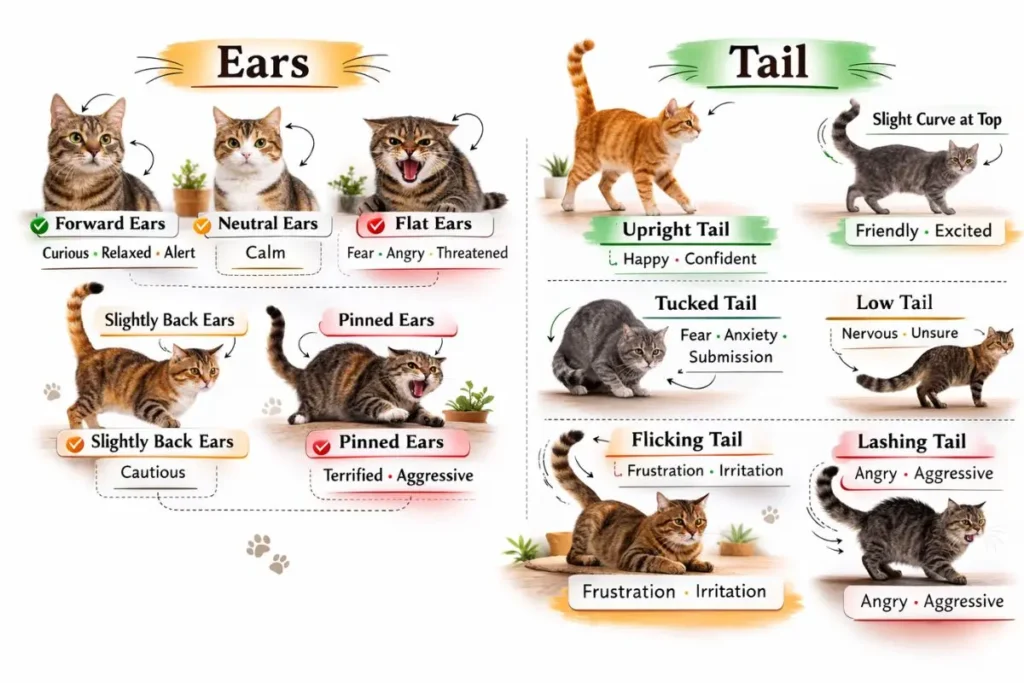
Your cat’s ears can tell you a lot about how they’re feeling. They serve as a quick barometer for emotions, whether it’s curiosity, fear, or frustration.
- Forward Ears: When your cat’s ears are facing forward, it usually means they’re curious, relaxed, or attentive. They might be engaged in something, like watching a bird outside or listening to a sound. This is generally a sign of a happy, healthy cat.
- Flat Ears: If your cat’s ears are flattened against their head, it often indicates stress or aggression. They may be feeling threatened or annoyed. When you see this, it’s best to give your cat some space. This can also occur if your cat is overstimulated during playtime, so it’s essential to keep an eye on their overall behavior.
Tail
A cat’s tail is one of the most expressive parts of their body. It communicates their mood and intentions, so understanding tail movements is crucial.
- Upright Tail: A tail held high is a sign of confidence and happiness. It’s often seen when a cat is walking through their environment, feeling secure. A slight curve at the top of the tail may indicate that they’re particularly friendly or excited.
- Tucked Tail: When your cat tucks their tail between their legs, it’s a sign of fear, anxiety, or submission. It’s an indicator that they’re feeling unsafe or stressed. It’s essential to respect their space and allow them time to calm down.
- Flicking or Lashing Tail: A fast-moving tail can signal frustration or agitation. Your cat may be annoyed or overstimulated. If you notice this while petting them, it’s a good idea to stop and give them a break.
Eyes
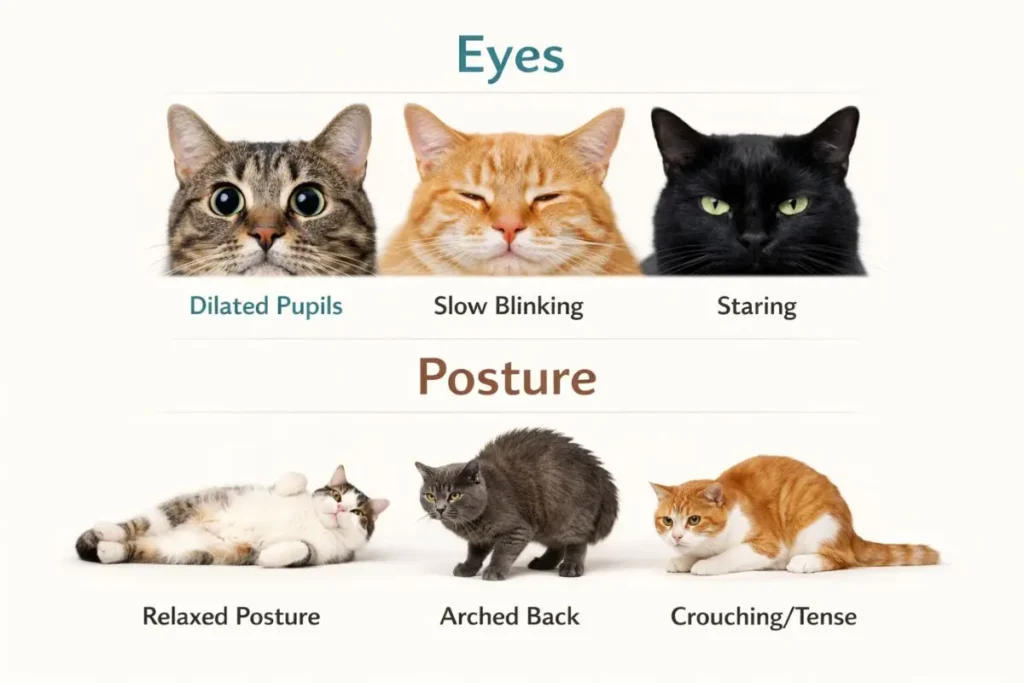
A cat’s eyes are incredibly expressive and can reveal a lot about their emotional state.
- Dilated Pupils: When a cat’s pupils are wide, it’s often an indication that they’re excited, frightened, or overstimulated. If you’re playing with them and notice dilated pupils, they’re likely in “hunt mode,” and the play session could get intense.
- Slow Blinking: If your cat slow blinks at you, it’s a sign of affection and trust. Cats only slow blink at individuals they feel safe with, so it’s an excellent way to bond with your pet. You can return the gesture by slow blinking back at them.
- Staring: While some cats may stare at objects or people out of curiosity, prolonged eye contact can sometimes be interpreted as a challenge. If your cat is staring at you, they might be trying to assert dominance or ask for attention. On the other hand, if your cat is avoiding eye contact, they may feel threatened or uncomfortable.
Posture
A cat’s overall posture is a critical indicator of how they’re feeling. Whether they’re standing, sitting, or lying down, their posture reveals a lot about their emotional state.
- Relaxed Posture: A cat with a relaxed, open posture is a content and confident feline. They may be lounging on their back with their belly exposed, showing you they feel completely safe.
- Arched Back: An arched back, often accompanied by puffed-up fur, signals that your cat feels threatened and is preparing to defend themselves. This could also occur when they’re startled or trying to make themselves appear larger during a confrontation.
- Crouching or Tense Body: When your cat is crouched low to the ground or tensed up, it typically means they’re frightened or unsure of their environment. This can also be seen in hunting behavior when they’re trying to sneak up on a toy or prey.
Solving Common Problems
Scratching Furniture
Why It Happens: Scratching is a natural and necessary behavior for cats. It helps them mark their territory, stretch their muscles, and shed the outer layer of their claws. However, when your cat starts scratching your furniture or carpets, it can become a problem.
How to Fix It:
- Provide Scratching Posts: Set up scratching posts made of sisal, cardboard, or carpet. Place them near the areas your cat likes to scratch to encourage them to use the posts instead of your furniture.
- Use Catnip: Sprinkle catnip on the scratching posts to attract your cat to the area. Most cats enjoy the scent, which can make the posts more enticing.
- Trim Their Claws: Regularly trimming your cat’s claws can reduce the damage caused by scratching. This can also make them less likely to engage in aggressive scratching.
- Cover Furniture: If your cat continues to scratch the furniture, you can try using double-sided tape. Cats dislike the sticky feeling, and it will deter them from scratching.
Not Using the Litter Box
Why It Happens: When a cat stops using the litter box, it’s often due to stress, an unclean box, or a medical issue. Cats are naturally clean animals, so if they avoid the litter box, something is likely bothering them.
How to Fix It:
- Keep the Litter Box Clean: Scoop the litter box daily and change the litter regularly. Cats are very sensitive to cleanliness, and a dirty box may discourage them from using it.
- Check the Location: Make sure the litter box is in a quiet, low-traffic area of your home. Cats prefer private, safe places for their bathroom needs.
- Try Different Litter: Some cats have preferences for certain types of litter. If your cat is avoiding the box, try experimenting with different textures or brands to see what they like best.
- Consult a Vet: If the problem persists, it’s essential to take your cat to the vet. Urinary tract infections, kidney disease, or other medical issues could be causing the behavior.
Excessive Meowing
Why It Happens: Cats meow to communicate with their owners. Excessive meowing could mean that your cat is hungry, lonely, or stressed. They may also be seeking attention, or something might be bothering them.
How to Fix It:
- Consistent Feeding Schedule: If your cat is meowing for food, try setting up a regular feeding schedule. Cats thrive on routine, so they’ll learn to expect their meals at specific times.
- Playtime and Interaction: Cats that meow for attention may need more interaction. Spend quality time with your cat each day by playing with toys or petting them.
- Check for Medical Issues: If your cat continues to meow excessively, it could be due to an underlying medical condition such as hyperthyroidism. It’s important to rule out health concerns by visiting the vet.
Over-Grooming and Excessive Licking
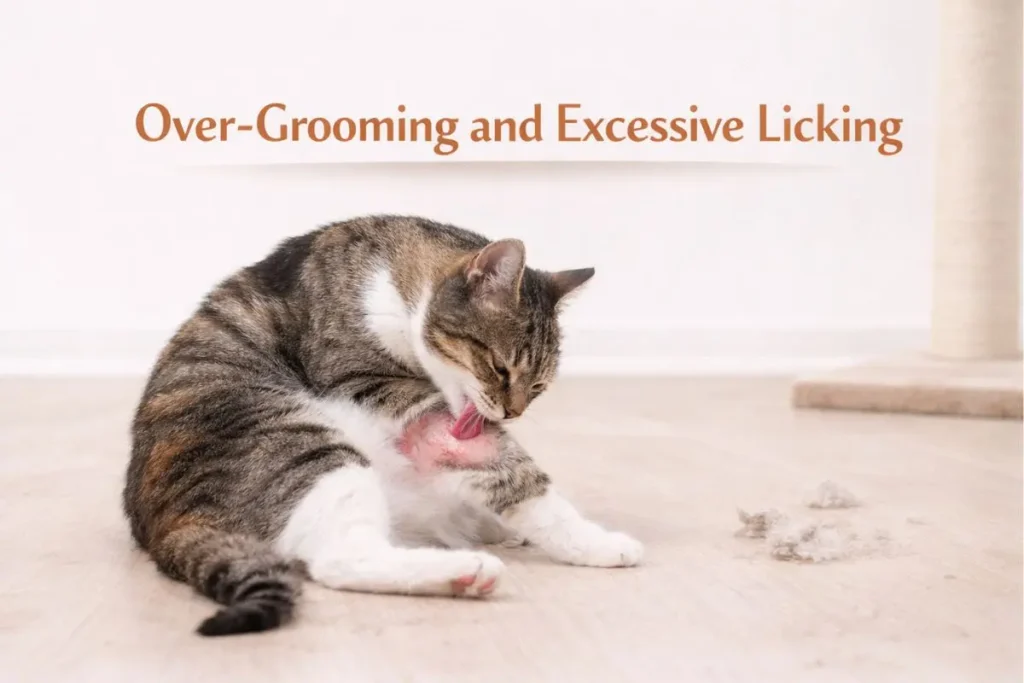
Why It Happens: Cats are fastidious groomers, but when a cat starts over-grooming, it may be due to stress, boredom, or a skin issue. Excessive licking can also be a sign of allergies or flea infestations.
How to Fix It:
- Provide Enrichment: Make sure your cat has enough mental and physical stimulation. Interactive toys, scratching posts, and climbing structures can help keep them occupied.
- Regular Vet Check: If the over-grooming continues, take your cat to the vet to check for any skin conditions, allergies, or parasites.
- Calming Products: Some cats may benefit from calming sprays or diffusers designed to reduce anxiety. Talk to your vet about options if you believe stress is causing the behavior.
Pro Tips for Understanding
Watch for Subtle Signs of Stress
Cats are masters of hiding their stress, but if you know what to look for, you can spot the signs early. Look for changes in behavior like hiding more often, changes in appetite, or sudden aggression. Creating a calm and predictable environment can help reduce stress.
Provide a Variety of Toys
Play is essential for a cat’s well-being. Ensure your cat has a mix of toys to engage with, from interactive wands to puzzle feeders. This not only keeps them active but also satisfies their natural hunting instincts, reducing the chances of behavior problems caused by boredom.
Use Positive Reinforcement
If your cat is displaying a desirable behavior, reinforce it with positive rewards, such as treats or affection. This helps them understand what behaviors are acceptable and encourages repetition.
By paying close attention to your cat’s body language, behavior, and needs, you can quickly identify the source of any issues and take steps to resolve them.