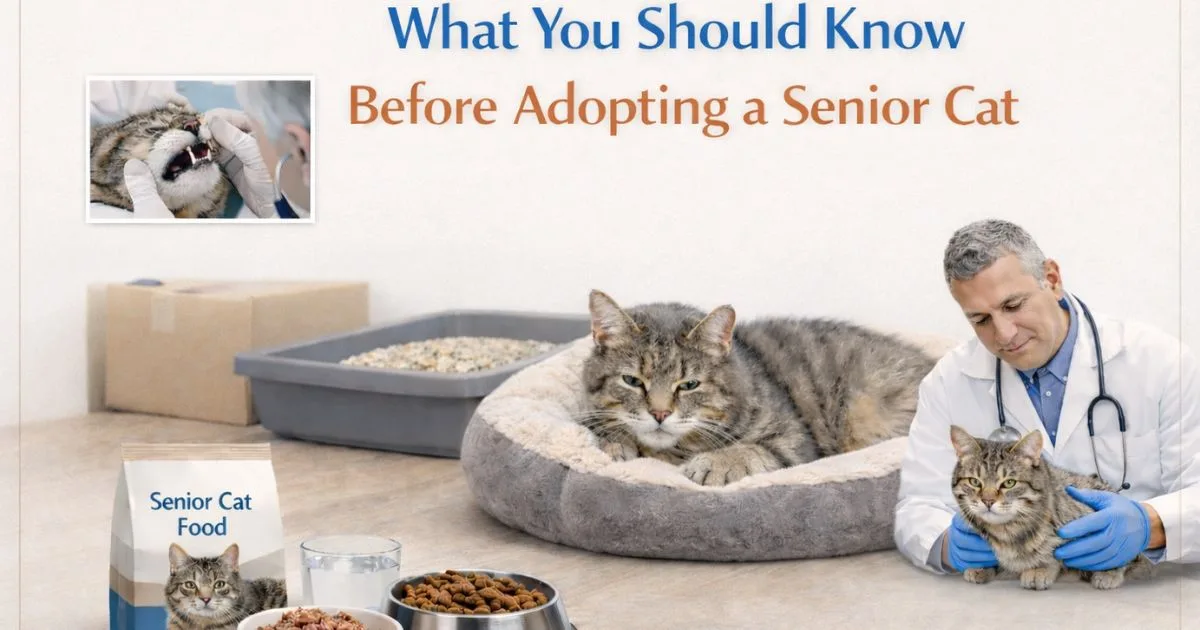
Adopting a senior cat can be one of the most rewarding decisions you’ll ever make. These wonderful senior cat companions bring comfort, affection, and stability to your life, making them an excellent choice for people looking for a calmer, more relaxed pet. However, it’s important to remember that senior cats come with their own set of challenges, especially when it comes to their health, behavior, and daily care.
Whether you’re a first-time cat owner or simply looking to offer a loving home to an older cat, understanding their specific needs will help you provide the best possible care and improve their quality of life. In this guide, we’ll walk you through everything you need to know about adopting a senior cat, from health concerns to behavioral adjustments, ensuring a smooth transition and a happy, healthy life for both you and your new feline friend.
Why Adopt a Senior Cat?
Before diving into the nitty-gritty of senior cat care, let’s take a moment to appreciate the advantages of adopting an older feline. Senior cats often have well-established personalities, making it easier for you to understand their needs and quirks. Unlike kittens, senior cats are generally less demanding in terms of activity and training, making them an excellent choice for first-time cat owners or anyone looking for a laid-back companion. Additionally, by adopting a senior cat, you’re providing a loving home for a cat that may otherwise be overlooked in a shelter.
Pre-Adoption Concerns
While adopting a senior cat is a fantastic choice, it does come with some challenges. Here are some common concerns you might face:
- Health Issues: Older cats are more likely to experience health problems, such as arthritis, kidney disease, or dental issues.
- Litter Box Problems: Cats with mobility issues or pain might struggle with using the litter box.
- Diet and Nutrition Needs: Senior cats have specific nutritional requirements to keep them healthy.
- Behavioral Changes: Aging cats may display behavioral changes, including increased vocalization or anxiety.
Preparing for Your Senior Cat
Adopting a senior cat requires a little extra preparation to ensure a smooth transition. Here’s what you should keep in mind:
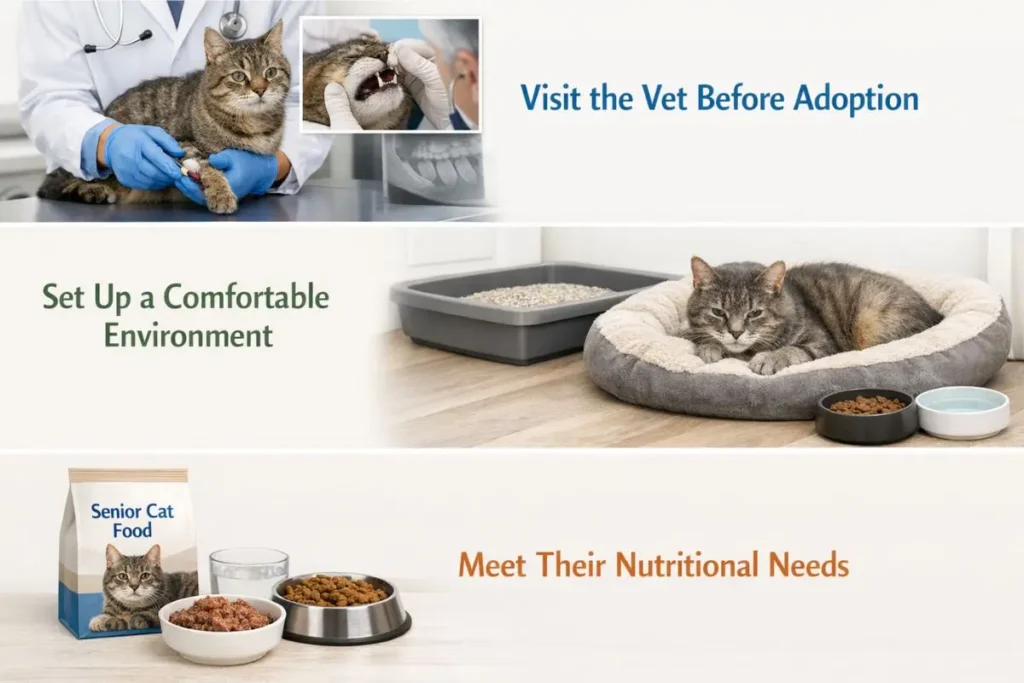
1. Visit the Vet Before Adoption
Before bringing your senior cat home, schedule a visit to the vet. A health check-up is essential for identifying any underlying medical conditions and addressing them early. Your vet will likely recommend:
- Bloodwork: To assess kidney function, thyroid health, and other vital markers.
- Dental Exam: Senior cats are prone to dental disease, which can cause pain and difficulty eating.
- Joint Assessment: For conditions like arthritis or other mobility issues that may require special care.
2. Set Up a Comfortable Environment
Making your home comfortable and accessible for a senior cat is essential. Older cats may have difficulty jumping or reaching high places, so adjust your living space accordingly:
- Litter Box: Use a low-sided litter box to make it easier for your cat to get in and out.
- Comfy Bedding: Provide soft, padded beds in quiet areas where your cat can relax undisturbed.
- Accessible Food and Water: Place food and water dishes at ground level, so your cat doesn’t have to stretch or jump to reach them.
3. Meet Their Nutritional Needs
As cats age, their dietary requirements change. Senior cats need special food that supports their aging bodies:
- High-Quality Senior Food: Look for cat food that’s formulated for senior cats. These foods often contain lower levels of phosphorus and higher amounts of omega-3 fatty acids, which support kidney function and joint health.
- Weight Management: Many senior cats are prone to becoming overweight, which can exacerbate joint problems. Make sure to feed your cat according to their ideal weight and activity level.
- Hydration: Dehydration is common in older cats, so consider offering wet food or providing extra water to encourage hydration.
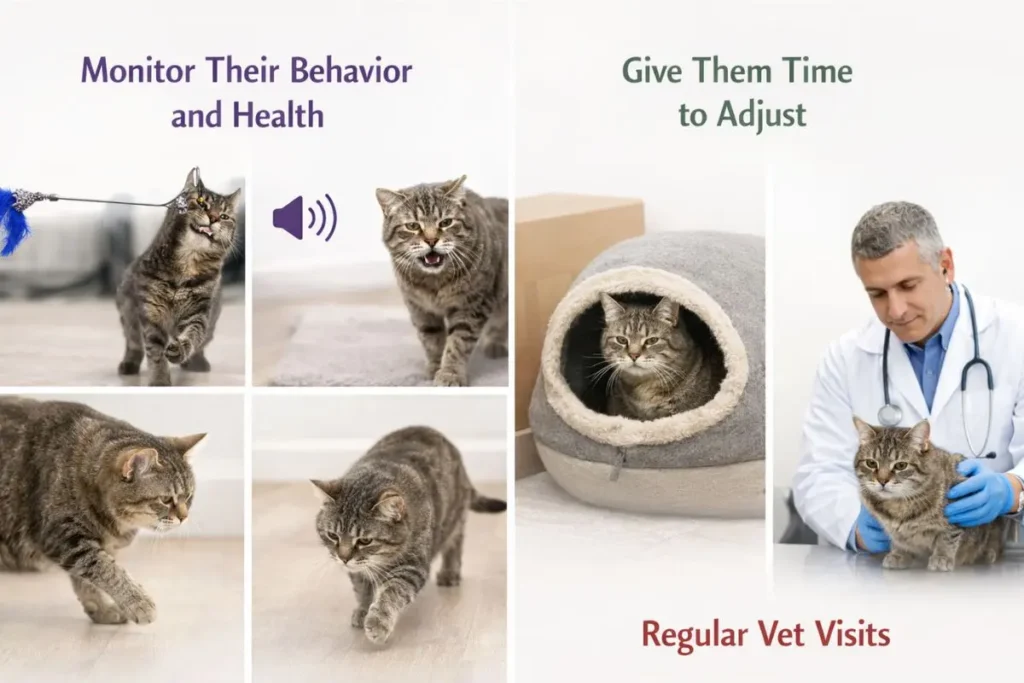
4. Monitor Their Behavior and Health
As your cat ages, it’s essential to monitor their behavior and health for any signs of discomfort or illness:
- Activity Levels: While some decrease in playfulness is normal, it’s important to offer your senior cat light play opportunities to keep them mentally and physically active.
- Vocalization: Some senior cats become more vocal due to anxiety or confusion. If you notice an increase in meowing, consult your vet to rule out any underlying health problems.
- Signs of Pain: Cats are notorious for hiding pain. Watch for subtle signs like limping, difficulty jumping, or changes in appetite, which could indicate arthritis or other health issues.
5. Give Them Time to Adjust
Moving to a new home can be stressful for any cat, and a senior cat may need extra time to adjust. Create a quiet, safe space where they can retreat if they feel overwhelmed. Gradually introduce them to the rest of the house and any other pets, and be patient as they settle in.
6. Regular Vet Visits
Even if your senior cat seems healthy, regular vet check-ups are essential. Annual exams allow your vet to catch any potential health issues early, and routine blood tests can track kidney function, liver health, and more.
Mistakes to Avoid When Adopting a Senior Cat
Adopting a senior cat comes with a learning curve, and there are some common mistakes that new cat owners often make. Here’s how to avoid them:
Not Adjusting Your Home for Mobility Issues
Many senior cats have difficulty with stairs or high surfaces. Don’t make the mistake of placing food and litter boxes in hard-to-reach areas. Invest in ramps or low beds to make their environment more accessible.
Ignoring Behavioral Changes
It’s easy to dismiss changes in behavior as part of aging, but these could be signs of pain, anxiety, or even cognitive dysfunction. If you notice significant changes in your cat’s behavior, consult your vet to determine the cause.
Underestimating the Importance of Diet
Some owners make the mistake of assuming their senior cat’s reduced appetite means they don’t need special food. In fact, senior cats require high-quality food that meets their specific needs. Consider adding wet food to their diet to promote hydration and provide them with the nutrition they need.