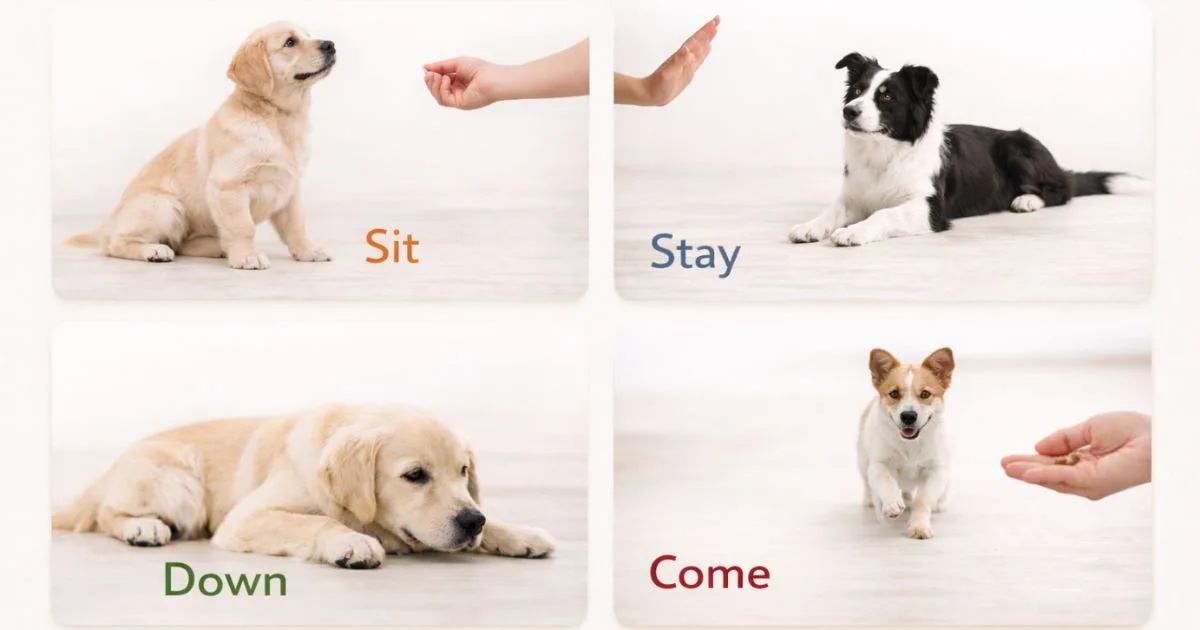
Training your dog is a crucial step toward developing a strong, healthy bond with your pet. It not only helps your dog follow basic commands but also ensures their safety, especially when you’re out in public or in potentially dangerous situations. As a new dog owner, it may seem challenging at first, but with consistency, patience, and the right techniques, your dog can learn essential training commands that will make your daily life easier, more enjoyable, and much safer. The foundation of any successful relationship with your dog lies in clear communication, and basic commands are the first and most effective way to establish that communication.
Teaching your dog obedience through basic dog training commands will also help prevent bad habits from forming, ensure better behavior, and provide your dog with structure and boundaries. Here, we dive into the essential dog training commands every dog should know, such as “sit,” “stay,” “come,” and “leave it,” and explain why they’re important for their behavioral development, safety, and overall well-being.
Basic Dog Training Commands
Basic dog training commands are more than just about keeping your dog obedient—they’re about communication. Dogs thrive when they understand the expectations of their owners and the environment around them. These commands form the foundation for a well-behaved dog and serve as a way to guide them through different situations, whether you’re taking a walk, having guests over, or ensuring their safety when they’re off-leash. Training is also a fun and rewarding process that strengthens the relationship between you and your dog, creating a sense of trust and understanding.
Dogs, especially puppies, have a lot of energy and curiosity, which can sometimes get them into trouble. Commands like “sit” and “stay” help keep them safe and out of trouble, while other commands like “leave it” prevent them from picking up potentially harmful items from the ground. Regardless of your dog’s age or breed, starting with the basics gives them a solid foundation for learning more complex behaviors later on.
Sit – A Foundation for Control and Focus
The “sit” command is one of the first and most essential commands that every dog should learn. It teaches your dog to pause, settle, and pay attention to you. Teaching your dog to sit is important for both impulse control and when you need them to stop doing something, like jumping on people or rushing out the door.
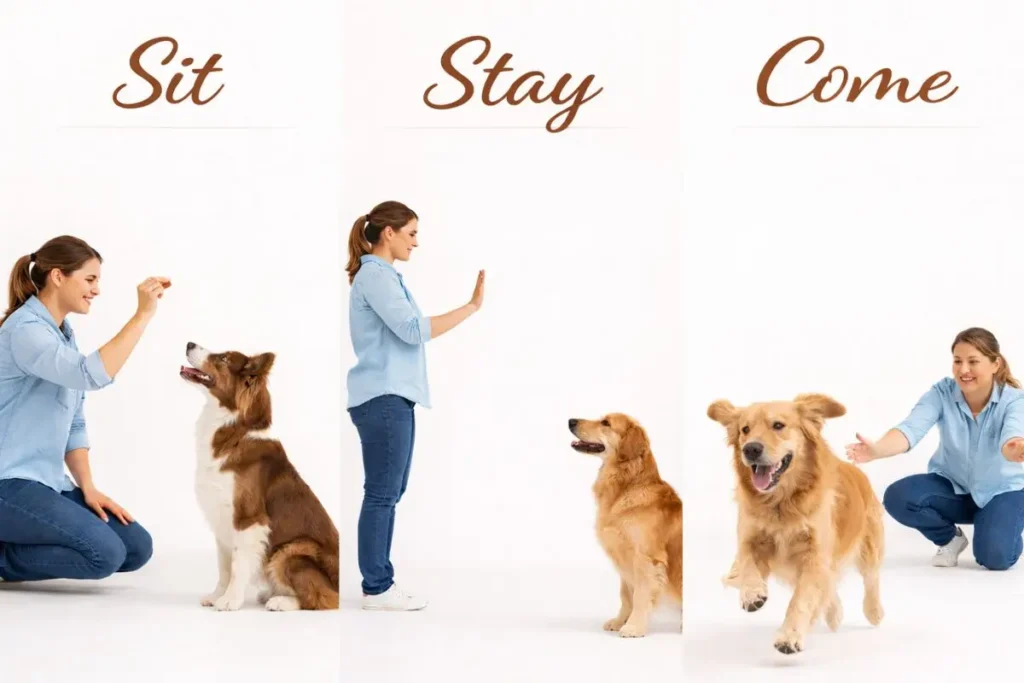
To teach “sit,” begin by holding a treat in front of your dog’s nose, making sure they focus on the treat. Slowly raise the treat above their head, guiding them to naturally lower their hindquarters into a sitting position. As soon as their bottom touches the ground, immediately reward them with the treat and praise. Over time, you can phase out the treat and use only verbal praise. This helps your dog understand that sitting gets them rewards, making it a powerful tool to manage their behavior.
One key to success is repetition. Dogs, particularly puppies, may need several tries to fully grasp the command, so practice several times throughout the day in short, focused sessions. Don’t rush your dog to sit—let them figure it out on their own, and make sure they associate the action with positive reinforcement.
Stay – Teaching Patience and Control
The “stay” command is particularly important for managing your dog’s behavior, especially in situations that require them to remain calm and controlled. This command is especially useful for when your dog needs to wait at a door, around other dogs, or in potentially hazardous environments like busy streets.
To teach “stay,” start by asking your dog to sit, then hold your palm in front of them while saying the word “stay.” Gradually increase the time your dog remains in the “stay” position before rewarding them. Initially, this can be as short as a few seconds, but as your dog gets better, you can stretch the time. If your dog moves before being released, calmly guide them back to their position and start again.
It’s essential to use a calm, consistent tone when training the “stay” command. Many dog owners make the mistake of saying “stay” in an inconsistent or rushed manner, which confuses the dog. Using a soft, steady voice helps your dog remain in position longer and fosters trust.
Come – The Most Crucial Command for Safety
One of the most important commands your dog can learn is “come.” This command can save your dog’s life, especially if they’re off-leash or running toward a dangerous situation. Teaching your dog to reliably come when called ensures they’ll always return to you, whether you’re at the park, near a busy road, or in any other situation where control is crucial.
To teach “come,” start by calling your dog’s name in an excited tone followed by the word “come.” Use high-energy praise and treats when they respond correctly. The key is to make coming to you feel like a fun experience for your dog. If they hesitate or ignore you, don’t punish them. Instead, make the training session more engaging by using a high-value treat or toy and repeating the command. Make sure that every time your dog comes to you, they are rewarded with lots of praise or a treat.
Remember, consistency is key. Always use the same tone, words, and energy when calling your dog. Avoid using “come” for situations where your dog will be punished, as this will create a negative association with the command.
Leave It – Preventing Harmful Behaviors
The “leave it” command is a must-have in any dog’s training repertoire, especially for dogs who like to sniff around and pick up objects off the ground. This command helps prevent your dog from picking up dangerous or harmful items, like food that could make them sick or sharp objects they could hurt themselves with.
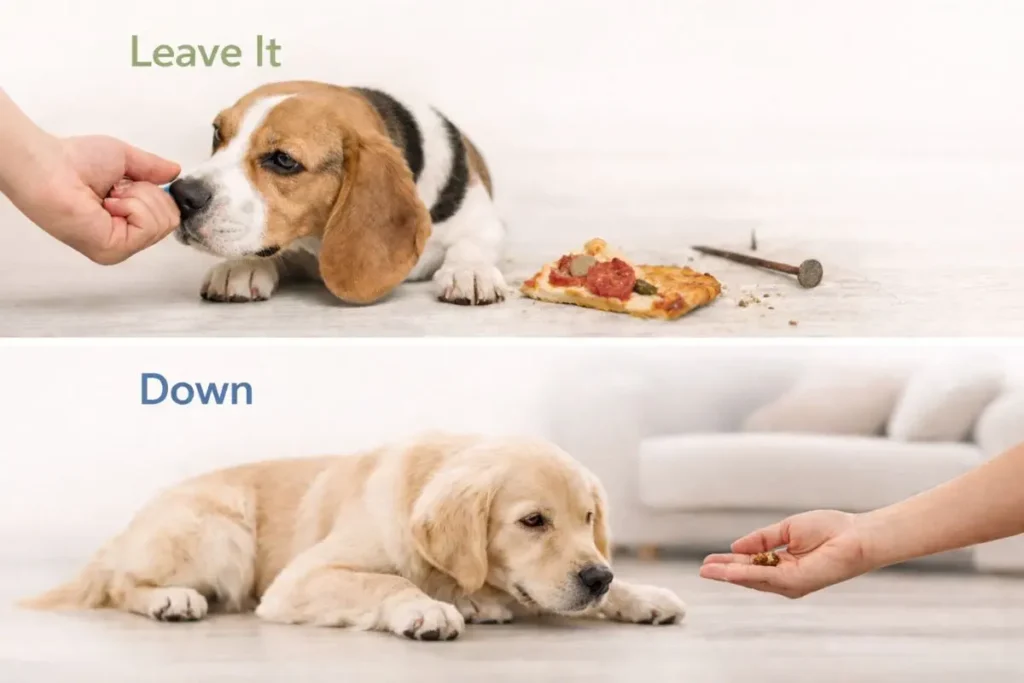
To teach “leave it,” start with a treat in your hand, closed so your dog cannot grab it. Hold your hand in front of your dog and say “leave it.” If your dog tries to sniff or paw at your hand, don’t give in. Wait until they stop trying and show some level of disinterest. Once they do, reward them with a different treat from your other hand. Gradually increase the challenge by placing treats on the ground and asking your dog to leave them.
Dogs are naturally curious, so it’s important to be patient with this command. It may take time for your dog to grasp that “leave it” means they should ignore something in favor of getting a treat. But with enough practice and consistency, your dog will begin to make the connection between the command and the rewards.
Down – Promoting Calmness and Relaxation
The “down” command is not just for relaxing; it also teaches your dog to stay calm in potentially stressful situations. Teaching your dog to lie down on command can help them settle when they’re too excited, when visitors arrive, or in situations where they need to be calm.
To teach “down,” start with your dog sitting, then hold a treat in your hand and move it toward the ground in front of their nose. Slowly guide their head down toward the floor while saying “down.” When they lie down, immediately reward them with praise and a treat. Repeat this process, gradually phasing out the treat to rely more on verbal praise.
The “down” command can be particularly helpful when you’re in social situations, as it helps your dog stay calm and not jump up on guests or become overly excited. It’s also beneficial when training for leash manners or when you need your dog to settle in one spot for a while.
Training Tips and Best Practices
Consistency is key when it comes to training your dog. Dogs thrive on routine, so try to use the same command words and actions every time. This helps your dog understand exactly what is expected of them and reinforces good behavior. It’s also important to keep training sessions short and engaging. Too long of a session can overwhelm your dog, leading to frustration or loss of interest. Aim for 5 to 10-minute sessions, and always end on a positive note, rewarding your dog for their effort.
Positive reinforcement is another vital part of dog training. Dogs learn best when they’re rewarded for good behavior, whether through treats, praise, or playtime. Make sure you immediately reward your dog when they perform the behavior you’ve asked for. This helps them make the connection between the action and the reward, reinforcing the learning process.
Avoid punishment-based training techniques, as these can cause confusion or anxiety in your dog. Instead, focus on rewarding the behaviors you want to see, which will encourage your dog to repeat those behaviors over time.
Socialization and Behavior Reinforcement
In addition to teaching commands, early socialization is critical for a well-behaved dog. Exposing your dog to a variety of environments, people, and other dogs helps them feel comfortable and confident in new situations. A well-socialized dog is less likely to develop behavior problems such as fear, aggression, or excessive barking.
When socializing your dog, start with controlled, positive experiences and gradually expose them to more challenging environments. Always reward calm and confident behavior, and avoid putting your dog in situations that may overwhelm them.
Training isn’t just about teaching specific commands—it’s about creating a positive and rewarding environment for your dog to learn in. By reinforcing good behaviors, staying patient, and using positive reinforcement, you’ll help your dog become a well-behaved, happy member of your family.