
Becoming a first-time dog owner is an exciting experience, filled with joy and companionship, but it also comes with its fair share of challenges. As a new dog owner, you may encounter a range of obstacles that can impact your dog’s behavior, health, and overall happiness. It’s easy to make mistakes during this learning process, especially when you’re unsure of the best ways to care for your furry friend. These common first-time dog owner mistakes can affect everything from training and exercise to nutrition and socialization. In this article, we will dive deep into 13 first-time dog owner mistakes and provide practical solutions on how to avoid them.
We’ll guide you through actionable steps that can help you create a strong, healthy relationship with your dog, ensuring that both of you thrive in your new journey together. By understanding these mistakes and how to correct them, you’ll be well on your way to giving your dog the best care and attention they deserve, leading to a happy and well-balanced life for your new best friend.

Skipping Dog Training from the Start
Mistake: One of the most common First-Time Dog Owner Mistakes is neglecting dog training early on. Many owners expect their dogs to instinctively know what to do, but proper training is crucial for teaching them the rules.
How to Avoid It: Begin training your dog as soon as possible. Even young puppies can start learning basic commands like “sit,” “stay,” and “come.” Consistency is key, so use rewards like treats and praise to reinforce positive behavior.
Training Tips:
- Keep sessions short and engaging (5-10 minutes).
- Use a mix of verbal praise and treats.
- Be patient and consistent in your approach.
Not Socializing Your Dog Early Enough
Mistake: Another critical First-Time Dog Owner Mistake is failing to socialize your dog properly. If a dog is not exposed to different people, animals, and environments early on, they may develop fear-based behaviors or aggression.
How to Avoid It: Start socializing your dog from an early age. This helps them feel comfortable around other dogs, people, and new places.
Socialization Tips:
- Introduce your dog to a variety of situations between 3 and 14 weeks of age.
- Schedule playdates with vaccinated dogs.
- Take your dog to pet stores, parks, or other public places.
Ignoring Proper Diet and Nutrition
Mistake: Many first-time dog owners overlook the importance of a balanced diet. Feeding the wrong food or the wrong portion size can lead to health problems and behavioral issues.
How to Avoid It: Learn about your dog’s nutritional needs based on their age, breed, and activity level. Consult with your vet to choose the best diet.
Food and Health Tips:
- Choose a high-quality food that suits your dog’s needs.
- Measure out portions to avoid overfeeding.
- Always provide fresh water.
Underestimating Exercise Needs
Mistake: Underestimating how much exercise your dog needs is a common First-Time Dog Owner Mistake . Some breeds require more physical activity than others, and without proper exercise, your dog may develop undesirable behaviors.
How to Avoid It: Research your dog’s breed to determine how much exercise they require. For high-energy breeds, like Border Collies, ensure they get enough daily activity to burn off energy.
Exercise Tips:
- Provide at least 30 minutes to 2 hours of exercise daily, depending on breed.
- Include both physical exercise and mental stimulation.
- Avoid over-exercising puppies.
Not Establishing a Routine
Mistake: Dogs thrive on consistency, so failing to establish a routine is one of the most common First-Time Dog Owner Mistakes. Without a structured day, dogs can become anxious or misbehave.
How to Avoid It: Set up a daily schedule for feeding, walks, bathroom breaks, and playtime. This helps your dog feel secure and understand what to expect.
Routine Tips:
- Stick to set times for meals and walks.
- Take your dog out after naps and meals.
- Include some quiet time and playtime each day.
Neglecting Regular Vet Check-ups
Mistake: Skipping regular vet check-ups is another First-Time Dog Owner Mistake Without regular visits, health issues can go unnoticed until they become serious.
How to Avoid It: Schedule annual or bi-annual check-ups with your vet. Regular visits ensure your dog’s health is monitored and vaccinations are up-to-date.
Vet Care Tips:
- Follow the vaccination schedule.
- Regularly check for signs of flea or tick infestations.
- Discuss weight management and diet with your vet.
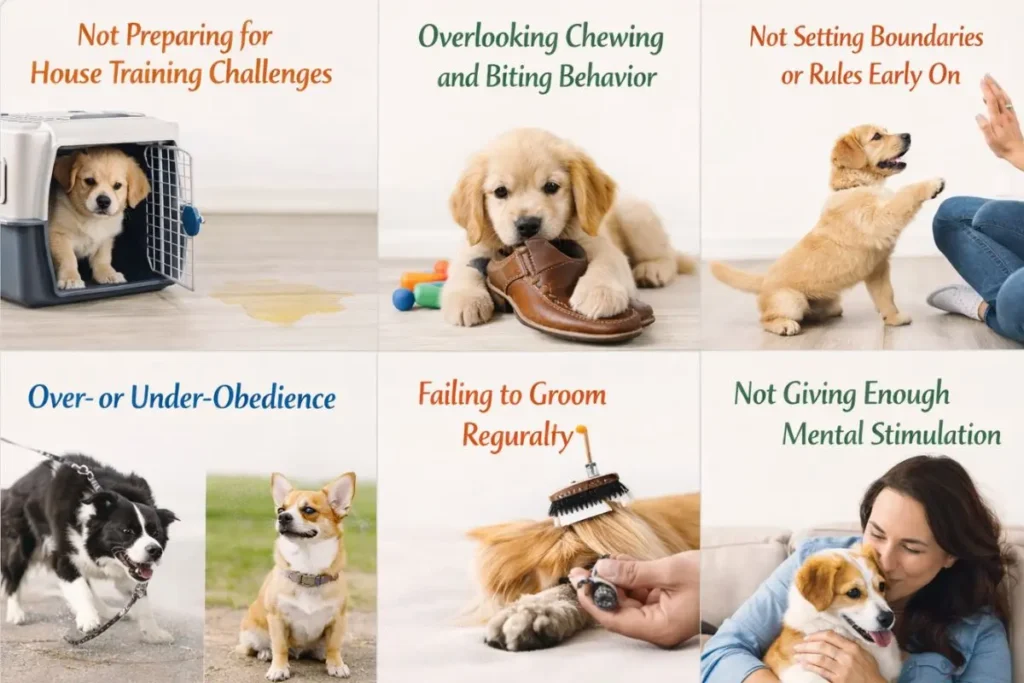
Not Preparing for House Training Challenges
Mistake: Many first-time dog owners believe house training will be quick and easy. However, it can take weeks or months for a dog to learn proper bathroom habits.
How to Avoid It: Start house training as soon as possible. Take your dog out frequently and reward them for going outside.
House Training Tips:
- Take your dog out after meals, naps, and playtime.
- Use a crate to limit your dog’s access to areas of the house.
- Be consistent and patient—accidents will happen.
Overlooking Chewing and Biting Behavior
Mistake: One of the most frustrating First-Time Dog Owner Mistakes and How to Avoid Them is not dealing with chewing early enough. Dogs chew naturally, but if not redirected, they can damage furniture or belongings.
How to Avoid It: Provide your dog with appropriate chew toys and discourage chewing on furniture.
Chewing Tips:
- Offer a variety of chew toys—rubber, nylon, and fabric.
- Reward your dog when they chew on the right things.
- Use anti-chew sprays on furniture to deter unwanted chewing.
Not Setting Boundaries or Rules Early On
Mistake: Failing to establish boundaries and rules is a major First-Time Dog Owner Mistake . If your dog isn’t taught what’s acceptable behavior from the start, it can lead to issues like jumping on guests or begging for food.
How to Avoid It: Be clear about the rules and enforce them consistently. Don’t let your dog do things like jumping up on people if you don’t want them to do so when they’re older.
Boundaries Tips:
- Use “off” or “down” commands when your dog jumps up.
- Establish no-go zones for your dog (like the kitchen or couch).
- Stick to your rules and be consistent.
Over- or Under-Obedience
Mistake: Some first-time dog owners are too lenient, allowing bad behaviors to slide, while others are overly strict, leading to stress or anxiety in the dog.
How to Avoid It: Maintain a balanced approach to training and discipline. Be firm, but also compassionate and understanding of your dog’s needs.
Failing to Groom Regularly
Mistake: Many owners overlook grooming, but regular grooming is crucial for your dog’s health and comfort. Failing to groom your dog can lead to mats, skin issues, and even infections.
How to Avoid It: Brush your dog regularly to keep their coat healthy and free from tangles. Trim nails as needed and bathe your dog when necessary.
Grooming Tips:
- Brush your dog’s coat regularly, especially if they have long hair.
- Trim nails regularly to avoid overgrowth.
- Bathe your dog with appropriate dog shampoo.
Not Giving Enough Mental Stimulation
Mistake: Failing to provide mental stimulation is a significant First-Time Dog Owner Mistake. Bored dogs often become destructive or develop behavioral issues.
How to Avoid It: Keep your dog’s mind sharp with puzzle toys, training sessions, and new experiences.
Mental Stimulation Tips:
- Rotate different toys to keep your dog interested.
- Provide mental challenges like treat-dispensing puzzles.
- Teach your dog new tricks to stimulate their mind.
Failing to Bond with Your Dog
Mistake: Finally, failing to bond with your dog is a common mistake. Dogs need love and attention, and without a strong bond, they can become anxious, distant, or even develop behavioral issues.
How to Avoid It: Spend quality time with your dog through play, training, or just cuddling. This will help build a strong emotional connection.
Bonding Tips:
- Spend time each day playing and interacting with your dog.
- Include your dog in your daily activities, like walks or runs.
- Use positive reinforcement during training to strengthen your bond.