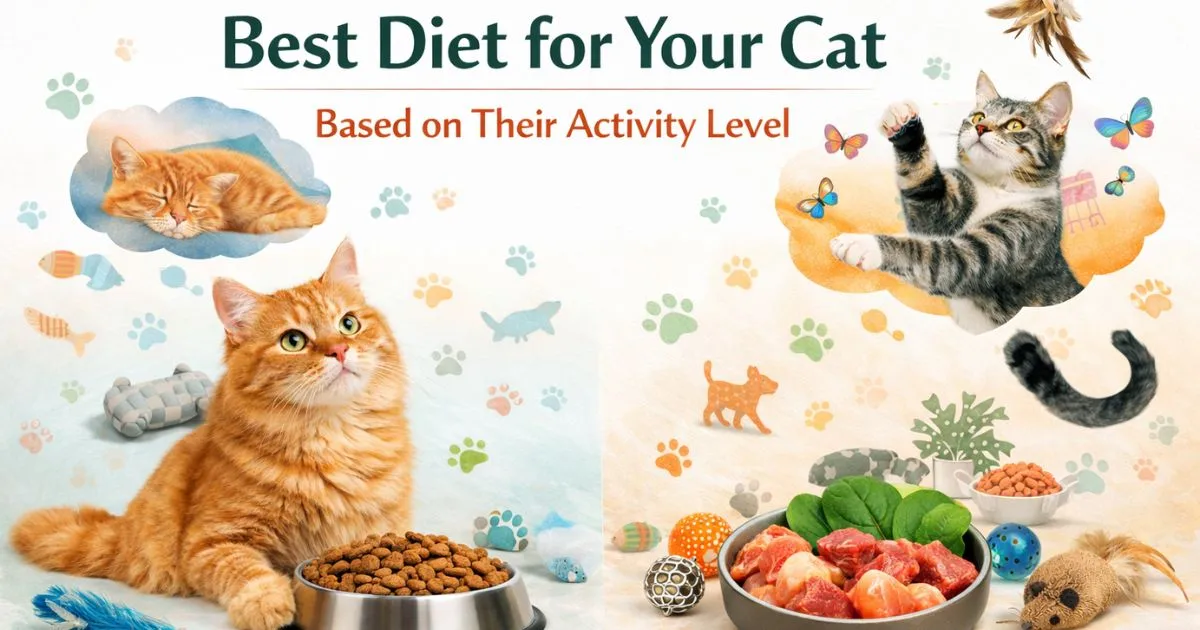
As a responsible cat owner, it’s important to understand how to provide the best diet for your cat based on their activity level to ensure they remain healthy, happy, and at an ideal weight. Cats, like humans, have different energy requirements depending on how much they move around each day.
If your cat is highly active, they will need more calories, protein, and fat to fuel their energy, while a less active or senior cat may require a lower calorie diet to prevent obesity. In this guide, we will explore the right cat diet for different activity levels, helping you make informed decisions about their nutrition to maintain their overall well-being.
Why Your Cat’s Diet Depends on Activity
Cats are naturally predators, and their activity levels will reflect their energy needs. Whether your cat is constantly on the move or prefers to sleep all day, their diet should support these differences in lifestyle. A diet tailored to your cat’s activity level will help prevent obesity, maintain healthy muscle mass, and ensure they are getting the right nutrients.
If Their Diet Isn’t Adjusted?
If you’re overfeeding a less active cat, you may inadvertently cause them to gain weight, which can lead to obesity-related health issues like diabetes or joint problems. On the flip side, underfeeding an active cat can lead to lethargy, muscle loss, and weakened immune function. That’s why understanding how much healthy food your cat needs based on their energy output is so important.
Best Diet for Active Cats
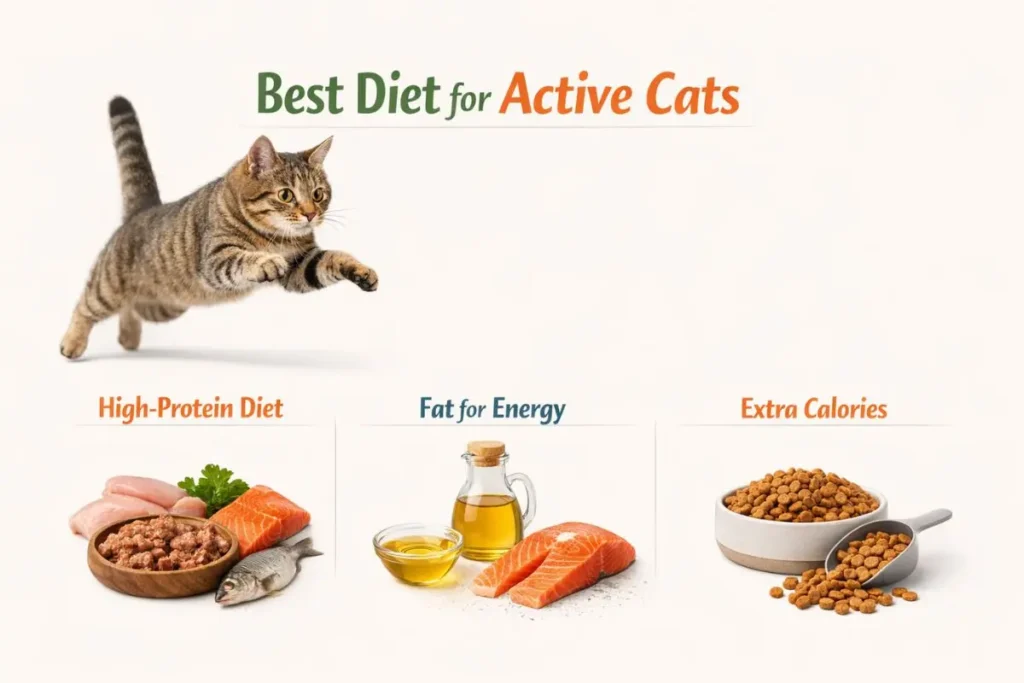
Active cats are those that spend a significant portion of their day playing, climbing, or exploring. These cats require more calories and protein to keep up with their energy demands.
High-Protein Diet
- Why it’s important: Active cats require protein to support muscle maintenance and energy. Protein helps their bodies recover after play and ensures they stay lean and strong.
- What to look for: Choose a cat food with animal-based proteins like chicken, turkey, or fish.
- Recommended foods: Look for wet food formulas with high protein content (at least 30-40% protein), which will keep your cat energized and well-fed.
Fat for Energy
- Why it’s important: Fat is a dense source of energy, and for active cats, it’s necessary for sustaining their activity levels. Fat also helps keep their coat shiny and their skin healthy.
- What to look for: Choose foods that include omega-3 and omega-6 fatty acids. Salmon oil and chicken fat are great examples of healthy fats.
- Recommended foods: Foods designed for high-energy cats often contain higher amounts of healthy fats to ensure sustained energy levels throughout the day.
Extra Calories
- Why it’s important: The more your cat moves, the more calories they burn. Active cats need extra calories to fuel their bodies, so a higher calorie food is crucial.
- What to look for: Look for formulas labeled for high-energy or active cats. These foods will have a higher calorie density to meet their needs.
- Recommended foods: High-calorie foods that are specifically tailored for active cats will keep them healthy without putting too much strain on their metabolism.
Best Diet for Less Active
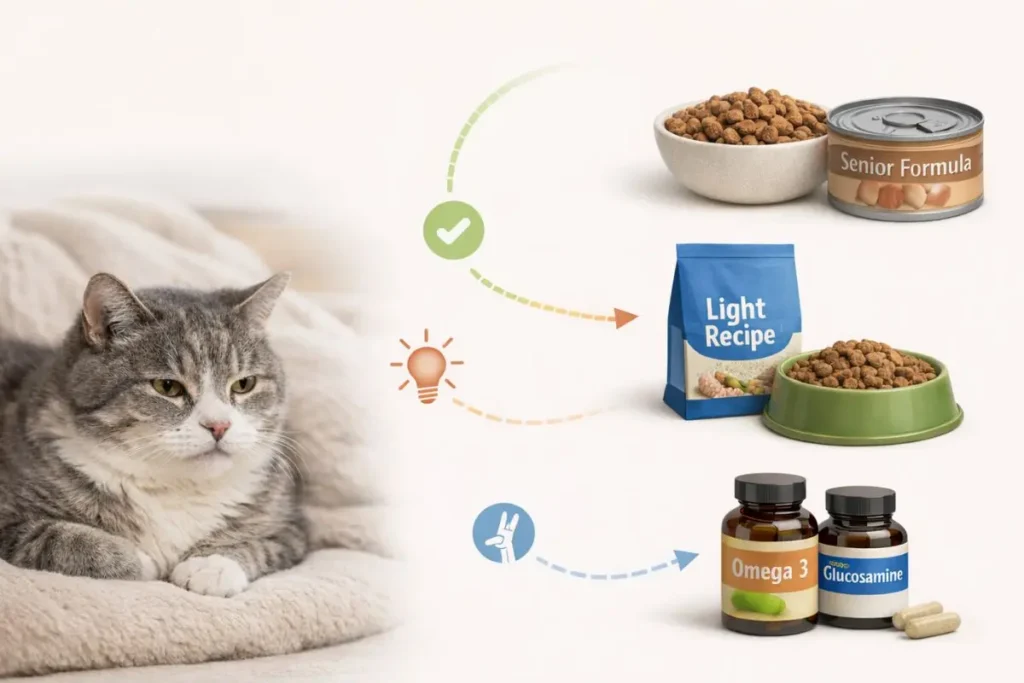
Less active cats, such as those who are more sedentary or elderly, require fewer calories and a cat diet designed to keep them lean and healthy.
Moderate Protein and Fat
- Why it’s important: Senior and less active cats still need protein to maintain muscle, but excessive fat and calories could lead to unhealthy weight gain.
- What to look for: Choose moderate protein levels (around 25-30%) and lower fat content (about 10-15%).
- Recommended foods: Look for senior formulas with moderate protein and fat levels, which will keep your cat’s body functioning well without leading to weight gain.
Fewer Calories
- Why it’s important: Cats that don’t move around as much burn fewer calories. If you feed them too many calories, they may gain weight, which can put strain on their joints, kidneys, and heart.
- What to look for: Foods labeled as “light” or “senior” are often lower in calories, which is ideal for less active cats.
- Recommended foods: Foods designed for senior cats are often calorie-controlled and nutrient-rich to help maintain weight without compromising health.
Joint Health Support
- Why it’s important: Older cats are more prone to joint pain and arthritis. Diets with added glucosamine and chondroitin can help support their joints and mobility.
- What to look for: Look for foods that contain joint support ingredients like glucosamine and omega fatty acids.
- Recommended foods: Senior formulas that include joint support can help your cat stay active longer and avoid stiffness.
Mistakes to Avoid
Here are some common pitfalls that cat owners face when feeding their cats based on activity level and how to avoid them.
Overfeeding Your Less Active Cat
It’s tempting to think your cat needs a full bowl of food every time they ask for it. But if your cat is less active, they might not need as much food as you think.
Fix: Always measure your cat’s food to avoid overfeeding, and check the food packaging for serving sizes based on their age and activity level.
Giving Treats Too Often
Treats are great, but they should not make up the bulk of your cat’s diet, especially if your cat is less active. Too many treats can lead to obesity.
Fix: Keep treats to a minimum, and only give them as a supplement to their regular meals. Opt for healthy, low-calorie treats.
Ignoring Hydration
Hydration is just as important as food! Many cats don’t drink enough water, especially if they eat dry food. Dehydration can lead to kidney issues and urinary tract problems.
Fix: Always provide fresh water, and consider incorporating wet food into their diet to increase hydration.