Adopting a new dog is a big commitment, and the first month is full of excitement, challenges, and learning. Whether you’re bringing home a playful puppy or an adult dog, this period is crucial for setting the tone for a happy and healthy dog-owner relationship. As a first-time dog owner, you’re bound to encounter some challenges along the way, including common issues like puppy biting, separation anxiety, and house training problems. These challenges are a normal part of the process, and with patience, consistency, and the right approach, they can be easily managed.
This guide will walk you through what to expect in the first month with your new dog, solve common issues, and give you expert dog care advice on how to make this initial transition as smooth as possible for both you and your new dog. By the end of this article, you’ll have the tools and knowledge you need to help your dog settle in and begin building a strong, loving relationship.
Separation Anxiety
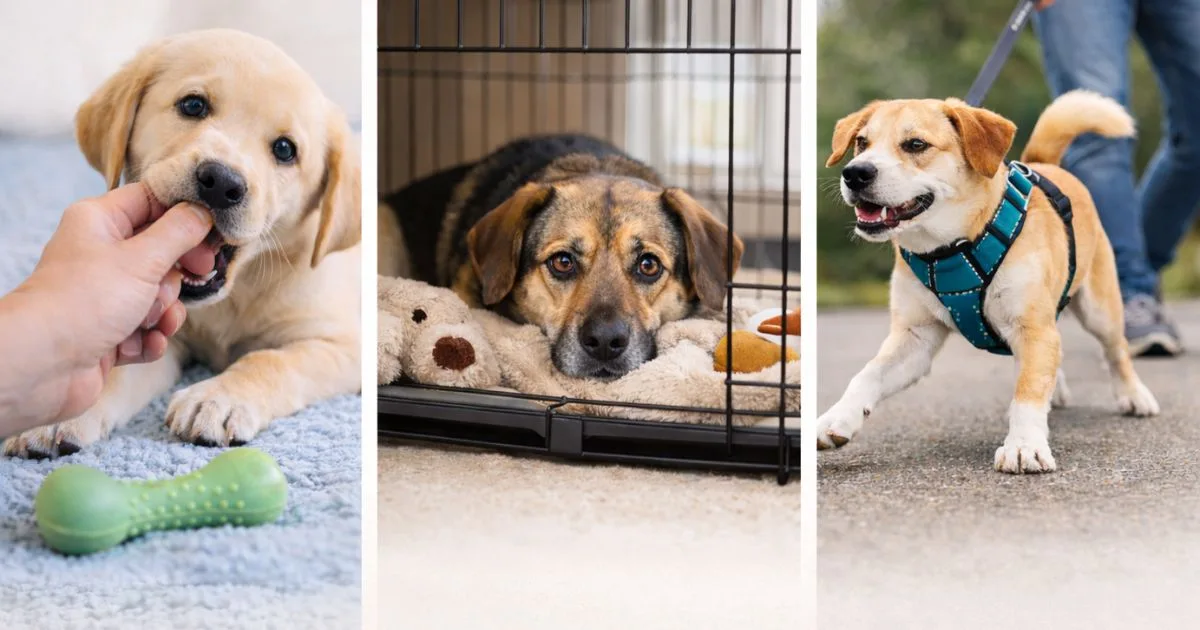
Your new dog may experience anxiety when you leave the house. This can lead to whining, barking, or even destructive behavior. This is especially common with dogs who have been rehomed or adopted from a shelter. What to expect in the first month with your new dog is likely a period of adjustment, where your dog will learn that your departures aren’t permanent.
What to Do:
- Establish a Consistent Routine: Dogs feel more secure when they know what to expect. Stick to a regular schedule for meals, walks, and potty breaks. This helps your dog feel grounded in their new environment, and it’s one of the most important things to expect in the first month with your new dog.
- Start with Short Absences: Gradually increase the time you leave your dog alone. Start with a few minutes, then work up to longer periods. What to expect in the first month with your new dog is that they may feel more comfortable as they get used to these short separations.
- Provide Comfort: Consider using calming aids like a comfortable crate or a safe space where your dog can retreat. Leave them with a favorite toy or treat to help distract them. This will create positive associations with alone time, a key component of what to expect in the first month with your new dog.
Leash Pulling
Leash pulling is a common behavior, especially in puppies or dogs who are still adjusting to their new environment. What to expect in the first month with your new dog is that they may have plenty of energy to burn, making leash pulling more likely. It’s a normal part of the learning process.
What to Do:
- Positive Reinforcement: Reward your dog when they walk calmly beside you. Use treats and praise to reinforce the behavior you want. This is an important step in what to expect in the first month with your new dog.
- Stop and Wait: If your dog pulls, stop walking and wait for them to come back to your side before moving forward. This teaches them that pulling leads to a stop, not progress. What to expect in the first month with your new dog is that they’ll learn quickly that pulling doesn’t get them where they want to go.
- Try a No-Pull Harness: A well-fitting no-pull harness can make leash walking easier while you’re working on training. As you work on leash training, you’ll notice improvement in the first month with your new dog, making walks more enjoyable for both of you.
By following these steps and keeping in mind what to expect in the first month with your new dog, you’ll set the foundation for a strong, trusting relationship and a well-behaved dog. Patience, consistency, and positive reinforcement are key to managing the challenges you might face as you adjust to life with your new furry friend.
First-Month Challenges with Your New Dog
Biting and Nipping
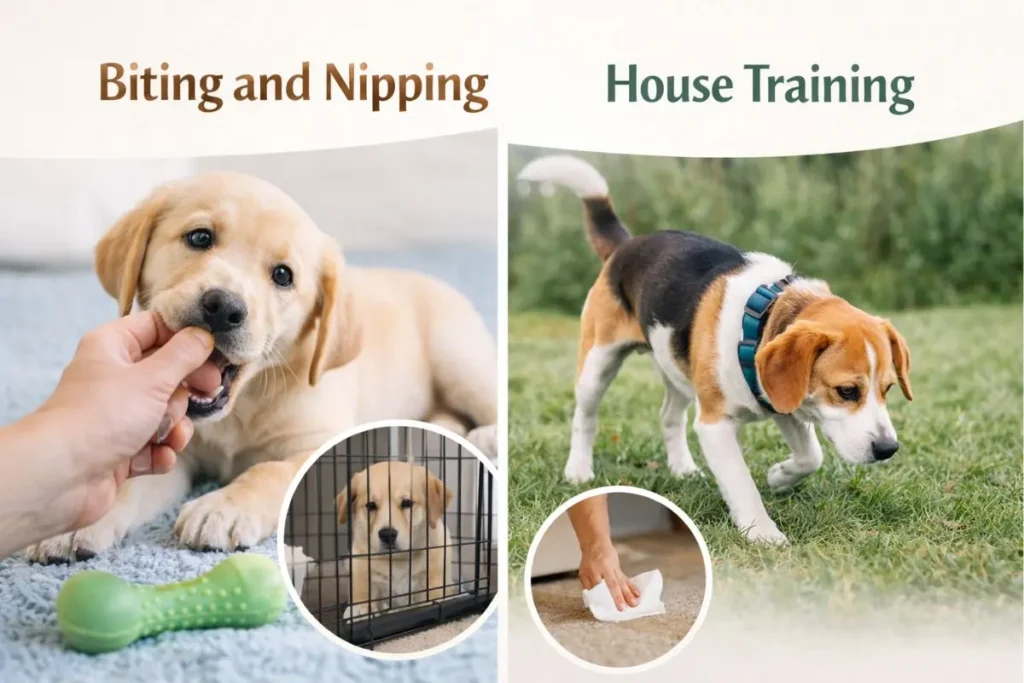
Puppies especially love to chew and nip, which can be frustrating for new dog owners. But remember, this behavior is natural—it’s how they explore the world around them.
What to Do:
- Redirect to Toys: When your dog starts to nip or bite, redirect them to a chew toy or bone. Praise them when they chew on the toy.
- Time-Outs for Rough Play: If your puppy gets too rough, calmly put them in a safe, quiet space for a brief time-out. This teaches them that rough play leads to a loss of attention.
- Consistency is Key: Make sure everyone in the household uses the same approach to stopping the biting behavior.
House Training
Whether you’ve adopted an adult dog or a puppy, house training can take some time. Don’t be discouraged by accidents; they’re part of the process.
What to Do:
- Frequent Potty Breaks: Take your dog outside frequently, especially after meals, naps, and playtime.
- Positive Reinforcement: Immediately reward your dog when they go potty outside. This reinforces the idea that doing their business outdoors is a good thing.
- Be Patient: If accidents happen indoors, clean the area thoroughly to remove any scent markers and prevent reoccurrence.
Diet and Nutrition Adjustments
The first month is also a great time to get your dog’s diet and nutrition on track. Whether you’re switching to a new food or adjusting portions, here’s what you need to know.
What to Do:
- Transition Slowly: If you’re changing your dog’s food, mix small amounts of the new food with their current food over a week to prevent stomach upset.
- Monitor Portions: Follow feeding guidelines based on your dog’s age, breed, and activity level. Overfeeding can lead to obesity and health problems later on.
- Ensure Balanced Nutrition: Make sure your dog’s food provides the essential nutrients they need to stay healthy, such as protein, fat, fiber, and essential vitamins.
Mistakes
Skipping Socialization
Mistake: Many new dog owners neglect to properly socialize their dog in the first month. Without exposure to different people, environments, and situations, dogs can develop fear or anxiety, leading to behavioral issues later on.
Solution: Gradually introduce your dog to a variety of experiences—new people, dogs, sounds, and environments. This will help them become well-adjusted and less fearful in different situations.
Not Establishing a Routine Early
Mistake: Without a consistent routine, dogs can become confused and anxious. This can affect their potty training, eating schedule, and overall behavior.
Solution: Establish a consistent schedule for meals, potty breaks, walks, and training sessions. Dogs thrive on routine, and it helps them feel secure and learn faster.
Being Inconsistent with Training
Mistake: Inconsistent training is a common pitfall. One person might allow certain behaviors (like jumping up) while another corrects them, which can confuse the dog.
Solution: Ensure everyone in the household is on the same page when it comes to rules and training. Consistent commands, rewards, and corrections will help your dog understand expectations more quickly.
Overfeeding or Underfeeding
Mistake: Some new owners either overfeed their dog due to guilt or underfeed them because they’re unsure of the right portion sizes.
Solution: Follow the recommended feeding guidelines based on your dog’s breed, size, and activity level. Consult your vet to ensure you’re providing the right amount of food for your dog’s age and growth.
Not Being Patient During House Training
Mistake: Many new dog owners expect house training to happen overnight. Accidents will happen, and punishing your dog for mistakes can lead to confusion and fear.
Solution: Be patient and consistent with house training. Praise and reward your dog when they go potty outside, and clean up accidents calmly without punishment. Remember, it takes time for dogs to learn where and when to go.
Pro Tips
- Establish Clear Boundaries: It’s important to teach your dog what’s acceptable and what isn’t. Set clear boundaries from day one, whether it’s where they’re allowed to go in the house or how they should behave on walks.
- Start Basic Training Early: The first month is the perfect time to begin teaching your dog basic commands like “sit,” “stay,” and “come.” This will help you build a stronger bond and prevent behavioral issues down the line.
- Keep a Calm and Positive Attitude: Dogs can sense their owners’ emotions, so staying calm and positive during training sessions will help your dog feel secure and learn faster.
Mini Case Example
Max, a 9-month-old terrier mix, had a rough start in life. When his new owners, Tom and Alice, brought him home, he struggled with separation anxiety and would chew on everything in sight. He would bark nonstop when they left, and his constant nipping made training challenging.
Tom and Alice were patient and consistent. They used a crate to help Max feel secure when they left the house, and they gradually increased the time they were gone. They also gave him chew toys to redirect his nipping. After a few weeks, Max became more comfortable being alone, and his biting started to decrease.
Actionable Tips
- Establish a Daily Routine: Make sure your dog has a predictable schedule for meals, potty breaks, and playtime.
- Socialize Gradually: Start introducing your dog to different environments, people, and other dogs in a controlled way.
- Work on Training: Begin teaching basic commands like “sit,” “stay,” and “come” using positive reinforcement.
- Practice Short Separations: Leave your dog alone for short periods to help them get used to being without you.
- Monitor Their Diet: Ensure your dog is on the right food and that you’re feeding them the correct portion sizes.
Wrapping Up
The first month with your new dog is full of ups and downs, but with patience, consistency, and a little guidance, you’ll be off to a great start. Whether you’re tackling separation anxiety, leash pulling, or house training, the key is to stay calm and consistent. Remember, every dog learns at their own pace, and with time, you’ll both adjust to your new routine.
Save this article for later, share it with fellow dog owners, or follow us for more dog care, training, and behavior tips!