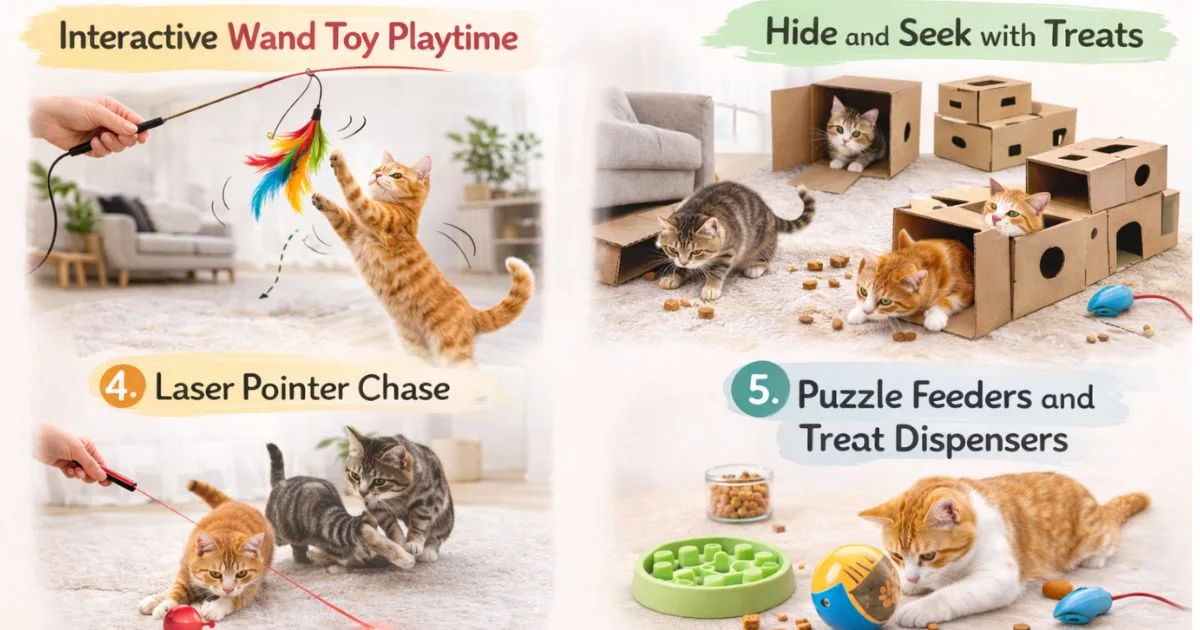
As a new cat owner, one of the most common challenges you’ll face is figuring out how to keep your indoor cat entertained and active. Indoor cats, though often independent, have plenty of energy and need mental and physical stimulation to stay happy. Without sufficient playtime and engagement, they can become bored and stressed, leading to unwanted behaviors like scratching furniture, excessive meowing, or even avoiding their litter box. This can be frustrating for both you and your cat.
But don’t worry—there are plenty of fun and easy games to play with your cat at home that will not only keep them entertained but also help keep their mind sharp and body fit. These activities are perfect for cat owners looking to prevent behavior issues, promote healthy habits, and deepen the bond with their feline companion. Playing fun games with your cat can help create a happier, calmer, and more satisfied pet while strengthening your relationship.
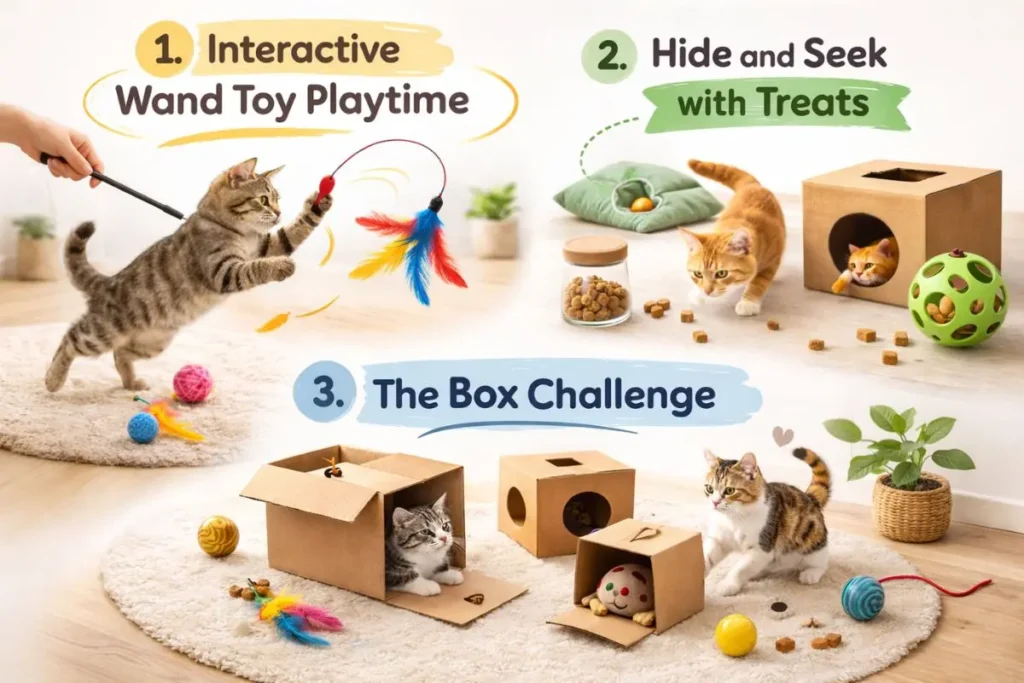
Interactive Wand Toy Playtime
Why it works:
Cats are natural hunters, and one of the most rewarding ways to engage their instincts is through interactive play. A wand toy with dangling feathers or ribbons mimics the movements of prey, such as birds or small rodents, triggering your cat’s predatory instincts. It’s not only a great form of exercise, but it also helps improve your cat’s coordination, reflexes, and mental sharpness.
How to play:
- Movement: Hold the wand toy at different heights to make your cat jump or swat. You can move the toy in circular patterns or zigzag it across the floor to mimic the erratic movements of a prey animal.
- Chase and Pounce: Quickly dart the toy across the floor to encourage your cat to chase after it. You can also slow it down to entice them to stalk the “prey” like they would in the wild.
- Duration: Keep the play session short—around 5 to 10 minutes. Cats can easily get overstimulated, and shorter play sessions are often more effective than longer ones.
Common Mistakes
- Too much stimulation: It’s important not to overdo it. If you notice your cat starting to lose interest or become agitated, stop the play session and let them rest.
- Not varying movements: Cats get bored quickly if the movement of the toy stays the same. Keep them engaged by switching up the speed, direction, and height of the toy.
Hide and Seek with Treats
Why it works:
Hide and seek with treats is a fantastic game that taps into your cat’s problem-solving abilities and natural instincts to hunt. By encouraging your cat to search for their favorite treats, you’re providing both mental stimulation and an opportunity for exercise. It’s a simple, interactive game that works well for cats of all ages.
How to play:
- Start simple: Begin by placing a few treats in easy-to-find locations—on the floor or on furniture within your cat’s reach.
- Increase difficulty: As your cat gets better at finding the treats, start hiding them in more challenging spots, such as inside a cardboard box, under a cushion, or behind furniture. You can also use puzzle feeders to make the game more challenging.
- Encourage your cat: Guide your cat by calling their name or using phrases like “Where’s the treat?” to help them get started.
Common Mistakes
- Using unhealthy treats: Avoid giving your cat too many treats, especially if they’re high in fat or sugar. Opt for healthy, low-calorie treats, or even their regular kibble.
- Hiding treats in unsafe places: Ensure the spots where you hide treats are safe for your cat to access. Avoid hiding them in places where your cat might injure themselves.
The Box Challenge
Why it works:
Cats have a natural love for boxes—they’re a source of comfort, security, and entertainment. Boxes also provide mental stimulation as your cat uses their curiosity to explore and investigate their environment. This simple activity is an easy way to engage your cat’s mind and provide them with a fun, interactive experience.
How to play:
- Use multiple boxes: Scatter several cardboard boxes around your home. Cats enjoy the feeling of being enclosed in a small space, so having multiple boxes will encourage them to jump in, out, and around.
- Add toys or treats: Place toys, treats, or crumpled paper inside the boxes to entice your cat to explore.
- Create a maze: If you have enough boxes, you can arrange them in a maze-like fashion to increase the level of difficulty and make the game even more stimulating.
Common Mistakes
- Using unsafe boxes: Make sure the boxes are sturdy and won’t collapse under your cat’s weight. Avoid boxes with sharp edges or that could pose a choking hazard if your cat chews on them.
- Forcing your cat to use the box: Let your cat explore the boxes at their own pace. Don’t force them into the box or expect them to engage with it immediately.
Laser Pointer Chase
Why it works:
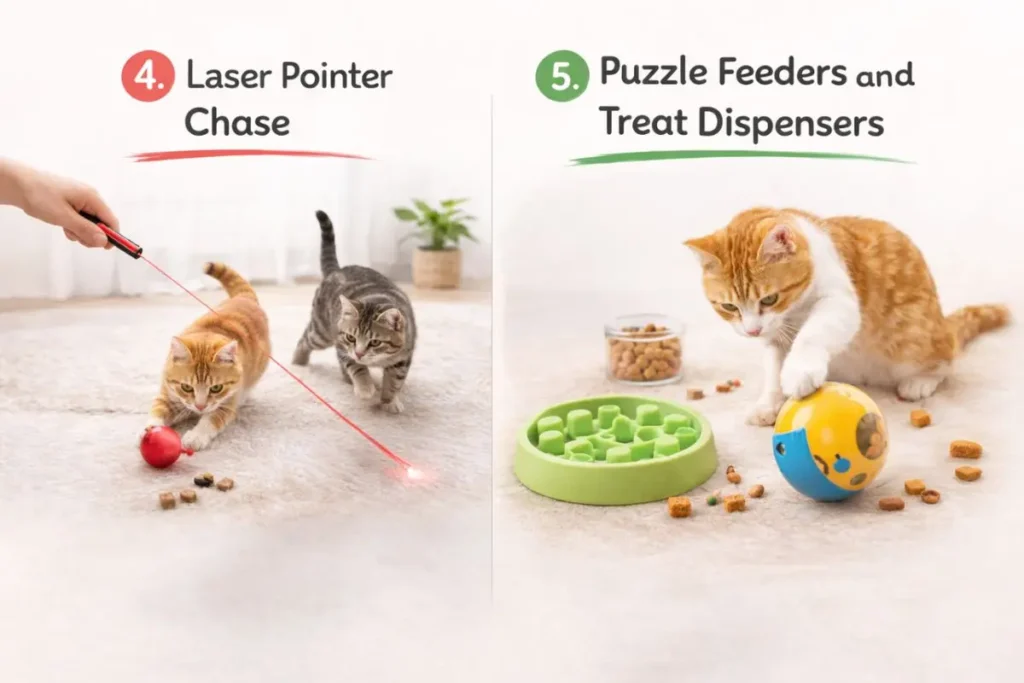
The laser pointer chase is a classic cat game, and for a good reason. The quick movements of the light simulate the unpredictable motions of prey, prompting your cat to chase after it with great enthusiasm. This game provides both mental and physical stimulation and is perfect for active cats who need to burn off excess energy.
How to play:
- Move the laser: Use the laser pointer to create fast, erratic movements across the floor, walls, and furniture to simulate prey. Allow your cat to chase the light for a few minutes, ensuring they’re actively engaged.
- Give them a chance to catch something: End the game by allowing your cat to “catch” the light on a soft surface or by tossing a treat near them. This will give them the satisfaction of catching their prey.
Common Mistakes
- Shining the light in their eyes: Never point the laser directly into your cat’s eyes, as it can cause eye damage.
- Not letting your cat “catch” something: Always let your cat catch the light at the end of the session, either by shining the light on a tangible object or offering a treat. Cats can become frustrated if they never “win” the chase.
Puzzle Feeders and Treat Dispensers
Why it works:
Puzzle feeders are a fantastic way to stimulate your cat’s brain while also encouraging healthy food eating habits. These toys make your cat work for their food, which can help prevent boredom and promote natural foraging behaviors. Puzzle feeders also slow down feeding, making mealtime a bit more challenging and rewarding.
How to play:
- Fill the puzzle: Place your cat’s regular food or some treats inside the puzzle feeder or treat dispenser.
- Encourage exploration: Watch your cat use their paws, nose, or mouth to manipulate the toy and release the food.
- Increase difficulty: As your cat gets the hang of it, you can make the puzzle more challenging by adjusting the settings or adding more complex puzzle feeders.
Common Mistakes
- Using inappropriate puzzle toys: Ensure that the puzzle feeder you choose is suitable for your cat’s size and skill level. Some cats may find certain puzzle toys too frustrating, while others might breeze through them too quickly.
- Overfeeding: Puzzle feeders should not be an excuse for overfeeding your cat. Monitor how much food they’re consuming during these sessions and make sure their overall nutrition is balanced.
Common Mistakes
While these games are fantastic for enriching your cat’s life, there are a few common mistakes you should avoid to ensure your cat stays healthy and happy:
- Not paying attention to your cat’s body language: Cats will tell you when they’re overstimulated, tired, or no longer interested. Watch for signs such as dilated pupils, swatting, or sudden aggression. If you notice any of these signs, stop the game and allow your cat to rest.
- Ignoring your cat’s preferences: Not all cats enjoy the same types of play. While one cat may love chasing a laser pointer, another might prefer a treat-based game. Pay attention to what your cat enjoys and adjust your playtime accordingly.
- Overusing certain toys: Variety is key to keeping your cat entertained. If you always use the same toy, your cat may lose interest. Rotate toys regularly and switch up the games to keep things exciting.
By incorporating these five games into your cat’s daily routine, you’ll help provide the physical and mental stimulation they need to stay happy and healthy. Playtime is a simple yet effective way to improve your cat’s quality of life, prevent behavior problems, and build a stronger bond with them.